
London Bridge Station Guide for First-Time Visitors to London SE1: Route Map + Expert Tips
I’ve lived in London for most of my adult life, and like a lot of Londoners, I’ve spent countless hours passing through London Bridge Station—whether for work, weekend plans, or catching a train further out. It’s one of the city’s major stations, located in SE1, on the south bank of the Thames. If you’re visiting for the first time, chances are you’ll find yourself here at some point.
I know it can feel a bit full-on when you first arrive—lots of platforms, fast-moving commuters, and so many signs pointing in different directions. But once you get the hang of it, it’s actually a really well-connected and easy station to use.
In this London Bridge Station guide, I’ll share everything I think would’ve helped me if I were new to London. From how the station is laid out, which Tube lines run through it, where you can grab a decent coffee, and how to get to nearby spots like The Shard, Tower Bridge, and Borough Market. I’ll also cover the practical stuff—like using contactless cards, finding toilets (always good to know), and when it’s a bit quieter if you’re not a fan of crowds. All helpful links are embedded at the end of this post for your perusal.
Hopefully, this helps take some stress out of your first visit.
Fun fact: London Bridge Station is also one of the most sustainable in the UK—its award-winning redesign includes natural ventilation, daylighting, and even geothermal energy, making it a leading example of a modern green station.

Did You Know? — What is SE1?
SE1 is the postcode district that covers a big stretch of central South London, right along the River Thames. It includes iconic areas like London Bridge, Borough, the Southwark Bankside strip, Southwark, and part of Waterloo.
If you’re visiting London for the first time, chances are you’ll end up in SE1 at some point — whether it’s to see The Shard, grab a bite at Borough Market, explore Tate Modern, or walk across Tower Bridge. It’s a brilliant area to base yourself or start your day, as it’s packed with history, great food, and some of the best river views in the city.
Where is London Bridge Station?
London Bridge Station is right in the heart of things—Zone 1, on the south bank of the River Thames, in the SE1 postcode. It’s in a really handy spot that connects central London to the south-east of England. You’re only a few minutes’ walk from some of London’s most iconic sights.
The main entrances to London Bridge Station are on Tooley Street, St Thomas Street, Joiner Street and Station Approach from Borough High Street.
If you’re heading to The Shard, Borough Market, or Southwark Cathedral, this is the closest and easiest station to use. You can walk to Tower Bridge in under ten minutes, and if you fancy crossing the river, the City of London is just on the other side.
People often ask, “How do I get to London Bridge Station?” — and the good news is, it’s super accessible. You’ve got the Jubilee Line and Northern Line on the Tube, plus Thameslink and National Rail trains all stopping here. It’s one of those stations that makes getting around London feel a lot more connected.

Pro Tip: I always use Citymapper or the TfL Go app when I’m out and about—they’re great for real-time updates and finding the quickest routes, especially if you’re new to the area.
Did You Know?
London Bridge Station is the oldest railway terminus in London still in operation—and one of the oldest major railway stations in the world.
Opened: 14 December 1836.
Originally built by the London and Greenwich Railway, the first railway line in London.
It was London’s first central passenger terminus, connecting the city to south-east England.
In the 19th century, it grew rapidly as a key link to Brighton, Gatwick, and the south coast.
It has undergone several major rebuilds—most recently a £1 billion redevelopment completed in 2018, transforming it into one of London’s most modern transport hubs.
Today, it serves National Rail, Thameslink, Southeastern, and Underground services, and welcomes over 50 million passengers annually.
The Oldest Railway Station in the World:
Mount, part of the Liverpool and Manchester Railway in the UK, opened in 1830 and is considered the world’s oldest surviving railway station building.
The Oldest Railway in the UK:
The Stockton and Darlington Railway, opened in 1825, was the first public railway to use steam locomotives and carried both freight and passengers.
What Trains and Tube Lines Run from London Bridge Station?
As a first-time visitor to SE1 or London in general, it’s helpful to know exactly what kind of transport runs through London Bridge Station. This major travel hub connects both Underground and National Rail networks — making it a popular gateway for locals, commuters, and visitors alike.
London Underground (Tube)
London Bridge is served by two key Tube lines:
- Jubilee Line — Connects you quickly to Canary Wharf, Westminster, Bond Street, and North Greenwich (for The O2).
- Northern Line (Bank Branch) — Links to Bank, Moorgate, King’s Cross St Pancras, and beyond.
Note: London Bridge is only served by the Bank branch of the Northern Line, not the Charing Cross branch.
National Rail Services
London Bridge Station is also a major stop for overground train services running beyond central London. These are part of the National Rail network and are operated by:
- Southern — Ideal for journeys to Gatwick Airport, Brighton, East Croydon, and coastal towns.
- Southeastern — Serves towns in Kent like Canterbury, Maidstone, and Dartford.
- Thameslink — Offers direct north-south connections, including to Luton Airport Parkway, St Pancras International, and Farringdon.

National Rail Services at London Bridge Station [Made Simple]
As a London commuter, I’ve lost count of how many times I’ve passed through London Bridge — it’s one of those stations that quietly does a lot. And if you’re visiting London for the first time, it’s good to know that this isn’t just a local Tube stop. It’s a major National Rail hub, linking central London with a whole stretch of the South East — and even to the coast or the airport.
But I get it — “National Rail”, “Thameslink”, “Southern”, “Southeastern” — it can feel a bit much. So here’s a breakdown to help you make sense of what runs from where and where it can take you:
What is National Rail?
If you’re visiting from abroad or new to London, National Rail is the term used for the network of long-distance and regional trains that run across the UK — basically anything beyond the London Underground. It’s not one single company, but rather a group of different train operators that all run under the National Rail umbrella.
So when you hear names like Thameslink, Southern, or Southeastern, think of them as different train companies that all uses the same set of tracks — and yes, they all run services from London Bridge Station. These trains are great if you’re:
- Heading out of London to places like Brighton, Canterbury, or Maidstone.
- Catching a flight from Gatwick or Luton Airport.
- Or just hopping across the city without needing the Tube.
London Bridge is one of those stations where you can catch both local and long-distance trains, which is why it’s such a key stop for commuters and visitors alike.
Who Runs What from London Bridge Station?
Here’s a simple, user-friendly table to guide you.
|
Operator |
Where They Go |
Why Use It |
|---|---|---|
|
ThamesLink |
North ? South through London (e.g. St Pancras, Luton Airport, Gatwick Airport) |
Ideal for airport transfers and cross-city travel. |
|
Southern |
South London & Sussex (e.g. East Croydon, Brighton, Hastings) |
Great for coastal towns and areas south of London. |
|
Southeastern |
Kent & South East (e.g. Canterbury, Maidstone, Dartford) |
Perfect for exploring historic towns and countryside escapes. |
Insider Tip:
London Bridge is one of those rare stations where you can easily switch between local, regional, and even airport-bound trains — all without changing terminals or leaving the station. Since they’re all part of the National Rail network, you can check timetables and book tickets in advance via the National Rail website, or directly at the station.

Thameslink
Thameslink trains run directly through London Bridge, offering a convenient route for passengers travelling between north and south London. Whether you’re heading to St Pancras International for Eurostar connections, Luton Airport Parkway, or other central London locations, Thameslink provides quick, easy travel without needing to change stations.
Popular Thameslink routes from London Bridge include:
- St Pancras International — A direct connection to Eurostar services, perfect if you’re heading to Paris or beyond.
- Luton Airport Parkway — Direct trains to Luton Airport make this an ideal route for travellers flying out of one of London’s major airports.
- Farringdon and Blackfriars — Easy connections to both locations for those exploring London.

Pro Tip: Thameslink is particularly useful for travellers heading to airports or anyone looking to avoid the hassle of changing trains in central London.
Insider Tip: Easiest Way to Reach Luton Airport from Central London
If you’re flying from Luton Airport, Thameslink runs direct trains from London Bridge to Luton Airport Parkway, with journey times typically between 40 to 60 minutes. From the Parkway station, it’s just a short 4-minute ride on the Luton DART shuttle to the airport terminal.
You can buy a combined ticket that includes both the train and DART shuttle, which makes the whole journey much simpler — no extra faff at the station. It’s a really convenient route, especially if you’re travelling with luggage or want to avoid switching trains in central London.
Southeastern
If you’re planning to head to some of London’s outer zones, Southeastern offers frequent services to a range of destinations across Kent and South East London.
Popular Southeastern routes from London Bridge include:
- Greenwich — A short ride to one of London’s most historic neighbourhoods.
- Lewisham, Bexleyheath, and Canterbury — Explore more of South East London and even venture further out to the historic city of Canterbury.

Thameslink and Southeastern Trains
If you’re looking to travel north to south, Thameslink and Southeastern trains are your best bet from London Bridge Station. These services provide seamless connections to key destinations across London and beyond, making them ideal for both everyday commuters and travellers heading to airports or popular tourist spots.
Southern Trains from London Bridge
If you’re planning a seaside escape or need to catch a flight, Southern trains from London Bridge are a reliable go-to. This operator runs frequent services to some South of England’s most popular spots — including the vibrant coastal city of Brighton and the conveniently located Gatwick Airport. Whether it’s a day trip or a travel connection, Southern makes getting there simple and stress-free.
Whether you’re after a day by the sea or need to get to your terminal on time, here’s what you need to know:
London Bridge to Brighton Train: One of the most popular day trips from London is the direct train from London Bridge to Brighton. These Southern services typically take around 1 hour 15 minutes, with no need to change trains. It’s a brilliant option if you’re craving fresh sea air, a stroll along the pier, or exploring Brighton’s quirky lanes and independent shops.
Gatwick Airport from London Bridge: Southern also offers direct trains to Gatwick Airport, with journey times ranging between 30 and 40 minutes. It’s one of the fastest and most convenient routes to Gatwick, especially during off-peak hours when services run frequently. You can sit back, relax, and skip the Tube or coach connections.

Insider Tip: Southern trains to Gatwick are often faster than the Gatwick Express if you’re starting from London Bridge.
Key National Rail Destinations from London Bridge Station
If you’re a first-time visitor navigating SE1 or London in general, understanding where trains from London Bridge Station can take you are a huge help when planning your itinerary or onward travel. Besides being a busy local stop, it’s a vital connector to frequently travelled destinations across the South East of England.
From commuter towns like East Croydon and Haywards Heath to major transport hubs like Gatwick Airport and Luton Airport Parkway, many travellers use this station as a springboard for both practical journeys and longer trips.
Direct from London Bridge:
Brighton — If you’re looking for a quick seaside escape, direct trains from London Bridge to Brighton take around 1 hour 15 minutes. It’s one of the most popular day trips from London, with its pebble beach, quirky shops, and buzzing food scene.
Gatwick Airport — Getting to Gatwick Airport from London Bridge is a breeze, with Southern and Thameslink services taking just 30–40 minutes. A great option if you’re flying in or out of London.
Luton Airport Parkway — Travelling north? Thameslink trains run direct from London Bridge to Luton Airport Parkway in around 50–60 minutes, making it a convenient airport connection without needing to switch lines in central London.
East Croydon, Haywards Heath, Hastings, and Tunbridge Wells — These popular commuter towns and coastal spots are well-served by Southern and Southeastern, offering easy access to both Sussex and Kent.
Dartford, Canterbury, and Maidstone — Southeastern trains make it simple to explore Kent’s gems, from the medieval streets of Canterbury to the riverside charm of Maidstone.

London Underground Connections: Jubilee & Northern Lines
If you’re wondering “What Tube lines go through London Bridge Station?”, the answer is the Jubilee Line and the Northern Line (Bank branch). These two lines make it super handy for reaching some of London’s biggest landmarks and transport hubs.
Jubilee Line and the Northern Line (Bank branch) are your go-to routes for easy and fast travel through the city.
Jubilee Line
The Jubilee Line is a fast and reliable east–west route through central London. From London Bridge, you can easily reach:
- Northbound: Canary Wharf, Waterloo, Westminster, Bond Street.
- Southbound: Ends at Stratford.
Northbound:
- Canary Wharf — perfect for business or riverside dining
- Waterloo — great for South Bank attractions and National Rail links
- Westminster — home to Big Ben and the Houses of Parliament
- Bond Street — ideal for shopping and a connection to the Elizabeth Line
Southbound: Ends at Stratford, a stop for the Olympic Park and Westfield Shopping Centre
Northern Line (Bank branch)
London Bridge is on the Bank branch of the Northern Line (not the Charing Cross branch). This makes it especially useful for reaching financial districts and northern connections:
- Northbound: Bank (City of London), Moorgate, King’s Cross St Pancras
- Southbound: Kennington, Morden
Northbound: Bank, Moorgate, and King’s Cross St Pancras — for the City, Eurostar, and other rail links.
Southbound: Southbound trains go towards Kennington and Morden, passing through south London neighbourhoods.
The Northern Line (Bank branch) makes it simple to get to destinations like King’s Cross and Bank, two major stations in the heart of London. Whether you’re heading to King’s Cross for the Eurostar or exploring Camden Town, this line will get you there quickly.
Insider Tip: When it comes to getting around central London, London Bridge offers excellent Underground connections that make exploring the city a breeze. The Jubilee Line and the Northern Line (Bank branch) are your go-to routes for easy and fast travel.


Connections to Other Major London Tube Stations
One of the reasons London Bridge is so central is its easy connections to other major London stations. If you’re hopping between the city’s big transport hubs, it’s a pretty smooth process.
Key Connections from London Bridge Station to Popular Underground Stations:
- Waterloo — Just 2 stops via the Jubilee Line, making it easy to transfer to the London Eye or other attractions near Waterloo.
- King’s Cross St Pancras — Direct via Northern Line (Bank branch), perfect for those heading to the Eurostar or looking to catch the Piccadilly Line.
- Victoria — You can change at Green Park or take a Southeastern service to Lewisham, then Southern trains to Victoria.
- Charing Cross — Simply change at Waterloo East or walk from Embankment for a quick and scenic route.
- Paddington — Take the Jubilee Line to Baker Street, then switch to the Bakerloo Line or Elizabeth Line for easy access to Paddington.
These great connections make London Bridge a key station for commuters and travellers alike, whether you’re on your way to Heathrow, Gatwick, or Luton Airport, or hopping between stations for a day of sightseeing.
If you’re wondering “How to get from London Bridge to King’s Cross” or seeking the best route from London Bridge to Victoria Station, these connections make your journey easy and stress-free.

Did you know?
The Northern Line actually has two branches in central London — the Bank branch and the Charing Cross branch.
London Bridge Station is served only by the Bank branch, which heads through places like Bank, Moorgate, and King’s Cross.
If you’re trying to get to stations like Tottenham Court Road, Leicester Square, or Camden Town, you’ll need to change to the Charing Cross branch — either at Kennington (southbound) or Euston (northbound), depending on which way you’re travelling.
It’s a little quirk of the Underground, but once you know it, it makes navigating much easier!
How to Get to the British Museum from London Bridge Station?
Best Route:
Take the Northern Line (Bank branch) from London Bridge to Tottenham Court Road
Walk about 5 minutes to the museum
Journey Time: Around 15 minutes
Fare (Contactless/Oyster): £2.80 off-peak | £3.40 peak
Walking distance: ~400 metres from Tottenham Court Road
Insider Tip: Exit via the Tottenham Court Road station’s new entrance (Dean Street) for the shortest walk to the museum’s main gate.
Navigating London Bridge Station: Entrances, Layout, and Facilities
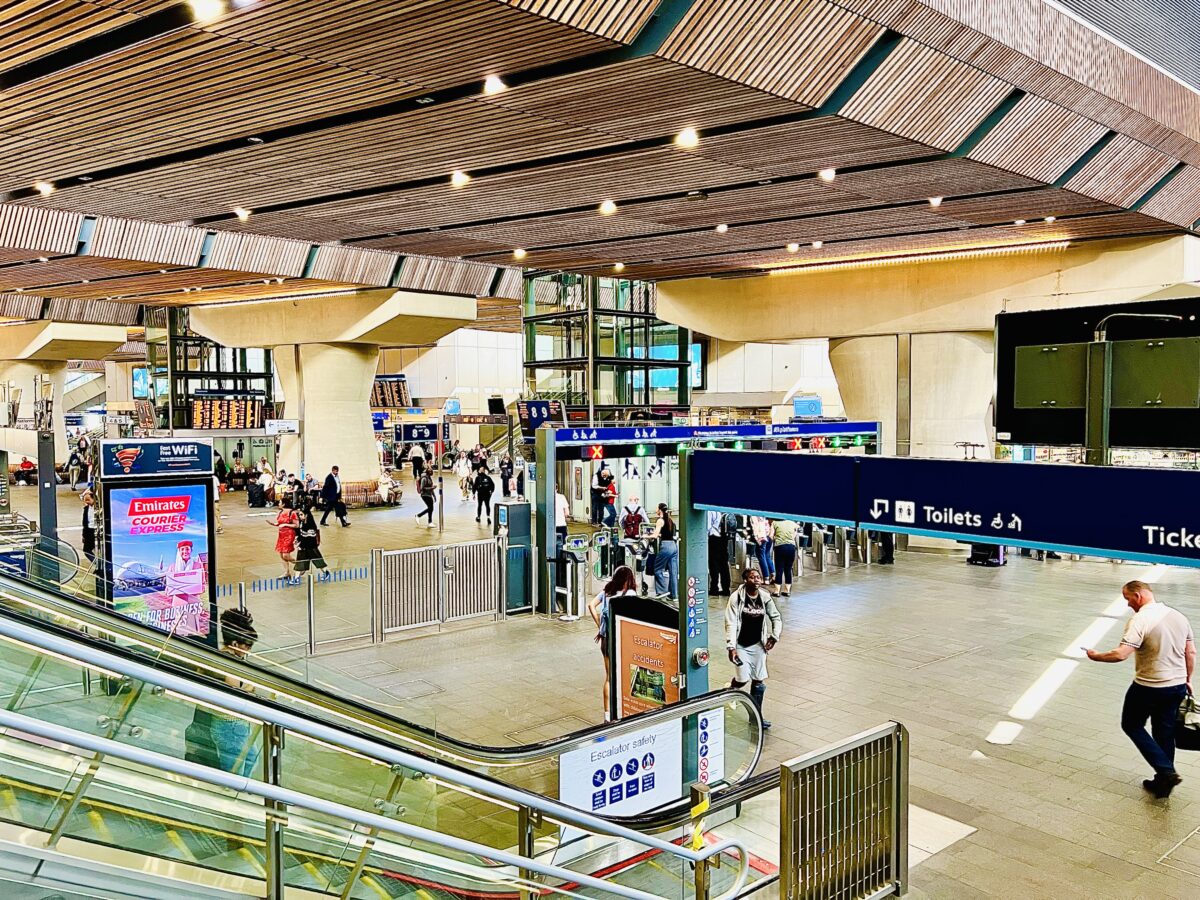
For first-time visitors, understanding the layout of London Bridge Station can greatly improve your travel experience. With multiple entrances, a split-level design, and a mix of mainline train platforms and Underground lines, it’s one of London’s most modern and efficiently designed stations—though it can still feel busy and confusing during peak hours.
Main Entrances and Exits
London Bridge Station has three primary entrance points:
- Tooley Street Entrance — the main and busiest entrance, closest to The Shard and London Bridge Underground Station.
- St Thomas Street Entrance — provides quick access to Guy’s Hospital, Borough High Street, and surrounding offices.
- Station Approach Entrance from Borough High Street — ideal for those heading towards Borough Market, Southwark Cathedral, and the South Bank.
All entrances are clearly signposted, and there are electronic displays at every major access point.
Station Levels and Navigation
The station is split across different levels or concourses:
- Ground Level — concourse for National Rail ticketing, shops, cafés, and station exits
- Upper Level — access to platforms 1–9 for mainline train services
- Lower Level — connections to the Jubilee Line and Northern Line (Bank branch) on the London Underground
Clear signage, lifts, escalators, and electronic displays help guide passengers to their platforms. For those with mobility concerns, London Bridge Station is fully accessible, with step-free access to all platforms.
Which Entrance is Best at London Bridge Station?
It really depends on where you’re coming from or where you’re going:
|
Station entrance |
Best for |
|---|---|
|
Tooley Street |
if you’re heading to the main concourse, the Underground, or exploring nearby spots like The Shard or Borough Market. |
|
St Thomas Street |
quick access to the Jubilee Line or The Shard’s viewing platform. |
|
Borough High Street |
if you’re approaching from London Bridge Borough Market or the Southwark Cathedral side. |
Insider Tip: As a frequent commuter, I usually go in via Tooley Street — it’s the most direct and has the widest access points.
Is London Bridge Station Easy to Navigate?
Yes, London Bridge Station is generally easy to navigate. This is especially since its major renovation was completed in 2018. The layout is modern and well signposted, with wide concourses and clear digital displays showing train times and platform numbers.
That said, it’s a large and busy station, particularly during weekday rush hours — so if you’re visiting for the first time, give yourself a few extra minutes to get your bearings. I always recommend following the overhead signs or asking a friendly staff member if you’re unsure — they’re usually very helpful.
Does London Bridge have Step-Free Access?
Yes, London Bridge Station offers full step-free access to all platforms, making it one of the most accessible major stations in London. There are lifts to both the National Rail platforms and the Underground (Jubilee and Northern lines), as well as step-free paths to all entrances.
Insider Tip: If you’re travelling with luggage, a pram, or a wheelchair, it’s one of the easier stations to use in central London.
Station Facilities and Amenities
Whether you’re catching a train, transferring to the Tube, or waiting for someone, London Bridge Station is well-equipped with modern facilities:
Toilets and Baby Changing
Clean, modern toilet facilities, accessible toilets and baby changing facilities are available at London Bridge Station.
Location:
- Clean, modern toilet facilities are located near the Tooley Street concourse.
- On the lower concourse, near the Joiner Street entrance (adjacent to the Northern Line and Jubilee Line Underground access tunnels).
Facilities Available:
- Standard toilets (separate for each gender)
- Accessible toilets (for disabled passengers)
- Baby changing facilities (available in accessible toilet areas)
Cost:
Toilets at London Bridge Station are free to use.
Opening Hours:
Usually aligned with station opening times — approximately 5:00 AM to midnight, but subject to change.

Left Luggage and Lockers at London Bridge Station
London Bridge Station does not have luggage lockers inside the station itself, but you can store your bags nearby through the Excess Baggage Company, which operates just outside the main concourse.
Location:
The Excess Baggage facility is located outside the station, near the Tooley Street entrance, close to the London Bridge Walk exit (look for the News building/Shangri-La signs).
Opening Hours:
Typically open daily from 7:00 AM to 11:00 PM, but it’s always a good idea to check current hours online or at the station.
Services Offered:
Secure left luggage storage (hourly or daily rates)
Shipping and courier services
Wrapping services for bags/suitcases
Payment:
Accepts card and contactless payments. No cash-only restrictions.
Shops and Dining
A wide variety of cafés, grab-and-go food, and high street shops including:
- Pret A Manger, M&S Simply Food, LEON, WHSmith, Starbucks.
- Nearby eateries: Flat Iron, Padella, Franco Manca (outside station exits).
Wi-Fi and Connectivity
- Free Wi-Fi is available throughout the station.
- Plenty of seating and power outlets near waiting areas.
- Portable Power Bank rental points.
Safety and Assistance
- Visible CCTV coverage
Information desks and customer help points
- Staff available to assist with queries and accessibility needs

Need to Charge on the Go?
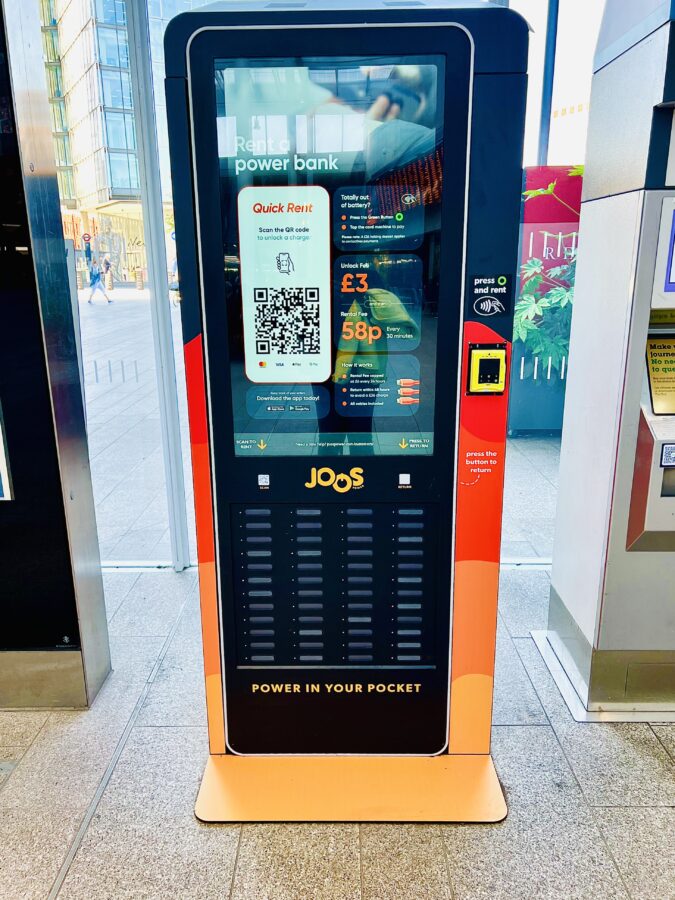
London Bridge Station now has power bank rental stations located next to the ticket machines. You can pay to collect a portable charger, top up your phone on the go, and return it at the same spot or another participating location — perfect for travellers needing a boost between journeys.
Tickets, Oyster, and Contactless at London Bridge Station: Everything You Need to Know
Whether you’re a first-time visitor to SE1 or simply passing through London Bridge Station, getting your travel tickets sorted is easy and straightforward thanks to the station’s excellent facilities. Here’s everything you need to know about Tickets, Oyster, and Contactless at London Bridge Station:
Where to Find Ticket Machines and Ticket Offices
London Bridge Station is well-equipped with plenty of self-service ticket machines, located across both the upper and lower concourses. These machines are easy to spot near major entrances, including:
- Upper concourse near the Station Approach (Borough High Street) entrance
- Lower concourse near the Joiner Street tunnel walkway, connecting to the Underground
- Operable with touchscreen interfaces, offering multiple languages
- Accept card and contactless payments, including Apple Pay and Google Pay
Ticket Offices
Prefer to speak to a person? Staffed ticket counters are available near both main entrances, including at:
- The Upper Concourse (Borough High Street entrance)
- The Lower Concourse (near Joiner Street access)
- These are open daily, though hours may vary slightly on weekends or holidays.


Using Oyster and Contactless Cards
London Bridge accepts Oyster cards, contactless debit/credit cards, and compatible smart devices (e.g. phones, watches) for Underground and National Rail services within London fare zones.
- Simply tap in and tap out at the yellow card readers at barriers.
- No need to buy a separate ticket if you’re using contactless or Oyster.
- Charges are calculated automatically based on your journey.
Top-Up Points and Daily Fare Caps
Need to add credit to your Oyster card?
Top-up is available at all self-service machines and some newsagents within the station. You can also use the TfL Oyster app for topping up on the go.
Daily Cap:
If you’re travelling within London Zones 1–6, there’s a daily price cap when using Oyster or contactless, so you’ll never pay more than the maximum fare for the day — great value for tourists making multiple trips.
Travelcards and Visitor Options
If you’re staying in London for several days and plan to travel a lot, consider:
- A 7-day Travelcard, valid on both Tube and National Rail within selected zones
- A Visitor Oyster card, which you can order before arriving in the UK
- Railcards (e.g. 16–25, Senior Railcard) — can be linked to your Oyster for discounts on pay-as-you-go fares
Need help choosing the right ticket or pass? Staff at London Bridge are usually available at the counters and in the concourse areas, ready to assist — especially during peak hours.

Quick Guide: Tickets, Oyster & Contactless at London Bridge Station
Ticket Machines:
Available on both upper and lower concourses — touchscreen, multilingual, card/contactless payments accepted.
Ticket Offices:
Located near the main entrances (Borough High Street & Joiner Street) — open daily with staff assistance.
Oyster & Contactless:
Tap in/out with an Oyster card, contactless card, or phone. Works on the Tube and eligible National Rail services.
Top-Up Points:
Oyster top-up available at machines and ticket offices.
Daily Fare Caps:
Pay as you go with Oyster/contactless — daily caps apply, making it cost-effective for multiple journeys.
Accessibility:
All machines and barriers are designed for easy access — wide gates and help points are available for assistance.
How to Get to Buckingham Palace from London Bridge Station?
Best Route (Fastest & Easiest):
Take the Jubilee Line from London Bridge to Green Park Station
From Green Park, it’s a 5–10 minute walk to Buckingham Palace
Approximate Journey Time: 17 minutes
Typical Fare (Contactless/Oyster): £2.80 off-peak | £3.40 peak
Walking Distance from Green Park: About 600 metres
Alternative Option (slower):
Take a Southern train to London Victoria, then walk to the palace
Journey Time: About 1 hour
Fare: £7–£10
Insider Tip: The Tube via Green Park is not only quicker, but avoids surface-level congestion. It’s your best bet during busy tourist seasons.
What are the nearest Tube stations to Buckingham Palace?
The closest Underground stations to Buckingham Palace are:
Green Park Station: Served by the Jubilee, Piccadilly, and Victoria lines.
St James’s Park Station: Served by the Circle and District lines.
Both stations are within a short walking distance to the palace.
Is it possible to walk from London Bridge to Buckingham Palace?
Yes, it’s approximately a 2.7-mile walk, taking around 50–60 minutes. The route offers scenic views along the River Thames and passes several landmarks.
Popular Day Trips from London Bridge By Train
Staying near London Bridge in SE1 gives you easy access to some of southern England’s most charming destinations — and you don’t even need to go through central London to get there. With frequent direct train services running from London Bridge Station, you can enjoy seaside escapes, historic towns, or peaceful countryside adventures, all within a couple of hours.
Here are some of the best day trips you can take directly by train:
Brighton (Seaside / Culture)
Journey time: ~1 hr 15 mins (Southern)
Brighton is a vibrant coastal city perfect for a day by the sea. Visit the iconic Brighton Pier, explore The Lanes for vintage finds, or admire the stunning Royal Pavilion. It’s a favourite for day trippers from London.
Canterbury (Heritage / History)
Journey time: ~1 hr 30 mins (Southeastern)
A must-visit for history lovers, Canterbury is home to one of the oldest and most famous cathedrals in England. The medieval streets, Roman museum, and charming cafés make this city feel like a step back in time.

Hastings (Seaside / History)
Journey time: ~1 hr 45 mins (Southern)
Known for the Battle of Hastings and its clifftop castle ruins, this coastal town offers a mix of history, sea air, and quirky old town vibes. Great for families or those wanting a slower pace by the shore.
Rye (Heritage / Village Charm)
Journey time: ~1 hr 45 mins (Southern via Ashford International)
One of the prettiest villages in the south, Rye is all cobbled streets, timber-framed houses, and antique shops. Ideal for photography lovers, literature fans, or a quiet countryside wander.
Whitstable (Seaside / Foodie)
Journey time: ~1 hr 30 mins (Southeastern)
Famous for its oysters, fresh seafood, and artsy charm, Whitstable is a laid-back coastal escape with a Bohemian vibe. Great for foodies and sea-lovers alike.
Sevenoaks (Nature / Countryside)
Journey time: ~35 mins (Southeastern)
A green getaway close to the city, Sevenoaks is home to Knole Park, where you can walk among deer in a historic estate setting. Perfect for nature lovers or a peaceful picnic.
East Croydon (Transport Hub / Shopping)
Journey time: ~15 mins (Thameslink / Southern)
Though technically still within Greater London, East Croydon is a convenient hub for shopping, dining, or connecting to other destinations like Gatwick Airport.
Haywards Heath (Countryside / Gateway Town)
Journey time: ~45 mins (Thameslink / Southern)
Often used as a stopover en route to Brighton, Haywards Heath is a peaceful market town surrounded by the rolling Sussex countryside. Ideal for a more relaxed, semi-rural outing.
Top Attractions near London Bridge and SE1
London Bridge Station is close to several notable sites:
- The Shard: Western Europe’s tallest building, offering panoramic views of London.
- Borough Market: A historic food market with a variety of gourmet foods.
- HMS Belfast: A museum ship on the River Thames.
- Tower Bridge: An iconic symbol of London, featuring a glass-floored walkway.
- The Tower of London: A historic castle and former royal residence.
Read my Comprehensive guide to Southwark Bankside Strip which offers top tips and places to see on a scenic walk along the Thames.

Essential Tours to Consider
To dig a little deeper, book these nearby tours to enrich your visit:
Borough Market Food Tour — Learn the history and taste the best of the market with a passionate guide.
The Shard — Head up to the viewing platform or enjoy a drink in one of the sleek restaurants for sky-high city views.
Shakespeare’s Globe Guided Tour — Just a short walk away, this tour is a treat for theatre and history lovers alike.
Private walking tour of historic pubs around London Bridge and Borough — explore centuries-old taverns and hear the stories behind Southwark’s vibrant pub culture.
London Bridge Hidden History or Ghost Tours — Discover the legends and lesser-known stories of the area’s past.
Tower of London including the Crown Jewels Exhibition & Tower Bridge Tours – Perfect if you’re continuing your exploration eastward — both are walkable from London Bridge Station.
Essential Travel Tips for First-Time Visitors to London Bridge Station
Whether you’re arriving from London airports, transferring between National Rail and Underground trains, or setting out to explore South Bank or SE1, London Bridge Station can feel a little overwhelming the first time you step inside. To help you navigate one of London’s busiest and most well-connected hubs with ease, here are some practical and essential travel tips for first-time visitors to London Bridge Station.
Arrive Early and Avoid Peak Hours
London Bridge Station serves millions of travellers annually and sees a heavy surge of commuters during weekday rush hours—typically from 7:30–9:30 AM and 4:30–6:30 PM. If you’re unfamiliar with the station’s layout or travelling with luggage, children, or mobility needs, it’s wise to arrive at least 20 minutes early. This allows plenty of time to:
- Navigate between the upper and lower concourses;
- Use self-service ticket machines;
- Top up your Oyster card or collect pre-booked tickets;
- Find your platform without rushing.
Use Contactless or Oyster for Easy Travel Within London
All London Underground and National Rail services operating within London Zones 1–6 from London Bridge Station accept Oyster cards and contactless debit/credit cards. These are the easiest and most flexible options for first-time visitors to London.
- Simply tap in and out at the yellow card readers at station entrances and exits.
- No need to buy a paper ticket for most local journeys.
- Daily and weekly fare caps apply, ensuring you never overpay.
Tip: Visit the Transport for London (TfL) website or use the TfL Go app to check your fare zones, caps, and travel card options.
However, if you’re travelling beyond London—for example, to Brighton, Gatwick Airport, or Canterbury—Oyster cards are not accepted. You’ll need to purchase a separate National Rail ticket, either online in advance or at the station.

Download a Travel App Before You Go
If you’re a first-time visitor to SE1 or London Bridge, apps are your best friend. Use apps like:
- Citymapper (ideal for first-time users in London)
- Google Maps (for real-time transport and walking directions)
- TfL Go (official London travel app with live service updates)
These apps help you:
- Check real-time platform information.
- Navigate exits and walking tunnels (very useful at London Bridge!).
- Identify step-free access points and toilet locations.
- Plan alternate routes if services are delayed.
Bonus tip for airport travellers: Apps like Trainline or National Rail Enquiries let you book airport connections (like Gatwick Express or Thameslink to Luton Airport Parkway) in advance, often with live delay updates.
How Early Should I Arrive at London Bridge Station?
If you’re catching a National Rail service (e.g. to Gatwick, Brighton, or Canterbury) or visiting for the first time, I’d suggest that you give yourself at least 30 minutes before your train departure.
The station spans multiple levels and entrances.
Platforms can be a 5–10-minute walk from the ticket gates.
During peak times (7:30–9:30am / 4:30–6:30pm), expect more crowds.
Tip: Arriving early gives you time for ticketing, finding your platform, or a quick coffee break — stress-free.
Quick Info: First-Time Travel Tips at London Bridge Station
|
Tip |
Details |
|---|---|
|
The best time to travel |
Avoid weekday rush hours (7:30–9:30 AM / 4:30–6:30 PM) |
|
How early to arrive |
At least 30 mins early for long-distance or unfamiliar travel |
|
Use Contactless/Oyster |
Accepted on all Tube and most National Rail services within Zones 1–6 |
|
Beyond Zones 1 – 6 |
Buy a separate ticket for destinations like Brighton or Gatwick |
|
Download apps |
Citymapper, TfL Go, for real-time travel planning |

Related Reading: Explore More of SE1 Southwark, London Bridge & Nearby
Guide to Borough Market London: Food, Tours, History, + Sustainability
The George Pub London Bridge History: London’s Last Galleried Coaching Inn
London Bridge and Bankside for First-Time Visitors: Top Sites + Hidden Gems by a Local
11 Old Pubs in London Bridge with Hidden Tales for Heritage Lovers
London Bridge vs Tower Bridge: Which One Should You Walk Across.
St Katharine Docks, London: The City’s Secret Marina near Tower Bridge
The Dickens Inn History: Dickensian Charm by St Katharine Docks, London
Why Stay Near London Bridge Station? 12 BEST Hotels From Boutique to Budget
Why is the Tower Bridge Famous? 27 Unique Facts about a London Victorian Landmark
Tower Bridge Captions for Instagram: 29 Sayings for Your London Photos
Where is Southwark, London? Everything You Need to Know.
Is Southwark Safe? Where to Stay, Areas to Avoid, and Safety Tips for First-Time Visitors.
Southwark Cathedral History: A Guide to London’s Oldest Gothic Church.
The Famous Writers of Southwark Cathedral: From Chaucer to Dickens, Shakespeare, and More.

FAQs
No — they are different landmarks. London Bridge Station is a major transport hub, while Tower Bridge is the iconic drawbridge often mistaken for London Bridge. They’re about a 15–20-minute walk apart.
The station is open 24 hours, but ticket offices, shops, and services have varying hours. Most ticket counters open around 6:00 AM and close by 10:00 PM. Always check ahead for holiday or weekend hours.
Check departure boards in the concourses or use apps like TfL Go or National Rail Enquiries for real-time platform updates. Staff are available if you need help — especially near gates during busy hours.
Toilets (including accessible and baby-changing facilities) are located:
On the upper concourse near Platforms 9–10.
Near Tooley Street exit.
A small fee may apply, but contactless payment is accepted.
Yes, it’s fully accessible with:
Lifts and escalators connecting all concourse levels.
Step-free access to every platform.
Tactile paving and accessible toilets.
my thoughts…
Whether you’re flying out, planning a seaside day trip, or simply navigating London for the first time, London Bridge Station is more than just a stop — it’s a major gateway to the South East and beyond. With direct access to airports, heritage towns, and coastal escapes, plus seamless Tube and National Rail connections, this station makes travel simple, even for first-time visitors.
I hope you found this guide helpful in making your journey easier to plan. With a little preparation — and the tips above — you’ll be ready to explore with confidence.
Have a great time exploring our charming city London.
Happy and safe travels, wherever travel takes you, xx


Absolutely! It’s such a handy option, especially when you’re on the move and your phone’s running low. Having rental chargers right at the station takes a bit of pressure off — great for travellers who don’t want to miss a moment (or a train)!
It’s great to hear that they rent chargers in the station. We try to come prepared, but find ourselves too often without enough backup charge.
Absolutely! London Bridge Station is huge and can feel like a maze, especially if you’re not familiar with it. Having a guide or map really helps first-timers find their way without stress. Glad you found it useful!
I’ve probably transfered through London Bridge station years ago, but a guide or map is so usefull, especially with the large trandsport hubs. You can really look around for a while to find your way.
Thank you! Yes, it’s fascinating how deep the roots of London’s rail network go — the 1830s really set the stage for the system we rely on today. I’m so glad you enjoyed the historical bits along with the tips!
Thank you! I’m so glad you found it useful London Bridge can be a bit of a maze at first, but once you know the layout and connections, it’s such a great hub. Wishing you a fantastic trip when you make it to London — hope this guide comes in handy when the time comes!
Thank you so much! I know, right? London Bridge Station is so much more than just a place to catch a train — there’s a lot going on behind the scenes. I’m really glad you found it informative!
Absolutely! Train stations — especially the big, busy ones — can feel like a maze when you’re in a new country. I’m so glad this guide helped break it down clearly. London Bridge Station has come a long way in terms of layout and accessibility, but that first visit can still be a lot! Thanks so much for your kind words, Amanda.
Thank you so much! I completely agree — navigating public transport in a new city can feel overwhelming at first, especially in a place as busy as London. I’m really glad you found the guide useful, even without having visited yet! If you ever do plan a trip, London Bridge Station is such a great starting point for exploring the city and beyond. Feel free to save the post for future reference — and let me know if you have any questions when the time comes!
What a great post! Public transportation can be so difficult to navigate in a new place. I’ve never been to London, but I found this guide so useful!
Train stations can be so overwhelming in new countries! This is a great breakdown for 1st time visitors!
Wow! This post is so helpful and informative. Who knew there was so much to discover/learn about the London Bridge Station?!
Wow! This is a very thorough guide! This will be very helpful when we make it to London. I will keep this guide for future reference.
It was interesting to learn more about the history of the rail system in London. I knew it was old, but I didn’t know it was 1830’s old. So interesting. Thanks for all the transport tips!