
Queen Victoria: The Woman Behind the Crown
Queen Victoria remains one of Britain’s most recognisable monarchs, yet the formidable widow dressed in black tells only part of her story. Behind the crown was a passionate, strong-willed and deeply emotional woman whose life was shaped by love, family, duty and profound loss. This Queen Victoria biography looks beyond the familiar image to reveal the woman who occupied the throne through more than six decades of extraordinary change.
On 24 May 2019, exactly 200 years after Victoria was born, I stepped inside Kensington Palace on a glorious day of sunshine. Two special exhibitions were telling her story: Victoria: A Royal Childhood and Victoria: Woman and Crown.
Two hundred years earlier, on that same May date, Alexandrina Victoria had been born within these walls. Then fifth in line to the throne, few could have imagined that this little princess would become Queen Victoria, reign for more than six decades, and give her name to an entire era.
There was something quite poignant about encountering Victoria’s story where it had begun. Her journals, personal possessions and intimate portraits gradually revealed someone quite different from the formidable monarch we know from history.
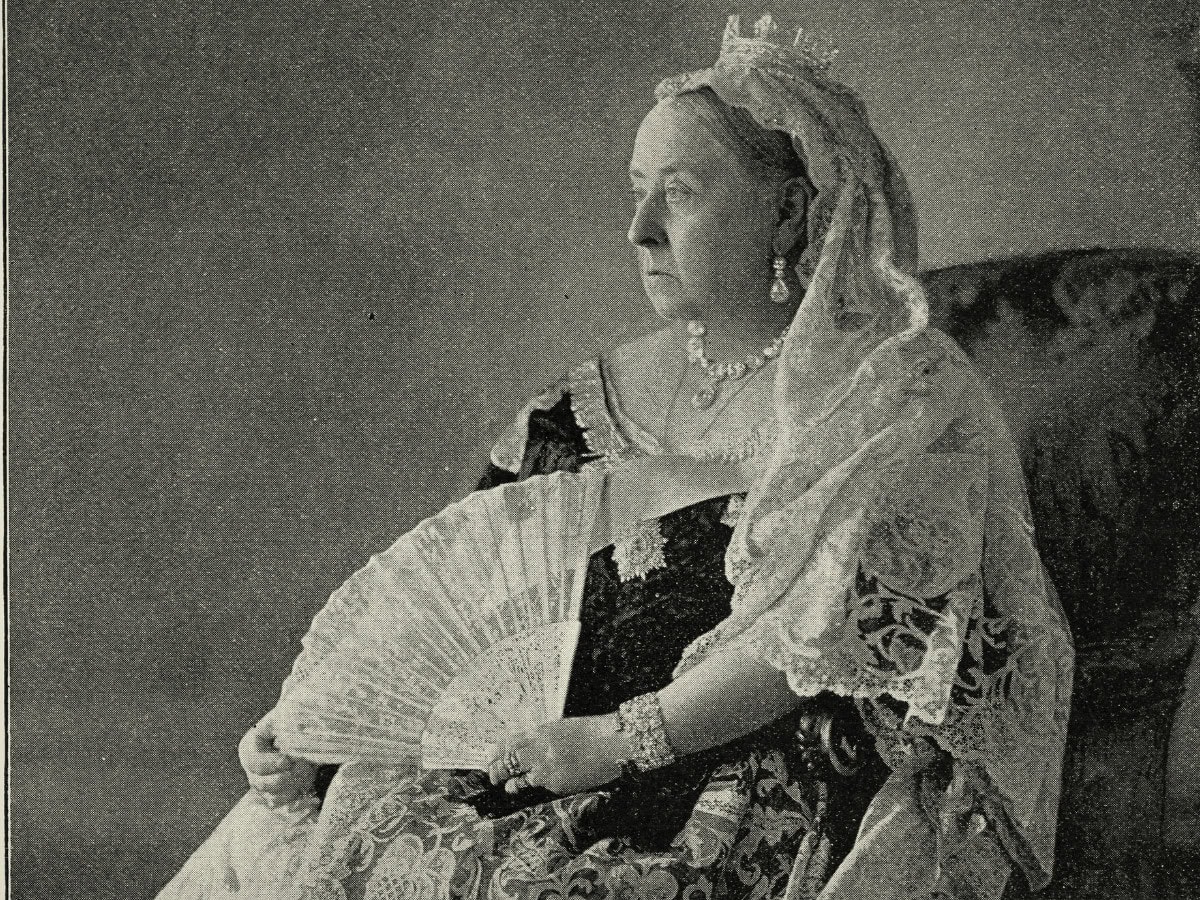
We tend to remember Queen Victoria as the older widow dressed in black, solemn and almost inseparable from our image of the Victorian era. Yet that familiar figure represents only one part of an extraordinary life. There was also the young Queen who loved dancing and the theatre, the passionate wife who adored Prince Albert, the complicated mother of nine children and the woman whose devastating grief transformed her public image.
This Queen Victoria biography grew from that first visit to Kensington Palace and an article I wrote soon afterwards. Seven years later, I have returned to Victoria’s story with further research and an even greater curiosity about the person behind the history. Through her marriage, motherhood, reign, passions, losses and favourite places, this mini biography looks beyond the black dress and formal portraits to meet the woman behind the crown.
Who Was Queen Victoria?
Queen Victoria (1819–1901) was born Alexandrina Victoria at Kensington Palace on 24 May 1819. She became Queen of the United Kingdom at just 18 years old, following the death of her uncle, King William IV, in 1837. She would remain on the throne for 63 years and 216 days, giving her name to the Victorian era and becoming one of the most recognisable monarchs in British history. Her long reign spanned an extraordinary period of industrial, technological and social change that transformed Britain and the wider world.
In 1840, Victoria married Prince Albert of Saxe-Coburg and Gotha, the man who would become the great love and defining relationship of her life. Together, they had nine children, whose marriages would eventually connect the British Royal Family with many of Europe’s ruling houses. In 1876, Victoria also became Empress of India, a title closely associated with the expansion and complexities of the British Empire during her reign.
When Queen Victoria died at Osborne House on the Isle of Wight on 22 January 1901, aged 81, Britain had changed enormously from the country she had inherited as a young queen.
These Queen Victoria facts give us the outline of an extraordinary life. But behind the dates and titles was a woman of strong opinions, deep attachments, contradictions and powerful emotions. To understand Victoria, we need to look beyond the crown.

From Sheltered Princess to Queen at Eighteen
Long before she became Queen, Victoria’s world was remarkably small. She grew up largely within the confines of Kensington Palace under the watchful eye of her mother, the Duchess of Kent, and Sir John Conroy, her mother’s ambitious adviser.
Her childhood was governed by a strict set of rules that became known as the Kensington System. Victoria was closely supervised, rarely left alone and deliberately kept dependent upon her mother and Conroy. Even as she grew older, she shared a bedroom with her mother and was accompanied when walking downstairs.
Friendships were limited and much of her young life unfolded away from the freedom we might imagine for a royal child.
Yet the system appears to have produced almost the opposite of what was intended. Victoria developed a strong will and a fierce determination to make her own decisions.
That independence arrived rather suddenly.
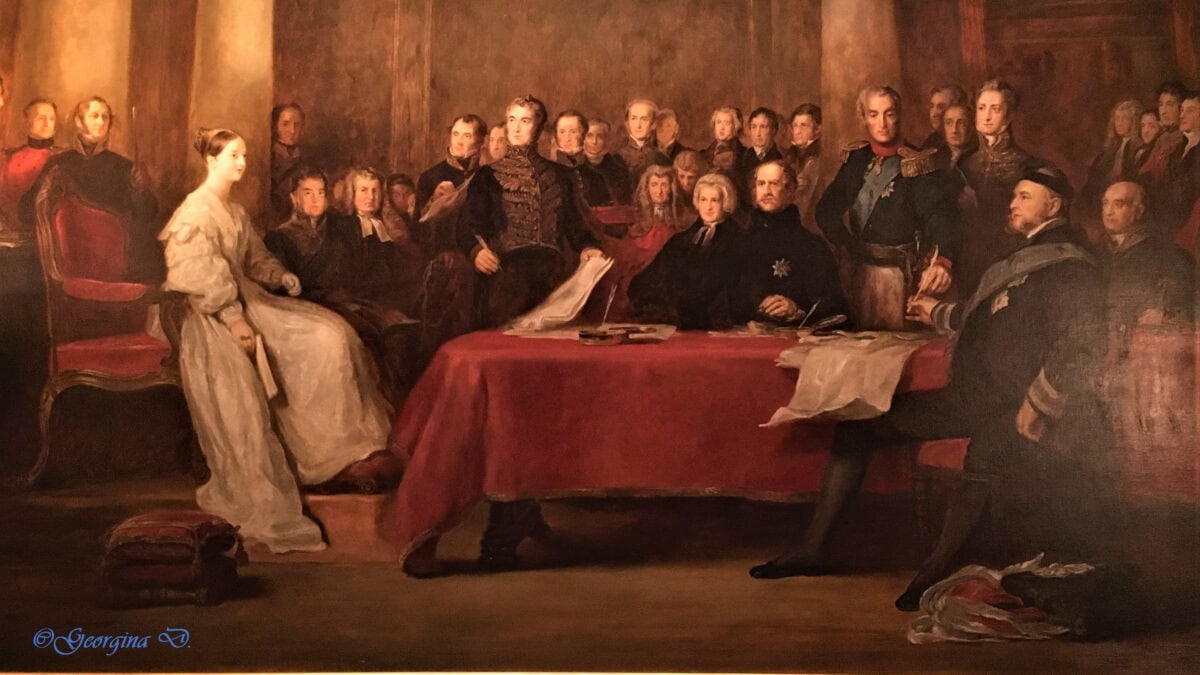
In the early hours of 20 June 1837, Victoria was awakened at Kensington Palace with news that the Archbishop of Canterbury and Lord Conyngham had arrived and wished to see her. Her uncle, King William IV, had died at Windsor Castle. The eighteen-year-old princess was now Queen.
Victoria, who went to bed a princess and awoke as Queen of Britain.
Later that day, Victoria met her Privy Council for the first time.
When I visited Kensington Palace for her bicentenary exhibition, I stood in the Red Saloon, the room where that first council meeting took place. A display of miniature figures recreated the historic scene depicted by Sir David Wilkie.
Knowing how closely controlled Victoria’s life had been until then made the room feel particularly significant. Here was a young woman who had spent much of her childhood under constant supervision, suddenly standing before some of the most powerful men in the country as their sovereign.
Contemporary accounts remarked upon the young Queen’s composure, and the moment seems all the more striking when set against the restrictions of her upbringing.
Victoria had inherited a crown and all the responsibilities that came with it. But on a deeply personal level, becoming Queen brought something else. As this Queen Victoria biography shows, the tightly controlled princess of Kensington suddenly possessed something she had scarcely known before: independence.
Her journey to that moment had been far from an ordinary royal childhood.
In [Queen Victoria’s Childhood: The Girl Before the Crown], I look more closely at the Kensington System, her journals and dolls, her love of theatre and the young girl who grew up behind the palace walls.


What Was Queen Victoria Really Like?
It is difficult to separate Queen Victoria from the image that history has handed down to us: an unsmiling older woman, dressed in black and looking every inch the formidable monarch. Yet spend a little time with Victoria’s journals, letters and personal possessions and a much more colourful personality begins to emerge.
Victoria was passionate and intensely emotional. She could be affectionate and enthusiastic, but also stubborn, demanding and quick-tempered. She formed deep attachments to those she loved and felt separation and loss keenly. There was little that was restrained about her private emotions.
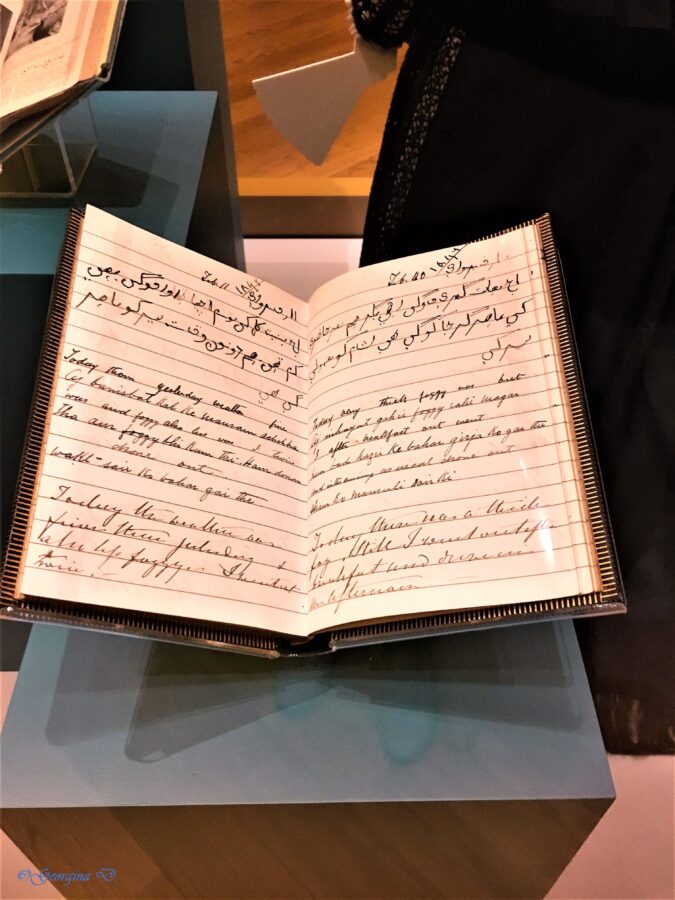
Fortunately, Victoria left us an extraordinary window into that private world. She began keeping a journal at thirteen and continued writing for almost the rest of her life. Her surviving writings record great affairs of state alongside family squabbles, performances she enjoyed, people who irritated her and the small pleasures of everyday life.
Even at eighteen, her determination was evident. On the day she became Queen, Victoria wrote of her desire to fulfil her duty to the country, acknowledging that she was young and inexperienced but insisting upon her sincere wish to do what was “fit and right”.
Yet duty was only one side of her character.
Victoria loved music, drawing, painting, theatre and dancing. She was a prolific amateur artist, producing thousands of drawings and watercolours during her lifetime. Her sketchbooks captured landscapes, family life, people she encountered and even theatrical performances she had enjoyed.
There was humour, too. In an affectionate note written to Prince Albert before their marriage, she addressed him as her “Dear Angel” and promised to send him something that would “amuse you very much”.
It is these small glimpses that make Victoria so fascinating. The woman who emerges from her private writings is not always easy, and certainly not always solemn. She could love fiercely, grieve deeply, lose her temper and delight in things that pleased her.
The familiar portraits show us the Queen. Her own words bring us rather closer to the woman behind the crown.

Was Queen Victoria Really “Not Amused”?
Few phrases are more closely associated with Queen Victoria than “We are not amused.” It has helped shape the enduring image of a stern, humourless monarch looking disapprovingly upon the world around her.
But did Victoria actually say it?
Although the phrase has long been attributed to her, there is no conclusive evidence that she did. Several stories emerged about the circumstances in which she supposedly made the remark, but they differ in their details.
Victoria’s own granddaughter, Princess Alice, Countess of Athlone, later recalled asking her grandmother about the famous words and said Victoria denied ever having uttered them.
What we do know is that the real Victoria was very capable of being amused. Her journals record laughter, pleasure and enjoyment, while music, opera, theatre and dancing were among the entertainments she loved.
Perhaps, then, “We are not amused” tells us less about Victoria herself and rather more about the solemn image later generations came to associate with her.
Queen Victoria and Prince Albert — Love Behind the Crown
If there was one relationship that shaped Queen Victoria’s private life more than any other, it was her marriage to Prince Albert. No Queen Victoria biography would be complete without considering a relationship that profoundly shaped both the woman and the monarch.
Their union had dynastic advantages and had long been encouraged by their families, but what developed between them was far more personal. For Victoria, particularly, the attachment was intense.
Falling in Love with Albert
Queen Victoria and Prince Albert were first cousins and first met at Kensington Palace in May 1836, when Victoria was seventeen. Their uncle, Leopold, King of the Belgians, hoped the young cousins might eventually marry.
Victoria was certainly impressed. She recorded in her journal that Albert was “extremely handsome”, but no engagement followed and Albert returned to the Continent.
When they met again in October 1839, Victoria was no longer a sheltered princess. She was Queen.
Her response to the twenty-year-old Albert was immediate and wonderfully revealing. She admired his blue eyes, his features and what she described as his “pretty mouth”. Within days, she had made her decision.
There was, however, an unusual complication. Victoria was the sovereign. Albert could not formally propose marriage to the Queen, so on 15 October 1839, she summoned him privately and asked whether he would marry her.
Her journal captures the emotion of the moment. After Albert accepted, Victoria wrote of the extraordinary delight of knowing she was loved by someone she regarded as an “Angel”.
They married on 10 February 1840 in the Chapel Royal at St James’s Palace. Victoria was twenty; Albert was the same age.
The marriage would bring nine children and more than twenty years of life together. It was loving and passionate, but it was not without disagreements, frustrations and questions about where Albert fitted beside a wife who also happened to be his sovereign.

The Secret Portrait Intended Only for Albert
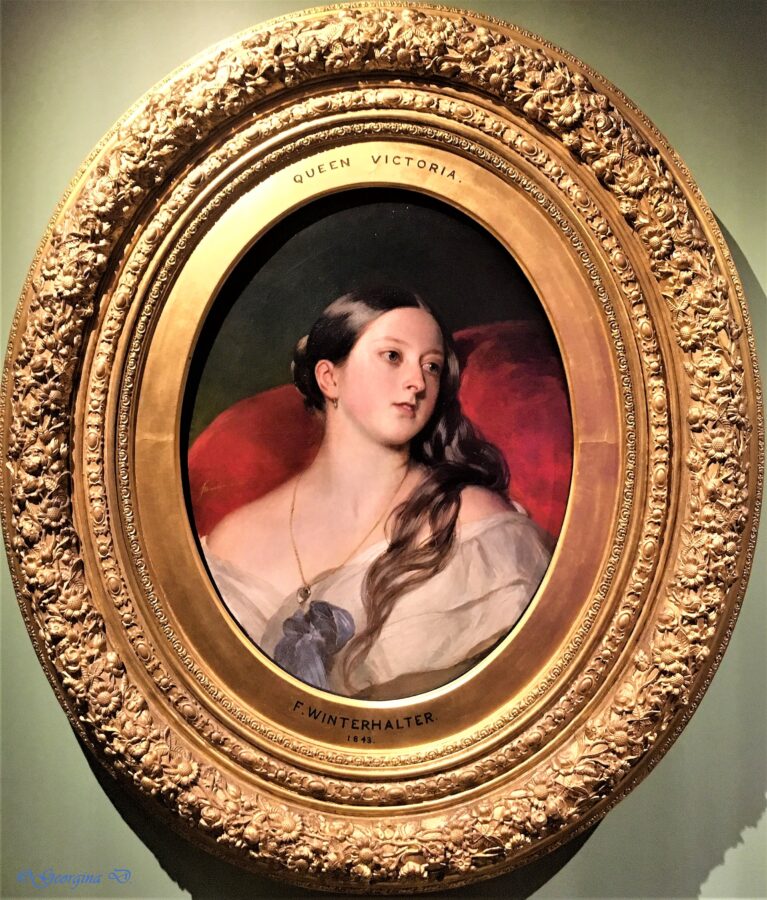
One of the objects I remember particularly well from the Kensington Palace exhibition was a portrait that seemed to strip away almost everything we associate with the public image of Queen Victoria.
In 1843, Victoria secretly commissioned Franz Xaver Winterhalter to paint her as a birthday present for Albert.
This was not Victoria presented as sovereign. There were no imposing robes of state or carefully staged symbols of monarchy. Her dark hair falls loosely over her shoulder and she appears relaxed and intimate. It was a private image, created for the eyes of the man she loved.
Seeing it at Kensington Palace brought home just how different the private Victoria could be from the Queen preserved in formal portraits.
The surprise worked. Victoria recorded her happiness that Albert thought the portrait both beautiful and a good likeness. Years later, she still referred to it as her beloved Albert’s favourite picture.
It is difficult to imagine a more fitting image for the woman behind the crown. For a moment, Victoria was not asking to be seen as Queen. She wanted to be seen simply as Albert’s wife.
A Queen Who Outranked Her Husband
That distinction also reveals one of the great contradictions of their marriage.
Victoria loved Albert deeply and held quite conventional nineteenth-century ideas about a wife’s relationship with her husband. Yet there was one fact neither of them could escape: she outranked him.
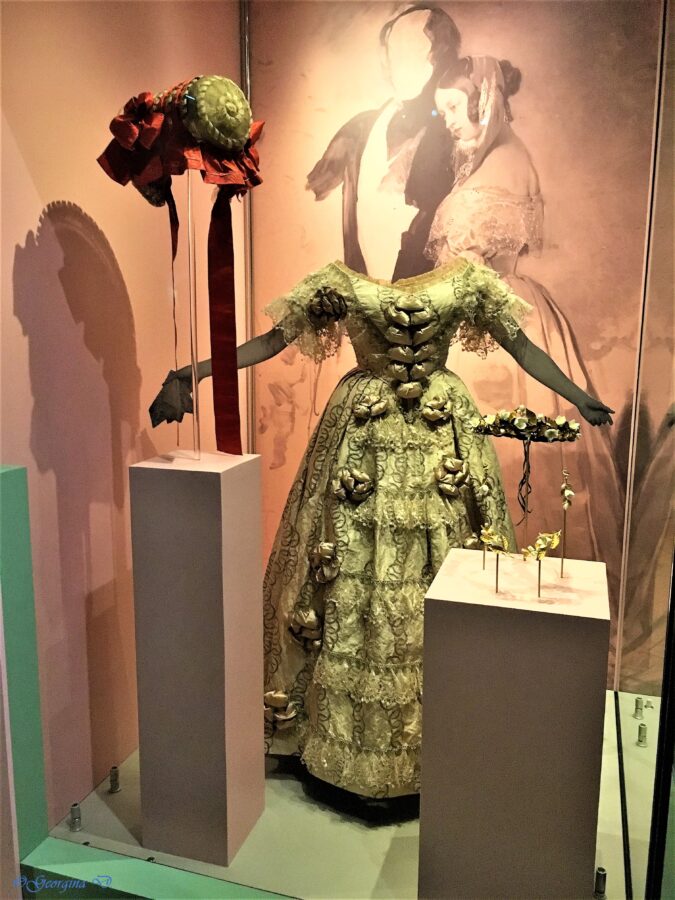
One small detail explained during my visit to the Victoria: Woman and Crown exhibition has always stayed with me. The interpretation drew attention to Victoria’s use of a bonnet when appearing with Albert and the way she could soften the visual distinction between the crowned Queen and a husband who had no right to wear a crown himself.
Whether understood as affection, marital deference or careful management of their public image, it speaks to the unusual balance at the heart of their marriage.
Albert initially had no defined constitutional role. Gradually, however, he became increasingly involved in Victoria’s working life. He organised her papers, acted as an unofficial private secretary and became a trusted adviser, while developing interests and public projects of his own.
Their relationship therefore evolved. The young Queen who had delighted in her independence came increasingly to rely upon her husband.
That does not mean theirs was a perfect marriage. Two strong personalities living under the pressures of monarchy inevitably clashed. Victoria could be emotional and quick-tempered; Albert could be critical and controlling. Their ideas about marriage, motherhood and a woman’s role can also appear contradictory when set against Victoria’s own position as sovereign.
But the affection between them was profound. To understand Queen Victoria and Prince Albert is to understand one of the central tensions of Victoria’s life: she was a woman who wished to be a devoted nineteenth-century wife while occupying a position no husband could outrank.
And when Albert was suddenly taken from her, the depth of that dependence would become painfully clear.
Queen Victoria as a Mother — Love, Duty and Contradiction
Motherhood occupied an enormous part of Queen Victoria’s married life. Between 1840 and 1857, she gave birth to nine children with Prince Albert: five daughters and four sons. Their growing family became central to the public image of Victoria and Albert as devoted parents surrounded by children.
Behind that carefully presented picture, however, Victoria’s feelings about motherhood were far more complicated.
A Queen Who Did Not Enjoy Pregnancy
Victoria adored Albert, but she did not share his enthusiasm for everything that followed from married life. Pregnancy was something she particularly disliked.
Her first child, Victoria—known within the family as Vicky—was born only nine months after the royal wedding. Victoria would go through another eight pregnancies over the following seventeen years, an experience she found physically uncomfortable and deeply frustrating.
Pregnancy also temporarily interfered with something enormously important to her: being Queen. Victoria had only recently discovered the independence that came with becoming sovereign when marriage and motherhood placed very different expectations upon her.
Her private writings reveal a woman unusually candid about these feelings. She could be decidedly unsentimental about babies and was particularly uncomfortable with breastfeeding. Some of her comments can sound startling to modern readers, especially when set against the idealised image of Victorian motherhood that developed during her own reign.
Yet it would be misleading to conclude that Victoria did not love her children.
Her journals and letters also contain affection, pride, anxiety and the familiar worries of a mother watching her family grow. One entry I encountered during the Kensington Palace exhibition captured that other side of Victoria particularly well. Looking at the large family she and Albert had created, she reflected on children as a source of both “anxiety and difficulty” and great blessing, describing the sight of their flourishing family with gratitude.
Those two emotions—frustration and profound attachment—could exist side by side.

Family Life with Albert
Albert took an active interest in the children’s upbringing and education, and together the couple attempted to create an ordered family life around them. Victoria delighted in family celebrations, birthdays, Christmases and periods spent away from the formality of court, particularly at Osborne House and Balmoral.
But this was no perfectly harmonious royal household. Victoria and Albert had strong expectations of their children and could be highly critical when they fell short. Relationships changed as the children grew older, married and developed lives and opinions of their own.
Perhaps this is another place where the woman behind the crown becomes more interesting than the familiar image. Victoria could complain bitterly about pregnancy and babies while fiercely loving the family those pregnancies created.
Why Was Queen Victoria Called the “Grandmother of Europe”?
Victoria’s nine children eventually produced 42 grandchildren, and many married into Europe’s royal and princely families.
Her descendants became connected with the ruling houses of Germany, Russia, Greece, Romania, Spain, Norway and elsewhere. By the early twentieth century, Victoria’s family tree stretched across much of royal Europe, earning her the familiar title “Grandmother of Europe.”
The connections were striking. Among her grandchildren were Kaiser Wilhelm II of Germany, while her granddaughter Alexandra became the last Empress of Russia. Another granddaughter, Victoria Eugenie, became Queen of Spain.
Yet these family bonds could not prevent political rivalries between nations. Within little more than a decade of Victoria’s death, descendants of the same grandmother would find themselves on opposing sides of the First World War—a poignant reminder that royal kinship and European politics were very different things.

Queen Victoria and Power — How Much Influence Did She Really Have?
It is tempting, when looking back at the enormous British Empire of the Victorian era, to imagine Queen Victoria personally ruling over it. The reality was more complicated.
Britain was already a constitutional monarchy when Victoria inherited the throne in 1837. Governments governed, Parliament legislated and ministers were politically responsible for their decisions. Victoria could not simply impose laws or policies according to her wishes.
But neither was she powerless.
The monarch retained the right to be consulted, to advise and to warn ministers, and Victoria took those responsibilities seriously. She read government papers, corresponded extensively with ministers and expressed her opinions—sometimes very forcefully—on domestic politics, foreign affairs, military matters and appointments. This political dimension is an important part of any Queen Victoria biography, revealing a monarch who was far from a passive observer.
Over a reign lasting more than 63 years, she dealt with ten prime ministers, and her relationships with them were anything but uniform.
From Lord Melbourne to Disraeli and Gladstone
As an inexperienced eighteen-year-old Queen, Victoria became particularly close to her first prime minister, Lord Melbourne. He guided her through the unfamiliar world of government and court, becoming something of a mentor to the young sovereign.
As Victoria matured, so did her understanding of her constitutional position.
Her later relationship with Benjamin Disraeli was notably warm. Disraeli understood how to charm the Queen, treated her with considerable attention and involved her closely in political correspondence. It was during his premiership that Victoria took the additional title Empress of India in 1876.
Her dealings with William Gladstone were very different. Victoria often found him difficult and disagreed with him on a range of political matters. Their strained relationship is a useful reminder that the Queen was not politically neutral in the sense of having no private opinions. She had plenty of them.
The constitutional question was what she could actually do with those opinions.
A Woman at the Centre of a Man’s Political World
There is another contradiction here that makes any Queen Victoria biography particularly fascinating.
Victoria lived in an age when women could not vote in parliamentary elections, could not sit in the House of Commons and faced profound legal and social restrictions. Yet at the centre of this overwhelmingly male political establishment sat a woman whom every prime minister was required to meet as sovereign.
She could advise and challenge. She could question. She could make her preferences unmistakably clear. But ultimately, constitutional government placed limits upon royal power.
Those boundaries were not always neat, and Victoria sometimes pushed against them. Her political influence also changed during different periods of her life, particularly as she gained experience and as the monarchy itself continued to evolve.
So did Queen Victoria rule Britain and its empire personally? No. That gives her far too much power and overlooks Parliament, government and the complex machinery of imperial rule.
But to dismiss her as merely a figurehead goes too far in the other direction.
Victoria occupied the throne for more than six decades, corresponded with generations of political leaders and possessed the access, experience and persistence to make her voice heard. Perhaps the more interesting question is not whether she ruled, but how this strong-willed woman learned to exercise influence within the constitutional boundaries of her crown.

Queen Victoria and the Victorian Era — An Age of Extraordinary Change
Queen Victoria’s long reign coincided with one of the most transformative periods in British history. Yet it is important to distinguish between the achievements of the Victorian era and the personal achievements of the Queen whose name it bears.
A Queen Victoria biography inevitably unfolds against this extraordinary backdrop, but Victoria herself cannot be credited with every development that occurred during her reign.
Between 1837 and 1901, Britain was transformed by industrialisation, expanding railways, bridges across the Thames, the telegraph, engineering and scientific advances. Photography emerged, cities grew rapidly and political and social reforms gradually changed everyday life.
The Great Exhibition of 1851, championed by Prince Albert, became a spectacular showcase of industry, invention and international ambition.
Victoria witnessed these changes rather than creating most of them. But her extraordinary longevity on the throne meant that she became increasingly identified with the age itself.
Nor was she universally popular throughout those 63 years.
As a young Queen, her closeness to the Whig government contributed to criticism during the Bedchamber Crisis of 1839. Much later, following Albert’s death, sympathy for her grief gradually existed alongside frustration at her prolonged withdrawal from public appearances. By the late 1860s and early 1870s, criticism of the monarchy had grown and republican ideas gained greater visibility.
Yet Victoria’s public image changed again.
Her return to more visible royal duties, together with the Golden Jubilee of 1887 and Diamond Jubilee of 1897, helped transform the ageing Queen into a powerful symbol of continuity.
By the end of her life, Victoria had become almost inseparable from the extraordinary age that still carries her name.
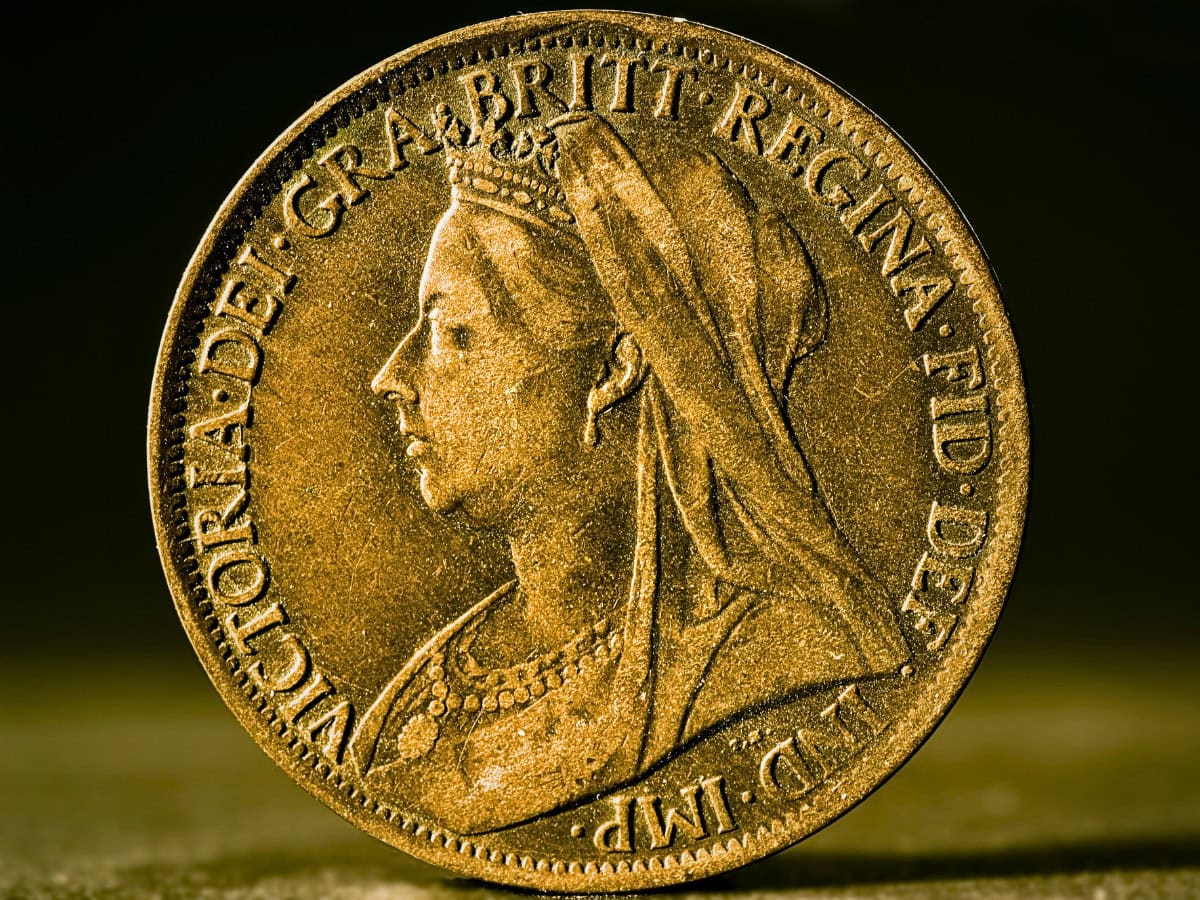
Queen Victoria, India and Empire
By the later decades of Queen Victoria’s reign, Britain presided over an empire stretching across vast areas of the world. Yet Victoria did not personally govern that empire, and her relationship with India in particular was filled with intriguing contradictions.
Becoming Empress of India
In 1876, Parliament passed the Royal Titles Act, allowing Victoria to take the title Empress of India. The change was strongly associated with her prime minister, Benjamin Disraeli, and Victoria embraced the new title with considerable enthusiasm.
It did not give her new powers to govern India. British rule there operated through ministers, officials and the colonial administration. Instead, the title strengthened the symbolic connection between the monarchy and an India that had come under direct Crown rule following the uprising of 1857 and the end of East India Company government.
Yet behind the imperial title was a Queen who developed a very personal curiosity about a country she would never actually visit.
Victoria’s Fascination with India
I remember this more intimate side of the story appearing strongly in the Kensington Palace exhibition. Among the objects and accounts were reminders of Victoria’s fascination with India, including her connections with Maharaja Duleep Singh, the deposed last Maharaja of the Sikh Empire, and the Koh-i-Noor diamond, which had come into British possession following the annexation of the Punjab.
Later in life, another relationship brought India much closer to Victoria’s private world.
Abdul Karim arrived in Britain from India in 1887 to serve during Victoria’s Golden Jubilee year. He became her Munshi, or teacher, and Victoria began learning Hindustani from him. Their closeness caused considerable resentment within the Royal Household, but she remained loyal to him.
These relationships offer fascinating glimpses into Victoria’s personal interests, but they should not be allowed to soften the larger historical picture. Her affection for individual Indian people and her enthusiasm for Indian languages and culture existed alongside a colonial system built upon conquest, political control and profound inequalities.
That tension is important. Queen Victoria could express genuine curiosity about India while simultaneously embodying the monarchy at the centre of the British imperial project.
It is one of the many contradictions that make the woman behind the crown so compelling—and one that deserves a story of its own.
The Places Where Victoria Could Be Herself
Palaces were part of Queen Victoria’s life from birth, but grandeur did not necessarily mean freedom. Two places came to mean something rather different to Victoria and Albert: Balmoral in the Scottish Highlands and Osborne House on the Isle of Wight.
Both offered distance from the formality of court. More importantly, they became places associated with Albert, their children and the family life Victoria treasured.
Balmoral and the Scottish Highlands
Victoria and Albert first visited the Scottish Highlands together in 1842, and the landscape captivated them. Their attachment eventually centred on Balmoral, where they leased an estate in 1848 before Albert purchased it in 1852. The existing house was replaced with the castle that became their Highland home.
For Victoria, Scotland seems to have represented something she had long craved: freedom.
She loved the mountains and glens, long days outdoors, Highland traditions, music and dancing. Court life did not disappear at Balmoral, but it could feel more distant. Victoria walked, sketched and recorded the landscape and people around her with enthusiasm.
She wrote about these experiences extensively in her journals.
Years later, after Albert’s death, some of those memories became a book. In 1868, Victoria published Leaves from the Journal of Our Life in the Highlands, from 1848 to 1861, drawing upon journal entries from the years she and Albert had spent together in Scotland.
The dates themselves feel poignant: 1848 to 1861. The story ends in the year Albert died.
The book allowed the public an unusual glimpse of their Queen away from official ceremonies—travelling through Highland landscapes, meeting local people and enjoying family life. It was also a record of a happier world Victoria had shared with the husband she had lost.
Her attachment to Scotland did not end with Albert’s death. She continued returning to Balmoral, finding familiarity and comfort in a landscape filled with memories.

Osborne House and Family Life by the Sea
If Balmoral gave Victoria mountains and open Highland landscapes, Osborne House offered something equally precious: a family home beside the sea.
Victoria and Albert acquired the Osborne estate on the Isle of Wight in 1845, and the home they created there was intended to be private and domestic rather than another centre of court ceremony.
Victoria loved it.
The sea was part of that affection. Writing from Osborne to her uncle, King Leopold I of Belgium, in May 1849, Victoria compared their surroundings with obvious delight: “You have mountains, and we have the sea…”
It is a simple line, but one that seems to capture something of what Osborne gave her.
Here, the royal couple could spend time with their growing family with a degree of privacy difficult to achieve in London. The children played and learned practical skills at the Swiss Cottage built for them within the estate. Victoria painted and sketched, while Albert helped shape the house, gardens and wider estate.
There was something else about Osborne that must have added to its sense of escape. Reaching the Isle of Wight meant crossing the Solent, placing a stretch of water between Victoria and the mainland while she remained within her own realm. She affectionately referred to Osborne as “our island home”, and the sea became part of the place she loved.
Having visited Osborne House myself, I remember looking from one of Victoria’s rooms across the water towards the mainland. It is a wonderfully peaceful view. Standing there, with the Solent stretching between the island and the distant shore, I could appreciate why Osborne might have felt removed from the formality of London and court, even though Victoria’s responsibilities as Queen could never entirely be left behind.
A Glimpse of Victoria’s Family World at Osborne
It was the smaller details at Osborne that stayed with me most.
Around the Swiss Cottage, Victoria and Albert’s children were encouraged to tend their own garden plots and learn practical skills. I remember the enormous pumpkins and, especially, the little wheelbarrows marked with the children’s initials. They are wonderfully ordinary objects to encounter in the home of one of Britain’s most famous monarchs.
For me, those simple traces of childhood brought Victoria’s family world closer than any grand state room could.
Osborne reveals something important about Queen Victoria and Prince Albert. Behind the public monarchy, they worked hard to create a private world of their own—a home filled with children, art, music, birthdays, Christmas celebrations and the rhythms of family life.
Victoria once wrote that it was impossible to imagine “a prettier spot”, and her affection for Osborne endured long after the happiest years there had passed.
After Albert died, both Osborne and Balmoral inevitably changed. The places that had sheltered their family life became repositories of memory.
Victoria continued to return to them.
And there is something particularly poignant about knowing that Osborne was where her extraordinary story eventually came to an end. On 22 January 1901, aged 81, Queen Victoria died here, surrounded by members of her family.
The little princess born at Kensington Palace had become Queen, wife, mother, widow and Empress, living long enough to give her name to an age. Yet her final days were spent at the beloved island home she and Albert had created together beside the sea.

Beyond the Black Dress — The Woman History Sometimes Forgets
Mention Queen Victoria, and the image that often comes to mind is the same: an older widow dressed in black, solemn beneath her small crown. Yet by now, we know that this was only one Victoria.
There was the imaginative girl who created stories for her dolls and the young Queen who loved music, theatre and dancing. There was the passionate wife who adored Prince Albert, and the mother who could complain about pregnancy and babies while remaining deeply attached to the family they created together.
Victoria could be affectionate and fiercely loyal, but also stubborn, demanding and quick-tempered. She held conventional ideas about a woman’s place while occupying a position no man in Britain could outrank. She enjoyed laughter despite the enduring association with “We are not amused”, and found freedom and happiness in the landscapes of Scotland and the family world she and Albert created at Osborne.
Then there was the widow.
Albert’s death changed Victoria profoundly, but even four decades dressed in mourning should not be allowed to erase the woman who existed before it.
Across more than 63 years on the throne, Queen Victoria witnessed extraordinary political, industrial, social and imperial change. Yet perhaps the most interesting Queen Victoria facts are sometimes the smallest ones—the journals, the dancing, the secret portrait, the family gardens and the places she loved.
She was neither saint nor caricature. She was passionate and contradictory, powerful and vulnerable, sometimes difficult and capable of profound love.
She was, above all, human.
And perhaps it is only when we look beyond the black dress that we begin to see the woman behind the crown.
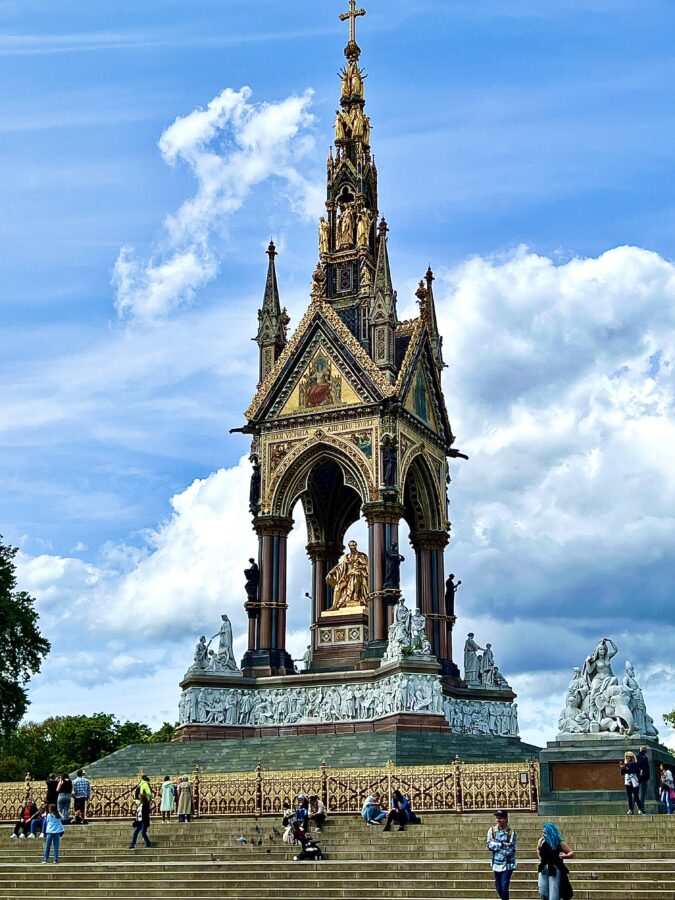
Queen Victoria’s Death and the End of an Era
On 22 January 1901, Queen Victoria died at Osborne House on the Isle of Wight. She was 81 years old and had been Queen for 63 years and 216 days.
Her eldest son, Albert Edward, succeeded her as King Edward VII, bringing the Victorian age to a close and beginning a new chapter in the history of the British monarchy.
For most people living in Britain at the time, Victoria had simply always been there.
She had come to the throne as an eighteen-year-old in 1837, when railways were still transforming the country and photography was in its infancy. By the time she died, Britain had entered the twentieth century. The world around the monarchy had been reshaped by industrialisation, expanding cities, political reform, scientific discovery, new technologies and an empire that had grown enormously during her lifetime.
Victoria herself had changed with it.
The spirited young Queen who had delighted in her independence became a wife and mother, then the black-clad widow who came to embody an age. Few monarchs had occupied the throne long enough to become so closely associated with the world in which their subjects lived.
Her death therefore represented more than the loss of a sovereign.
After more than six decades, the Victorian era was over.
Yet the name Victoria did not disappear with it. More than a century later, her family, her marriage to Prince Albert, her contradictions and the extraordinary changes that unfolded during her reign continue to shape how we remember both the woman and the age that carried her name.

Queen Victoria Facts and Timeline
After following the woman behind the crown, these key Queen Victoria facts place the milestones of her extraordinary life into context. From a princess born at Kensington Palace to a monarch who reigned for more than six decades, this brief Queen Victoria timeline traces the moments that shaped her life.
- 1819 — Victoria is born: Alexandrina Victoria was born at Kensington Palace on 24 May 1819, the daughter of Prince Edward, Duke of Kent, and Princess Victoria of Saxe-Coburg-Saalfeld.
- 1837 — Victoria becomes Queen: Following the death of her uncle, King William IV, Victoria succeeded to the throne on 20 June. She was just 18 years old.
- 1838 — The young Queen is crowned: Victoria’s coronation took place at Westminster Abbey on 28 June 1838.
- 1840 — Victoria marries Prince Albert: Queen Victoria and Prince Albert married at the Chapel Royal, St James’s Palace, on 10 February. Their first child, Victoria, was born later that year.
- 1845 — Osborne becomes their island retreat: Victoria and Albert purchased the Osborne estate on the Isle of Wight, creating the family home Victoria would cherish for the rest of her life.
- 1848 — Victoria and Albert make Balmoral their Highland home: The couple leased Balmoral in Scotland, beginning an enduring royal connection with the estate and the Scottish Highlands.
- 1851 — The Great Exhibition opens: Closely associated with Prince Albert, the Great Exhibition opened at the Crystal Palace in Hyde Park and became one of the defining events of their partnership.
- 1861 — Prince Albert dies: Albert died at Windsor Castle on 14 December, aged 42. His death transformed Victoria’s life and began decades of mourning.
- 1868 — Victoria becomes a published author: Leaves from the Journal of Our Life in the Highlands, from 1848 to 1861 was published, sharing extracts from her life in Scotland with Albert.
- 1876 — Victoria becomes Empress of India: The Royal Titles Act enabled Victoria to adopt the title Empress of India.
- 1887 — Victoria celebrates her Golden Jubilee: Fifty years of her reign were marked with celebrations across Britain and the Empire.
- 1897 — Victoria celebrates her Diamond Jubilee: Sixty years on the throne were celebrated on a remarkable scale, by which time Victoria had become the longest-reigning British monarch in history.
- 1901 — Queen Victoria dies: Victoria died at Osborne House on 22 January 1901, aged 81, after a reign of 63 years and 216 days. Her eldest son succeeded her as King Edward VII.

Queen Victoria’s Legacy — The Woman Behind the Crown
Queen Victoria’s legacy stretches far beyond the length of her reign. Her descendants became entwined with the royal houses of Europe, the constitutional monarchy continued to evolve during her lifetime, and her name became inseparable from an age of extraordinary change and a complicated imperial inheritance.
Yet after following Victoria’s story through this Queen Victoria biography, it is the smaller details that stay with me.
Looking back on that sunny May day at Kensington Palace, on the 200th anniversary of her birth, I remember her handwritten journals, the colourful clothes so different from the familiar widow’s black, and the intimate portrait intended for Albert’s eyes.
And from my later visit to Osborne House, I remember the children’s little wheelbarrows, their initials still connecting them to that family world, and the peaceful view across the water from the island home Victoria loved.
Perhaps those details explain why she continues to fascinate us.
Behind the Queen-Empress was a woman who loved deeply, laughed, argued, lost her temper, worried about her children, cherished particular places and carried profound grief.
The crown made Victoria one of the most recognisable figures in British history. But beyond the crown was someone far more complicated—and far more human.
More than two centuries after her birth, it is those glimpses of the private Victoria that still allow us to meet the woman behind the crown.
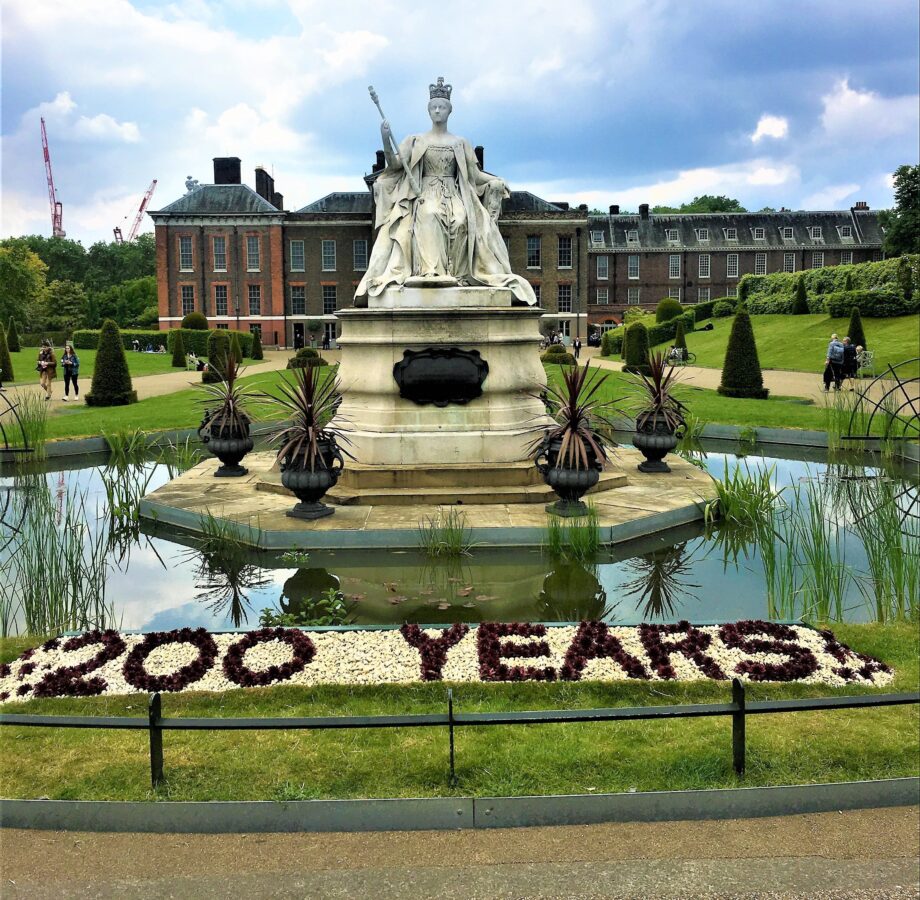
I hope you’ve enjoyed reading this mini biography of Queen Victoria as much as I have enjoyed revisiting her story—perhaps even more. Her life becomes so much richer when we look beyond the crown and familiar black dress to the woman herself.
And there is still another Victoria to meet. Her childhood at Kensington Palace was unusually restricted, sometimes lonely and deeply influential in shaping the strong-willed young woman who became Queen at just eighteen. If you would like to begin where her story truly began, continue with Queen Victoria’s Childhood: The Girl Before the Crown.
Please take a moment…
Before you go, I’m excited to share some news—Timeless Travel Steps was awarded Best Slow Travel & Heritage Travel Blog 2026! Please take a moment to read our story and discover the passion behind our journeys.
For more travel insights and tips, consider following Georgina from Timeless Travel Steps on BlueSky, Instagram, Facebook and Pinterest. Don’t miss out on her latest adventures and expert advice. Subscribe to stay updated and join a community of fellow travel enthusiasts eager to explore the world.
Continue Exploring Britain’s Royal History
If you enjoyed reading about Queen Victoria: The Woman Behind the Crown, you may also like these related guides exploring Britain’s monarchs, royal prisoners and the places where history unfolded.


