
Lady Jane Grey: England’s Nine Days Queen, Execution & Last Words
Lady Jane Grey never dreamed of becoming Queen of England. A gifted Tudor noblewoman, she was just about 17 years old when the weight of a kingdom was placed upon her shoulders. Yet despite being officially proclaimed queen, she is rarely remembered as one. Instead, history knows her as England’s Nine Days Queen. Nine days later, she lost her crown. Months afterwards, she lost her life.
Her path to greatness was heartbreakingly brief. Intelligent, deeply religious and exceptionally well educated, Lady Jane Grey never sought the crown that ultimately sealed her fate. She loved books more than courtly life, scholarship more than power, and her quiet devotion to learning stood in stark contrast to the political ambition that surrounded her.
Her story is both compelling and profoundly moving—a tale of duty, innocence and quiet courage that deserves to be revisited by every generation.
Today, Lady Jane Grey is remembered not only for her brief reign, but also for her tragic execution, her remarkable composure in the face of death and her famous last words, which have echoed through the centuries. She was also one of the three queens imprisoned at the Queen’s House within the Tower of London, where her extraordinary story reached its heartbreaking conclusion.
More than four centuries later, visitors still pause at Tower Green and the Chapel of St Peter ad Vincula, reflecting on the fate of the young queen whose life—and final moments—continue to move people from around the world.
In this guide, you’ll discover who Lady Jane Grey really was, how she became England’s Nine Days Queen, why she was executed, her famous last words, the truth behind the iconic painting of her execution, and the remarkable places where her story continues to live on.
Disclosure
Timeless Travel Steps is supported by our readers. If you purchase through an affiliate link on my site, at no cost to you, I may earn a commission from qualifying purchases. Additionally, Timeless Travel Steps is a participant in the Amazon Services LLC Associates Program. As an Amazon Associate, I earn from qualifying purchases at no extra cost to you. Please read our Disclosure for further information.
Lady Jane Grey at a Glance
Before we explore Lady Jane Grey’s remarkable story, here’s a quick look at the key facts about England’s Nine Days Queen—the young Tudor monarch whose brief reign is often overshadowed by her tragic execution.
|
FACT |
DETAILS |
|---|---|
|
Full name |
Lady Jane Grey (later Lady Jane Dudley after her marriage) |
|
Also known as |
England’s Nine Days Queen |
|
Born |
October 1537, Bradgate Park, Leicestershire, England |
|
Parents |
Henry Grey, 1st Duke of Suffolk, and Lady Frances Brandon |
|
Royal connection |
Great-granddaughter of Henry VII and first cousin once removed of Edward VI |
|
Married |
Lord Guildford Dudley (25 May 1553) |
|
Religion |
Protestant |
|
Became Queen |
10 July 1553 |
|
Length of reign |
Nine days (10–19 July 1553) |
|
Royal title |
Queen of England, France and Ireland |
|
Predecessor |
Edward VI |
|
Successor |
Mary I |
|
Imprisoned |
Tower of London (19 July 1553) |
|
Executed |
12 February 1554, Tower Green, Tower of London |
|
Lady Jane Grey’s age at death |
16 or 17 years old (most historians believe she was 16, although she is traditionally described as 17) |
|
Buried |
Chapel of St Peter ad Vincula, Tower of London, beside her husband, Lord Guildford Dudley |
|
Known for |
England’s Nine Days Queen, whose reign is often overshadowed by her tragic execution, leaving many to forget that she was ever Queen of England. |
Interesting Fact: Although history remembers her as England’s Nine Days Queen, Lady Jane Grey never actively sought the throne. A gifted scholar who loved languages, theology and classical literature, she became queen through the ambitions of others—a decision that ultimately cost her her life.
Who Was Lady Jane Grey?
Before she became England’s Nine Days Queen, Lady Jane Grey was a bright, thoughtful and deeply religious young noblewoman born into one of the most influential families of Tudor England. Although history remembers her for her brief reign and tragic execution, Jane’s story began long before a crown was ever placed upon her head.
A Royal Bloodline
To understand who Lady Jane Grey was, it helps to understand her place within the Tudor family tree.
Lady Jane Grey was born in October 1537 at Bradgate Park in Leicestershire. She was the eldest daughter of Henry Grey, 3rd Marquess of Dorset (later the 1st Duke of Suffolk), and Lady Frances Brandon.
Through her mother, Jane was the great-granddaughter of King Henry VII. Lady Frances Brandon was the daughter of Mary Tudor, Queen of France and the younger sister of King Henry VIII. This made Lady Jane Grey the great-niece of Henry VIII and placed her firmly within the Tudor royal line.
Jane was also the first cousin once removed of King Edward VI, the only legitimate son of Henry VIII. When Edward’s health began to fail in 1553, Jane’s close royal connections unexpectedly transformed her from a highly educated noblewoman into a potential heir to the English throne.
Following her marriage to Lord Guildford Dudley, the younger son of John Dudley, Duke of Northumberland, she also became known as Lady Jane Dudley. Although the marriage strengthened powerful political alliances, it would also draw Jane into the dangerous succession crisis that changed her life forever.
At first glance, Lady Jane Grey’s place in the Tudor family tree may seem like a matter of ancestry alone. In reality, it was the very reason she became caught in one of the greatest political and religious struggles of the sixteenth century.
Jane inherited royal blood, but few could have imagined that it would one day place a crown upon her head—and a death sentence upon her life.

Lady Jane Grey’s Early Life and Education
Long before she became England’s Nine Days Queen, Lady Jane Grey was recognised for something far more remarkable than her royal blood—her brilliant mind.
Jane spent her childhood surrounded by privilege, yet life within the Grey household was far from carefree. As the eldest daughter of Henry Grey, Duke of Suffolk, and Lady Frances Brandon, she received the education expected of a Tudor noblewoman. However, Jane’s intellectual curiosity soon exceeded every expectation.
Jane’s Education
From an early age, Lady Jane Grey displayed an extraordinary gift for learning. Under the guidance of some of the finest tutors of the Tudor period, she became fluent in Latin and Greek while still a child. She later mastered French, Italian and Hebrew, an achievement that few women—and indeed few men—of the sixteenth century could claim.
Her love of languages reflected not only remarkable intelligence but also a genuine passion for scholarship and theology.
Jane’s education shaped every aspect of her character. She became a committed Protestant, immersing herself in Scripture, classical literature and religious debate. Jane did not like sports or hunting parties very much. Rather than seeking the lavish distractions of court life, she preferred the quiet company of books.
Among her favourite authors was the ancient Greek philosopher Plato, whose writings offered the intellectual fulfilment she struggled to find elsewhere.
The English scholar Roger Ascham, who visited Bradgate during Jane’s childhood, left one of the most vivid descriptions of the young noblewoman. Finding her reading Plato while the rest of the household enjoyed a hunting party, he asked why she had chosen to remain indoors. Jane famously replied:
I wist all their sport in the park is but a shadow to that pleasure that I find in Plato. Alas, good folk, they never felt what true pleasure meant.
Lady Jane Grey | Historic Royal Palaces
Her words reveal a young woman whose greatest joy lay not in wealth or status, but in learning—a rare outlook in the Tudor court, where power and influence often mattered far more than knowledge.
Yet Jane’s childhood was not without hardship.
A Glimpse Into Jane’s Strict Upbringing
Despite the privileges of her upbringing, she later described life with her parents as strict and emotionally demanding. In another conversation recorded by Roger Ascham, Jane spoke candidly about the impossible standards expected of her:
“For when I am in the presence either of father or mother, whether I speak, keep silence, sit, stand or go, eat, drink, be merry or sad, be sewing, playing, dancing, or doing anything else, I must do it as it were in such weight, measure and number, even so perfectly as God made the world; or else I am so sharply taunted, so cruelly threatened, yea presently sometimes with pinches, nips and bobs and other ways (which I will not name for the honour I bear them) … that I think myself in hell
Lady Jane Grey | Ives, Eric 2009
Whether every detail reflected daily reality or the emotions of an exceptionally sensitive and intelligent teenager, her words offer a rare glimpse into the pressures faced by one of Tudor England’s most gifted young women.
Looking back, it is impossible not to wonder what life might have held for Jane had she remained simply a scholar. She possessed the intellect to become one of the greatest learned women of her generation.
Instead, history had already begun writing a very different future for the quiet girl who found more happiness in Plato than in the splendour of the Tudor court.
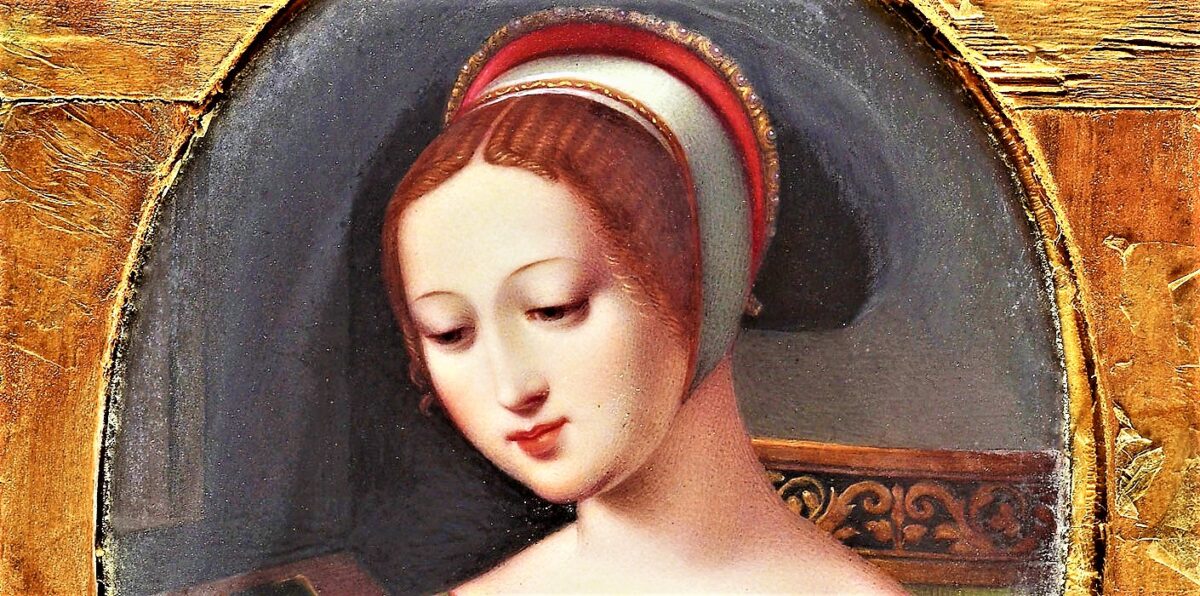
Life at Sudeley Castle
Around February 1547, when Lady Jane Grey was only ten years old, her life took another important turn. Following the death of King Henry VIII, she was sent to live in the household of Queen Catherine Parr, Henry’s sixth and final wife, at Sudeley Castle in Gloucestershire.
For a young noblewoman, this was both an honour and an important stage in her education. During the Tudor period, it was common for children of influential families to be raised for a time in another aristocratic household. There they refined their education, learned court etiquette and formed valuable connections that could shape their future.
Catherine Parr
Jane found an inspiring mentor in Catherine Parr. One of the most educated and influential women of the Tudor age, Catherine shared Jane’s passion for learning and her commitment to the Protestant faith. Living at Sudeley exposed Jane to an environment where scholarship, religion and intellectual discussion flourished—qualities that perfectly suited her own character.
Thomas Seymour
Sudeley was also home to Thomas Seymour, Catherine Parr’s husband and the uncle of the young King Edward VI. After Catherine’s death in September 1548, Jane became Seymour’s ward. Before long, he began exploring the possibility of arranging a marriage between Jane and his royal nephew, Edward VI—a plan that would have united two close Tudor relatives and dramatically strengthened Seymour’s political influence.
The scheme never came to fruition. Thomas Seymour was arrested and executed for treason in 1549, bringing his ambitions to an abrupt end. Jane returned to her family home at Bradgate Park.
Lady Jane Grey at Bradgate and the Tudor Court
When Lady Jane Grey returned to Bradgate, she resumed the studies that remained her greatest passion. Once again, books, languages and theology filled her days, and it seemed her future might continue along the quiet path she had always preferred.
A couple of years later, her father was created Duke of Suffolk, bringing Jane more frequently to the Tudor court. Her exceptional intellect, royal lineage and unwavering Protestant faith soon earned her admiration among some of the kingdom’s most influential figures.
Yet beyond the splendour of court life, England was entering an uncertain and dangerous chapter.her father was created the Duke of Suffolk resulting in a beautiful and talented girl frequenting the royal court.
Among those who recognised Jane’s importance was John Dudley, Duke of Northumberland, the most powerful man in England after King Edward VI.
As the young king’s health steadily declined, Northumberland understood that the question of the Tudor succession would soon dominate the kingdom. Jane’s close royal bloodline and firm Protestant beliefs made her an ideal candidate to advance both his political ambitions and the Protestant cause.
With the agreement of Jane’s father, Northumberland arranged for his eighteen-year-old son, Lord Guildford Dudley, to marry the sixteen-year-old Jane. Historians continue to debate whether he had already envisaged Jane as England’s future queen. Yet it is difficult to ignore how perfectly the marriage positioned the Dudley family at the very heart of the unfolding succession crisis.
For Jane, however, there was little reason to believe that her life was about to change forever. What appeared to be a prestigious dynastic marriage was, in reality, the beginning of a chain of events that would alter the course of English history.
Without realising it, the young scholar had already taken her first steps towards the throne she never wished to claim.

Lady Jane Grey and Guildford Dudley: A Marriage That Changed Everything
By the early 1550s, Lady Jane Grey had grown into one of the most accomplished young women in Tudor England. Her intelligence, royal lineage and unwavering Protestant faith made her an attractive match among England’s most influential noble families. What should have marked the beginning of a happy married life, however, would instead become the opening chapter of one of the greatest succession crises in English history.
The Wedding of Lady Jane Grey and Guildford Dudley
On 25 May 1553, sixteen-year-old Jane married Lord Guildford Dudley, the eighteen-year-old son of John Dudley, Duke of Northumberland, at Durham House in London. The wedding formed part of an elaborate triple marriage ceremony that also united Jane’s sister, Lady Katherine Grey, and Guildford’s sister, Lady Katherine Dudley, with members of England’s leading noble families.
Like most aristocratic marriages of the Tudor period, theirs was arranged to strengthen powerful family alliances rather than for love alone. Such unions were expected to secure influence, preserve dynasties and advance political interests. Few, however, would have imagined just how profoundly this marriage would shape the future of the Tudor monarchy.
“A Wife Who Loves Her Husband”
Despite the political circumstances surrounding their marriage, there are gentle hints that Guildford Dudley and Lady Jane Grey developed genuine affection for one another. Very little survives to reveal the nature of their relationship, yet one touching remark has echoed through history. Jane is recorded as describing herself simply as “a wife who loves her husband.”
Those few words reveal a deeply human side to a young woman so often remembered only as England’s Nine Days Queen. Behind the political manoeuvring, family ambition and religious conflict stood two teenagers beginning married life together, unaware that within weeks they would become prisoners in the Tower of London.
Whether theirs was a political alliance that slowly blossomed into affection or a deeper love that history has only partially preserved, Jane’s own words hint at genuine devotion amid the turmoil surrounding them.
It is one of the quieter tragedies of her story that a marriage which had scarcely begun would end on the scaffold less than a year later.
Why Did Lady Jane Grey Become Queen?
One of the questions most often asked is why Lady Jane Grey became Queen of England. The answer lies in a complex combination of Tudor succession law, religious conflict, political ambition and the failing health of the young King Edward VI.
Jane neither campaigned for the throne nor expected to inherit it. Instead, a remarkable series of political, legal and religious events unfolded during the final months of Edward VI’s reign, placing a reluctant seventeen-year-old at the centre of one of England’s greatest constitutional crises.
Edward VI’s Failing Health
When Edward VI inherited the English throne in 1547, he was only nine years old. As the only legitimate son of Henry VIII, Edward represented the future of the Tudor dynasty and the hopes of England’s growing Protestant movement.
In January 1553, Edward developed a persistent fever and cough, now widely believed to have been caused by tuberculosis. Although he experienced brief periods of recovery, his condition steadily deteriorated throughout the spring. Realising that he was unlikely to survive, the young king became increasingly concerned about who would succeed him.
Under the terms of Henry VIII’s will, the crown would pass first to Edward’s half-sister Mary, followed by Elizabeth if Mary died without heirs. For Edward and many of his Protestant advisers, this prospect was deeply troubling. Mary was a committed Catholic and was expected to reverse the Protestant reforms introduced during Edward’s reign.
Jane, by contrast, was an exceptionally devout Protestant whose scholarship, education and religious convictions closely reflected Edward’s own vision for England’s future.
The succession had suddenly become far more than a question of inheritance. It had become a battle over England’s religious future.
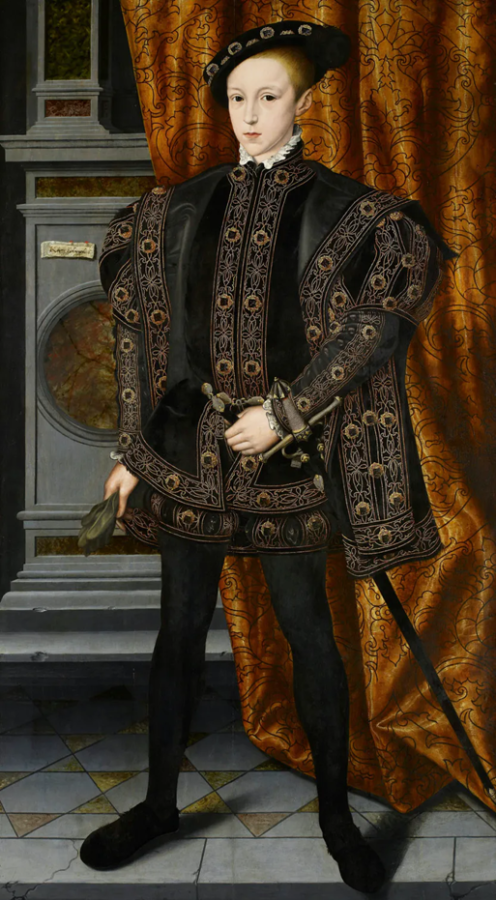
Edward VI’s Device for the Succession
Determined to preserve Protestant rule, Edward began drafting a new succession plan known as the Device for the Succession.
Initially, Edward intended the crown to pass to the future male heirs of his cousin Lady Frances Brandon or her daughters, including Lady Jane Grey. His aim was clear—to ensure that England would continue under a Protestant monarch.
As Edward’s illness worsened during June 1553, however, it became increasingly obvious that there would be no time for Jane or her sisters to produce male heirs.
Faced with this reality, Edward revised the document.
Instead of waiting for future sons, he named Lady Jane Grey herself as his successor. Although Jane would reign as queen, Edward still expected that the crown would eventually pass to her future male heirs, preserving the Tudor dynasty and England’s Protestant settlement.
The revised Device for the Succession received support from leading bishops, judges, peers and members of the Privy Council, giving it an appearance of legal authority, even though it directly challenged Henry VIII’s carefully established succession.
The Third Succession Act Explained
To understand why Edward’s decision proved so controversial, it is important to look back to the Third Succession Act of 1544.
Earlier in Henry VIII’s reign, both Mary and Elizabeth had been declared illegitimate after Henry’s marriages to Catherine of Aragon and Anne Boleyn were declared invalid.
The Third Succession Act restored both daughters to the line of succession, although it did not reverse their legal status as illegitimate. More importantly, the Act gave Henry VIII the authority to determine the future succession through his will.
Henry exercised that right by placing Edward first, followed by Mary, Elizabeth and then the descendants of his younger sister, Mary Tudor, Queen of France.
Lady Jane Grey’s mother, Lady Frances Brandon, stood ahead of Jane in this line of succession. Curiously, however, Edward’s Device for the Succession bypassed Frances almost entirely in favour of her eldest daughter.
This conflict between Henry VIII’s will and Edward VI’s Device for the Succession lay at the heart of the constitutional crisis that followed Edward’s death.
Northumberland’s Grand Plan
It is impossible to discuss Lady Jane Grey’s accession without considering the influence of John Dudley, Duke of Northumberland.
As Edward VI’s chief minister and one of the kingdom’s most experienced statesmen, Northumberland had devoted years to supporting Protestant reform. If Mary became queen, much of that work—and his own political influence—would almost certainly disappear.
His son’s marriage to Lady Jane Grey placed the Dudley family in an extraordinarily advantageous position should Jane inherit the throne.
One can’t help but think that this is all part of a grand masterplan by John Dudley, Duke of Northumberland who was also the Lord Protector to Edward VI, as a carefully calculated political strategy to securing the Dudley family’s influence at the very centre of Tudor government. Afterall, he did marry-off his son with young Lady Jane.
Whether Northumberland genuinely believed he was protecting England’s Protestant future, safeguarding his own position or pursuing both goals at once remains a question historians continue to debate.
While powerful men debated crowns, succession and religion, Jane remained the thoughtful young scholar she had always been. Yet events far beyond her control were gathering pace. The crown she had never sought was now moving inexorably towards her, bringing with it a destiny that would change her life—and Tudor history—forever.
How Did Lady Jane Grey Become England’s Nine Days Queen?
By the summer of 1553, the fate of the Tudor dynasty rested on the failing health of the young King Edward VI. As his condition deteriorated, preparations quietly began for a succession that would change the course of English history.
King Edward VI died on 6 July 1553 at the age of just fifteen. Fearing that Mary Tudor might immediately claim the throne, his death was deliberately kept secret for several days while supporters of the Device for the Succession worked behind the scenes to secure Lady Jane Grey’s accession.
On 9 July, Jane was summoned to Syon House, where members of the Privy Council informed her that Edward had died and that, under his Device for the Succession, she was now Queen of England.
According to contemporary accounts, Jane was overwhelmed by the news. Rather than celebrating, she is said to have burst into tears and initially refused the crown, insisting that the rightful succession belonged elsewhere. Only after considerable persuasion from her family and the assembled councillors did she reluctantly accept what she believed to be God’s will.
The following day, 10 July 1553, Lady Jane Grey was officially proclaimed Queen of England, France and Ireland. Although history remembers her simply as England’s Nine Days Queen, there was nothing symbolic about her accession. She was publicly proclaimed, recognised by the Privy Council and acknowledged by many of the kingdom’s leading nobles and bishops.
Following Tudor tradition, Jane travelled to the Tower of London, where newly proclaimed monarchs customarily resided before their coronation. Within its formidable walls, preparations began for the ceremonies that would formally crown the young queen.
For a brief moment, it seemed that England had accepted its new monarch.
Yet beyond the Tower walls, events were already moving in a very different direction.
Jane entered the Tower as England’s queen, expecting a coronation. Within days, those same walls would become her prison.

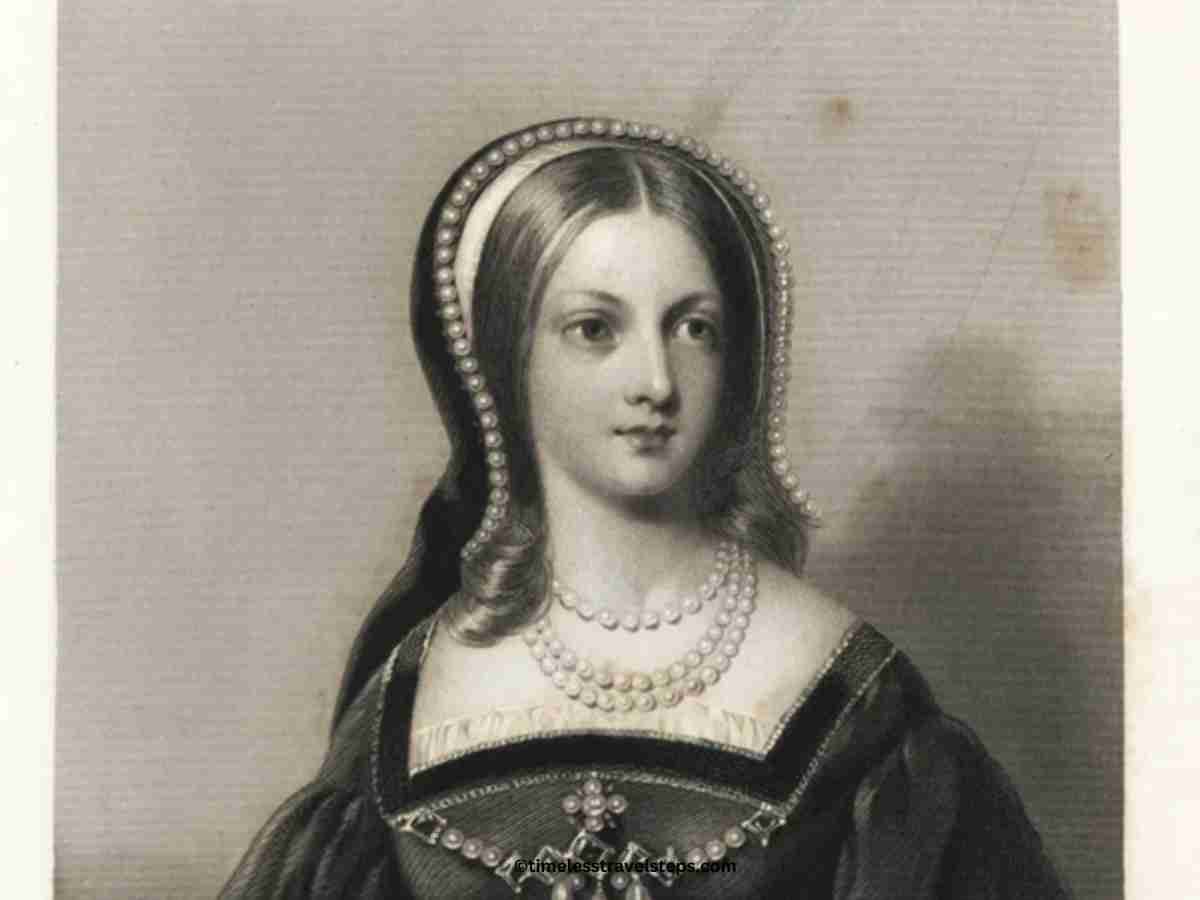
Her headdress was white, heavily decorated with jewels, and on her neck a chinclout (a type of scarf) ‘of black velvet, striped with small chains of gold, garnished with small pearls, small rubies and small diamonds … furred with sables and having thereat a chain of gold enamelled green, garnished with certain pearls.’ | Lady Jane Grey (1536-54) after a painting by Herbert Norris, © Lebrecht Music & Arts/Alamy Stock Photo
Nine Days as Queen of England
Although Lady Jane Grey reigned for only nine days, her time as Queen of England was far from symbolic. Once she reluctantly accepted the crown, she carried out the duties expected of a Tudor monarch with quiet dignity and determination.
Rather than retreating from responsibility, the seventeen-year-old immersed herself in the business of government, despite knowing that the kingdom around her was deeply divided.
Jane attended meetings of the Privy Council, received official business and considered matters of state. Surviving records show that she signed official documents using the royal style “Jane the Quene”, a poignant reminder that, however brief her reign, she exercised the authority of a reigning queen.
One of the clearest examples of Lady Jane Grey’s independence concerned her husband, Guildford Dudley. While the Dudley family expected Guildford to be proclaimed king, Jane is reported to have refused. She was prepared to grant him the title of Duke of Clarence, but maintained that only Parliament had the authority to make him king.
Her decision reportedly caused tension within the Dudley family and revealed a young queen determined to uphold constitutional custom rather than simply yield to political pressure.
Lady Jane Grey may have worn the crown for only nine days, but during that brief reign she proved herself far more than a reluctant figurehead. She ruled with humility, conscience and quiet resolve. Yet beyond the walls of the Tower of London, support for Mary Tudor was gathering strength, and the fate of England’s young queen was about to change forever.

Why Was Lady Jane Grey Imprisoned?
Although Lady Jane Grey had been proclaimed Queen of England, her reign rested upon fragile political foundations.
Almost immediately after Edward VI’s death became public knowledge, Mary Tudor, the eldest daughter of Henry VIII, fled to East Anglia, where she began gathering supporters. Many English nobles believed that, regardless of Edward’s wishes, Henry VIII’s will and the Third Succession Act made Mary the rightful heir to the throne.
Support for Mary grew with astonishing speed. Catholics rallied behind her claim, while many Protestants also hesitated to support Jane, fearing that Edward VI’s Device for the Succession lacked a firm legal foundation.
Meanwhile, John Dudley, Duke of Northumberland, marched from London with an army in an attempt to intercept Mary before her support became overwhelming. His campaign failed. As Mary’s following continued to grow, confidence in Jane’s government rapidly crumbled.
Realising that the political tide had turned, the Privy Council abandoned Jane and proclaimed Mary queen. On 19 July 1553, just nine days after Jane had been proclaimed Queen of England, Mary I was recognised as the rightful monarch.
Lady Jane Grey’s reign — Jane the Quene — was over — just like that.
Jane offered no resistance. There was no battle for the throne and no desperate attempt to cling to power. Instead, she quietly surrendered the crown she had never sought.
She was arrested within the Tower of London, the very fortress she had entered only days earlier as England’s sovereign. Her husband, Guildford Dudley, was imprisoned separately in the Beauchamp Tower, while Jane was confined in the former royal apartments now known as the Queen’s House, under the care of the Gentleman Gaoler.
Although Guildford and Jane were now prisoners, there was still hope that their lives might be spared. Few could have imagined that the events of the following months would ultimately lead them both to the scaffold.
The crown Jane had worn for only nine days had vanished almost as quickly as it had appeared. The Tower that had welcomed her as England’s queen had become her prison.
The Trial of Lady Jane Grey and Guildford Dudley
On 13 November 1553, Lady Jane Grey and her husband, Guildford Dudley, were brought before a special commission at Guildhall, London, to stand trial for high treason. Also tried that day was Archbishop Thomas Cranmer, who had supported Edward VI’s plans for the Protestant succession.
The charges against Jane were not based on violence or rebellion. She had not raised an army, plotted against Queen Mary I, or attempted to reclaim the throne after her deposition. Instead, under Tudor law, the act of accepting the crown, allowing herself to be proclaimed queen and exercising the authority of a reigning monarch amounted to treason against the lawful sovereign.
During her brief reign, Jane had carried out the duties expected of a monarch. She met with the Privy Council, considered matters of state and signed official documents using the royal style “Jane the Quene.” Those actions, performed during her nine days as Queen of England, became powerful evidence that she had exercised royal authority in place of Mary Tudor.
The outcome of the trial was never seriously in doubt. Jane and Guildford were both found guilty of high treason and sentenced to death. Under the law, Guildford faced the brutal punishment reserved for male traitors, while Jane was condemned to die by burning or beheading. Queen Mary later commuted Jane’s sentence to beheading, sparing her a far more horrific fate.
Despite the guilty verdict, the sentence was not carried out immediately. Mary recognised that the seventeen-year-old queen had been swept into events largely orchestrated by others, and there was little appetite for making a martyr of such a young woman.
Although both Lady Jane Grey and Guildford Dudley had been condemned to death, the sentence remained suspended. For the young queen and her husband, there was still reason to hope that mercy might prevail.
Why Was Lady Jane Grey Executed?
One of the questions most frequently asked about the Tudor period is why Lady Jane Grey was executed. At first glance, the answer seems straightforward—she had been proclaimed Queen of England. Yet the truth is far more complex.
Jane did not seek the crown, raise an army or attempt to seize power. Instead, she became the unwilling centre of a political and religious crisis that placed her life in danger.
Queen Mary I Shows Mercy
Despite the guilty verdict, Queen Mary I did not immediately order Lady Jane Grey’s execution. Although Jane had been convicted of high treason, Mary appears to have regarded her less as a determined rival and more as a young woman caught up in the ambitions of others.
Only seventeen years old, Jane had neither sought the crown nor attempted to fight to reclaim it after Mary’s accession. She surrendered peacefully when her nine-day reign came to an end and accepted her imprisonment within the Tower of London.
Contemporary accounts suggest that Mary recognised the difference between those who had engineered the succession crisis and the reluctant teenager who had become its unwilling figurehead.
For the time being, Jane remained a prisoner in the Tower while her death sentence was left unfulfilled. Mary hoped that, provided no further threats emerged against her reign, there might never be any need to carry it out.
There was even cautious optimism among some of Jane’s family and supporters that the young queen might eventually receive a royal pardon. Had events taken a different course, history might have remembered Lady Jane Grey not as the tragic Nine Days Queen who died on the scaffold, but as the young woman whose life had been spared.
For several months, it seemed entirely possible that Lady Jane Grey would spend the rest of her life as a prisoner rather than become one of the most tragic figures of the Tudor age.
Wyatt’s Rebellion Changes Everything
That hope vanished in January 1554.
Soon after her accession, Queen Mary I announced her intention to marry Philip of Spain, heir to the Spanish throne. The proposed marriage proved deeply unpopular. Many feared that England would fall under Spanish influence, while Protestant leaders saw it as a threat to the religious reforms established during the reign of Edward VI.
The growing unrest culminated in Wyatt’s Rebellion, led by Sir Thomas Wyatt the Younger. The rebels hoped to prevent the Spanish marriage and, for many of them, replace Mary with Lady Jane Grey, whose Protestant faith made her a powerful alternative to the Catholic queen.
Jane herself played no part in the rebellion. She remained imprisoned within the Tower of London, isolated from the events unfolding beyond its walls. There is no evidence that she encouraged, supported or even knew of the conspiracy before it began.
Yet her innocence no longer mattered.
As long as Lady Jane Grey lived, her royal blood and legitimate Tudor lineage meant she could continue to serve as a rallying point for those determined to overthrow Mary. Every future rebellion could be fought in Jane’s name, whether she wished it or not.
Wyatt’s Rebellion was eventually crushed, but it changed everything. Faced with the prospect of further uprisings, Queen Mary I reluctantly concluded that she could no longer leave Jane alive. The young queen’s death sentence, suspended for almost three months, would now be carried out.
History has often judged Mary’s decision harshly. Yet many historians believe it was driven less by personal vengeance than by political necessity. Jane had become an innocent casualty of England’s bitter struggle over religion, succession and power.
Lady Jane Grey had committed no act of violence. Yet her very existence remained a threat to the Tudor crown. The crown she had never sought had become the reason she could no longer be allowed to live.
Lady Jane Grey and Guildford Dudley’s Final Hours
The final days of Lady Jane Grey and Guildford Dudley reveal the deeply personal tragedy behind one of the most heartbreaking episodes of Tudor history. Until this moment, Jane’s story had been shaped by crowns, succession and political ambition. Now, behind the walls of the Tower of London, it became the story of two young people facing a fate neither had chosen.
Jane and Guildford had been married for less than a year. They had entered marriage surrounded by expectations of family influence and political promise, never knowing that the same ambitions that brought them together would ultimately lead them both to the scaffold.
Guildford’s Last Walk
On the morning of 12 February 1554, Guildford Dudley was taken from the Beauchamp Tower to face execution at Tower Hill.
Unlike Jane, who was granted a private execution within the Tower precincts, Guildford’s execution took place publicly. As the son of the powerful Duke of Northumberland, his downfall was a dramatic reminder of how quickly fortunes could change in Tudor England.
The young man who had once stood at the centre of royal ambition was now a condemned traitor walking towards death.
According to contemporary accounts, Guildford was calm as he made his final journey. His execution took place shortly before Jane’s, leaving her to face the same fate later that day at Tower Green.

Jane and Guildford: Their Last Farewell
One of the most poignant stories from Lady Jane Grey’s final hours concerns a possible farewell between Jane and Guildford before their executions.
Tradition holds that Guildford requested permission to see Jane one last time before his death. However, historians remain divided over whether this meeting actually took place. Some later accounts suggest that Jane declined, not because she had ceased to love her husband, but because she feared the emotional pain would make their final separation even harder to bear.
Other interpretations suggest that the couple may have exchanged words from their respective prison apartments or through messengers within the Tower.
Whatever the truth, the tragedy remains the same. Two teenagers, married in a political alliance only months earlier, found themselves facing death together.
Jane had once described herself as “a wife who loves her husband”—a rare glimpse into the private feelings of a young woman often remembered only as a failed queen. Behind the political crisis was a marriage that had barely begun, yet ended in unimaginable sorrow.
The Passing Cart
Perhaps the most haunting moment of Lady Jane Grey’s final hours came shortly before her own execution.
According to later accounts, as Guildford’s body was returned from Tower Hill, Jane saw the passing cart carrying the remains of her husband from the Tower windows.
The sight must have brought the full reality of what awaited her into sharp focus.
The young scholar who had loved books more than courtly life, the reluctant queen who had never sought the crown, now knew there would be no last-minute rescue.
As the cart passed beneath the Tower walls carrying Guildford Dudley’s lifeless body, Jane knew there would be no miracle. The young husband she had married less than a year earlier had gone before her. Soon, she would follow.
Within hours, Lady Jane Grey’s execution would take place on Tower Green, bringing an end to the life of England’s Nine Days Queen.
Lady Jane Grey’s Execution: Death and Last Words
On 12 February 1554, the short and tragic life of Lady Jane Grey came to an end within the walls of the Tower of London.
Her husband, Guildford Dudley, was dead
Jane was only 16 or 17 years old.
Yet the final moments of Jane’s life are remembered not only for their tragedy, but for the remarkable dignity, faith and composure with which the young queen faced her death.
The same fortress that had welcomed her as England’s queen only months earlier would now witness the final chapter of her extraordinary story.
Lady Jane Grey’s Final Walk to Tower Green
Unlike Guildford, who had been executed publicly at Tower Hill earlier that day, Jane was granted a private execution within the Tower precincts. Her death took place on Tower Green, close to the royal apartments where she had once waited for a coronation that never came.
Dressed in black, Jane walked towards the scaffold accompanied by her ladies and religious attendants. According to contemporary accounts, she carried her prayer book and read from Psalm 51, a passage reflecting repentance, faith and a plea for God’s mercy.
She then addressed those gathered to witness her execution, acknowledging her role in the events that had led to her downfall while declaring her innocence before God.
Good people, I am come hither to die, and by a law I am condemned to the same; the fact indeed against the Queen’s Highness was unlawful and the consenting thereunto by me… I do wash my hands thereof in innocency before the face of God and the face of you good Christian people this day.
Anonymous (1997) [1850]. “1554, The Execution of Lady Jane Grey and Lord Guildford Dudley”. In Nichols, John Gough (ed.) The Chronicle of Queen Jane and of Two years of Queen Mary, the Camden Society; Marilee Hanson
Lady Jane then gave her gloves and handkerchief to one of her ladies, her prayer book to the Lieutenant of the Tower, her gown, headdress and collar to her ladies.
She asked her executioner to ‘dispatch of her’ quickly, and she tied a blindfold around her eyes.
She scrambled blindly for the block, panic overtook her, and she cried, ‘What shall I do? Where is it?’
Someone helped her find her way, and she laid her head on the block and said her last words:
‘Lord, into thy hands I commend my spirit’
The axe fell.
Jane the Quene.
England’s Nine Days Queen.
October 1537 – 12 February 1554.

Where Is Lady Jane Grey Buried?
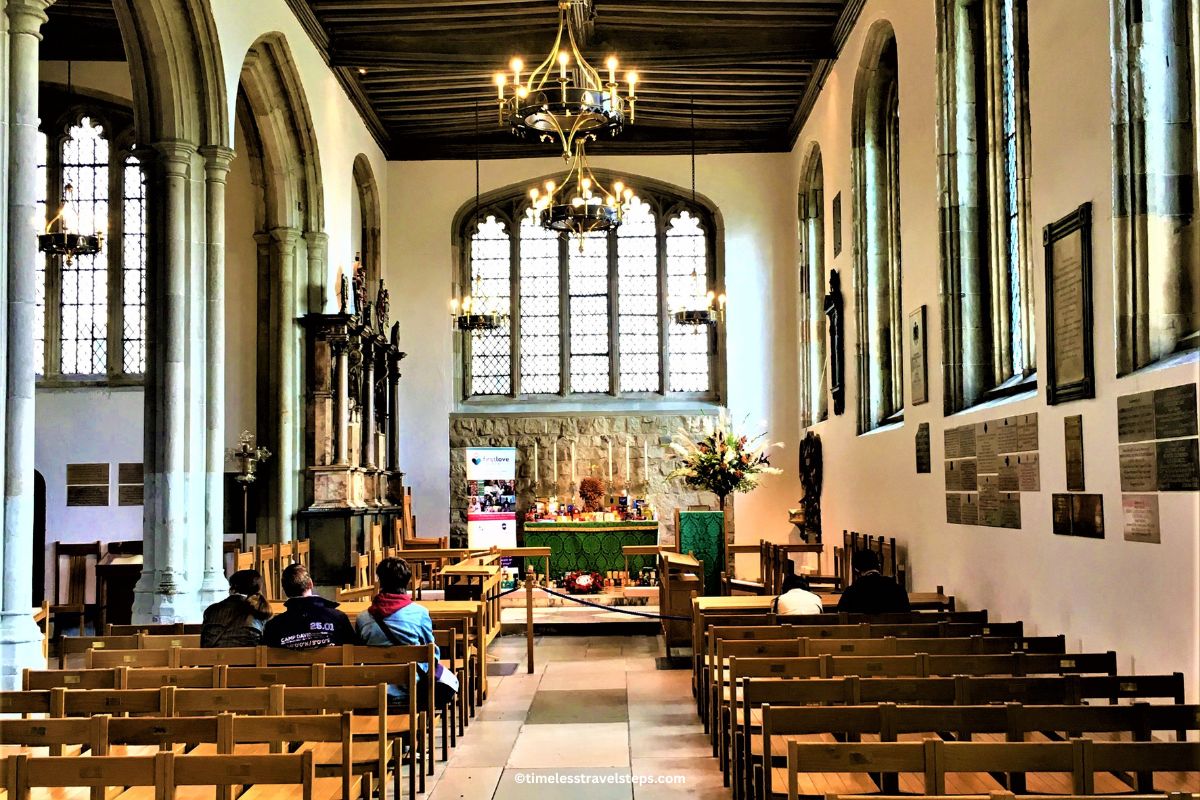
Following her execution on Tower Green on 12 February 1554, Lady Jane Grey was buried within the Tower of London, in the Chapel of St Peter ad Vincula.
Her final resting place lies beside many other figures from the Tudor court who met tragic ends, including Anne Boleyn and Catherine Howard, two of Henry VIII’s queens. Although Jane had worn the crown of England for only nine days, she was buried within the same royal fortress where she had once entered as a queen awaiting her coronation.
Today, the Chapel of St Peter ad Vincula remains one of the most poignant places connected with Lady Jane Grey’s story. Within its walls rests the young queen whose brief reign, tragic execution and remarkable courage have continued to capture the imagination for more than four centuries.
The Famous Lady Jane Grey Execution Painting: Art, Myth and Memory
Few images from Tudor history are as instantly recognisable as the Lady Jane Grey execution painting. For generations, the image of a blindfolded young queen reaching towards the execution block has shaped how people imagine the final moments of England’s Nine Days Queen.
Painted almost three centuries after Jane’s death, The Execution of Lady Jane Grey does not record an eyewitness account. Instead, it reflects the deep fascination and sympathy that later generations felt towards a young woman whose life had been transformed by politics, religion and ambition.
The painting has become inseparable from Lady Jane Grey’s story — a powerful reminder that history is not only remembered through documents and events, but also through the images that capture the emotions of the past.

The Painting That Defined Lady Jane Grey’s Story
Painted in 1833, The Execution of Lady Jane Grey was painted by the French artist Paul Delaroche during the Romantic period, when artists often explored dramatic moments from history through powerful emotional scenes.
The painting depicts Jane at Tower Green, moments before her execution on 12 February 1554. Blindfolded and dressed in white, she reaches towards the block while two attendants support her — one guiding her hand, the other preparing her for the final moment.
The scene captures the vulnerability and innocence of a young queen facing death, and it has become one of the most enduring representations of Lady Jane Grey’s tragic fate.
Yet the painting was created nearly 280 years after Jane’s execution. It was not painted from memory or eyewitness observation, but from historical accounts and the artist’s own interpretation of the event.
For millions of people around the world, this painting has become the face of Lady Jane Grey’s final moments.
Yet the scene that appears so real was created centuries after her death — a reminder that history is shaped not only by what happened, but also by how later generations choose to remember it.
How Accurate Is the Lady Jane Grey Execution Painting?
The painting contains elements that reflect traditional accounts of Jane’s execution.
Lady Jane Grey was indeed executed at Tower Green, within the Tower of London precincts, rather than at the public execution site of Tower Hill. Accounts describe her as wearing dark clothing, praying from her prayer book and being blindfolded before approaching the block.
Some contemporary accounts also describe Jane struggling to find the execution block after her eyes were covered, crying out for help before being guided towards it. It is this heartbreaking moment that Delaroche chose to portray.
However, many details of the painting are artistic interpretation rather than historical certainty.
The white gown, the dramatic lighting, the carefully arranged figures and the expressions of grief surrounding Jane were deliberate choices designed to heighten the emotional impact. The painting reflects Victorian romanticism, presenting Jane as a symbol of innocence, courage and tragic sacrifice.
The painting does not show us exactly what Lady Jane Grey saw on that February morning in 1554. Instead, it reveals how later generations felt about her tragedy.
Lady Jane Grey’s Legacy
Although Lady Jane Grey reigned for only nine days, her legacy has endured for more than four centuries. In the years following her execution, she came to be remembered by many Protestants as a Protestant martyr—a young woman whose faith and principles had drawn her into one of the greatest succession crises of the Tudor age.
During the Victorian period, interest in Lady Jane Grey was revived through biographies, novels, plays, operas and works of art. Among the most famous is The Execution of Lady Jane Grey, painted in 1833 by Paul Delaroche. Although created nearly 280 years after her death, the painting has become the defining image of England’s Nine Days Queen and introduced her story to millions around the world.
Visitors to the Beauchamp Tower can still see poignant reminders of the Dudley family’s imprisonment. To the right of the fireplace, a finely carved Dudley coat of arms is cut deep into the stone wall, thought by some historians to have been created by Guildford Dudley or his brother, Robert, during their captivity in the Tower.
Across the fireplace is another moving inscription simply reading “IANE”—the Tudor spelling of Jane. Standing before these centuries-old carvings offers a powerful reminder that behind the politics and pageantry of the Tudor court were real people whose lives were forever changed by the struggle for the English crown.
Her story grew to legendary proportions in popular culture, producing romantic biographies, novels, plays, operas, and films.
Today, Lady Jane Grey is often described as England’s forgotten queen. Overshadowed by the reigns of Henry VIII, Mary I and Elizabeth I, her story is sometimes overlooked despite its importance in Tudor history. Yet her brief reign, tragic execution and extraordinary courage continue to inspire historians, authors and visitors exploring the places connected with her life.
Although her reign lasted only nine days, Lady Jane Grey’s courage ensured she would be remembered for far longer. The young queen who never sought power became one of the Tudor period’s most enduring and poignant figures.
Lady Jane Grey Timeline
This timeline highlights the key events in Lady Jane Grey’s life, from her birth at Bradgate Park to her brief reign as England’s Nine Days Queen and her execution at the Tower of London.
|
DATE |
EVENT |
|---|---|
|
October 1537 |
Born at Bradgate Park, Leicestershire |
|
February 1547 |
Joined the household of Catherine Parr at Sudeley Castle |
|
May 1553 |
May 1553 Married Lord Guildford Dudley |
|
6 July 1553 |
Edward VI died |
|
9 July 1553 |
Jane informed she was queen |
|
10 July 1553 |
Proclaimed Queen of England |
|
19 July 1553 |
Mary I proclaimed queen; Jane imprisoned |
|
13 November 1553 |
Trial at Guildhall |
|
January 1554 |
Wyatt’s Rebellion |
|
12 February 1554 |
Executed at Tower Green |
Essential Facts About Lady Jane Grey
Although Lady Jane Grey ruled England for just nine days, her life is filled with remarkable stories and little-known facts that continue to fascinate historians and visitors alike.
- Lady Jane Grey was only sixteen or seventeen years old when she was executed at the Tower of London on 12 February 1554.
- She ruled England for just nine days, earning the title England’s Nine Days Queen, making her one of the shortest-reigning monarchs in English history.
- Lady Jane Grey never expected to become queen. A gifted scholar, she preferred a quiet life devoted to books, learning and her Protestant faith.
- She received one of the finest educations of any Tudor noblewoman, becoming fluent in Greek, Latin, French, Italian and Hebrew while still a teenager.
- Jane loved classical learning, famously telling her tutor, Roger Ascham, that she found greater pleasure reading Plato than joining courtly sports and hunting parties.
- During her brief reign, she signed official documents as “Jane the Quene,” demonstrating that she carried out the duties of a reigning monarch despite her reluctance to accept the crown.
- She refused to make her husband, Lord Guildford Dudley, king, believing that only Parliament could lawfully grant him that title.
- Lady Jane Grey was buried in the Chapel of St Peter ad Vincula within the Tower of London, where several other notable Tudor figures, including Anne Boleyn and Catherine Howard, also rest.
- Her tragic story inspired one of the world’s most famous historical paintings—The Execution of Lady Jane Grey by Paul Delaroche—which introduced her story to generations around the world.
- Although officially proclaimed Queen of England, France and Ireland, Lady Jane Grey has often been described as England’s forgotten queen, overshadowed by the reigns of Mary I and Elizabeth I despite the profound impact of her story.
Can You Visit Places Connected to Lady Jane Grey?
From her childhood home to the Tower where she spent her final months, these historic sites offer a poignant glimpse into the life of England’s Nine Days Queen.
- Bradgate Park — Lady Jane Grey’s childhood home. Although Bradgate House is now a romantic ruin, visitors can explore the estate where Jane spent her early years immersed in books, languages and learning.
- Sudeley Castle — Following the death of Henry VIII, Jane lived in the household of Queen Catherine Parr and Thomas Seymour. It was here that she continued her education and experienced life at one of Tudor England’s most influential households.
- Tower of London — The most significant place in Lady Jane Grey’s story. Jane entered the Tower as England’s newly proclaimed queen in July 1553, expecting her coronation. Within days, she became its prisoner, was later tried for treason and was executed on Tower Green on 12 February 1554.
- Beauchamp Tower — Guildford Dudley was imprisoned here after Jane’s deposition. Visitors can still see the Dudley coat of arms carved into the stone beside the fireplace and the moving inscription “IANE”, believed to commemorate Jane.
- Chapel of St Peter ad Vincula — Lady Jane Grey and Guildford Dudley were buried beneath the chapel floor following their executions. Today, it remains one of the most moving places to visit within the Tower of London and is also the final resting place of Anne Boleyn, Catherine Howard and other notable Tudor figures.
Best Books About Lady Jane Grey: From Biography to Historical Fiction
Whether you’re looking for a scholarly biography or an engaging introduction to England’s Nine Days Queen, these books are among the most highly regarded works on Lady Jane Grey.
- Lady Jane Grey: A Tudor Mystery — Eric Ives
- The definitive academic biography and widely regarded as the standard work on Lady Jane Grey.
- Crown of Blood: The Deadly Inheritance of Lady Jane Grey — Nicola Tallis
- A highly readable modern biography that brings Jane and the Tudor court vividly to life.
- The Nine-Day Queen of England: Lady Jane Grey — Faith Cook
- Explores Jane’s life through the lens of her Protestant faith and personal convictions.
- Innocent Traitor — Alison Weir (Historical Fiction)
- A well-researched novel imagining Jane’s life through multiple perspectives.
- The Nine Days Queen — Ann Rinaldi (Historical Fiction/Young Adult)
- A popular fictional retelling that introduces younger readers to Jane’s story.
Lady Jane Grey in Film and Television
Lady Jane Grey’s tragic story has inspired filmmakers and television producers for decades, introducing England’s Nine Days Queen to new audiences around the world.
- Lady Jane (1986) — A historical drama starring Helena Bonham Carter and Cary Elwes, focusing on Jane’s relationship with Guildford Dudley and the political events leading to her execution.
- Becoming Elizabeth (2022) — A historical television drama exploring the turbulent years following Henry VIII’s death, including Lady Jane Grey’s place within the Tudor succession.
- The Tudors — Although Lady Jane Grey does not play a major role, the series provides valuable background to the Tudor dynasty and the political tensions that eventually shaped her fate.
- BBC documentaries and historical programmes regularly examine Lady Jane Grey’s brief reign, execution and enduring legacy as one of Tudor England’s most compelling figures.
Questions Readers Still Ask About Lady Jane Grey
Why is Lady Jane Grey known as the Nine Days Queen?
Lady Jane Grey is known as England’s Nine Days Queen because she was proclaimed Queen of England on 10 July 1553 and deposed on 19 July 1553. Although her reign lasted only nine days, she was officially recognised by the Privy Council and carried out the duties of a reigning monarch before Mary I claimed the throne.
Was Lady Jane Grey officially crowned?
No. Although Lady Jane Grey was proclaimed Queen of England, France and Ireland and took up residence in the Tower of London in preparation for her coronation, she was deposed before the ceremony could take place.
Was Lady Jane Grey related to Henry VIII?
Yes. Lady Jane Grey was the great-granddaughter of Henry VII through his younger daughter, Mary Tudor, Queen of France, making her Henry VIII’s great-niece and giving her a legitimate claim to the Tudor throne.
Did Lady Jane Grey have any children?
No. Lady Jane Grey and her husband, Lord Guildford Dudley, were married for less than a year and had no children.
What were Lady Jane Grey’s last words?
Lady Jane Grey’s final recorded words before her execution were:
“Lord, into thy hands I commend my spirit.”
They reflected her deep Protestant faith and remarkable composure as she prepared to meet her death at Tower Green on 12 February 1554.
Did Queen Mary I regret executing Lady Jane Grey?
There is no conclusive evidence that Queen Mary I publicly expressed regret. However, Mary initially spared Jane’s life after her conviction for high treason and only authorised the execution following Wyatt’s Rebellion in 1554, when Jane’s continued existence was seen as a threat to the stability of the Tudor crown.
Remembering Lady Jane Grey
Lady Jane Grey never sought power. She sought books, learning and a quiet life of faith. Yet history placed a crown upon her head.
More than four centuries later, England’s Nine Days Queen continues to captivate historians and visitors alike. Her brief reign, tragic fate and remarkable courage have secured her place as one of the most poignant figures of the Tudor period.
Perhaps that is Lady Jane Grey’s greatest legacy. She may have been England’s forgotten queen, but she will never be forgotten by history.
For more travel insights and tips, consider following Georgina from Timeless Travel Steps on BlueSky, Instagram, Facebook and Pinterest. Don’t miss out on her latest adventures and expert advice. Subscribe to stay updated and join a community of fellow travel enthusiasts eager to explore the world.
Continue Exploring Britain’s Royal History
If you enjoyed the story of Lady Jane Grey, you may also like these related guides exploring Britain’s monarchs, royal prisoners and the places where history unfolded.


I agree, this part of English history is so difficult to comprehend and beyond believe! I’ve always wanted to know more and time has afforded me to do so now. I feel compel to share, to add value to one’s visit to London Fortress. Thank you so much for reading Lady Jane Grey The Forgotten Queen and for sharing your thoughts. Much appreciated
The forgotten Queen is such a good way to describe her. This is part of history I always struggle with because of all that happened but mum loved it and ensured we were taught some. Your knowledge and interest shine though in the blog.