
Christmas Pudding History: Medieval Feasts, Missing Plums & Royal Tables
Christmas pudding history is full of surprises, but perhaps the greatest mystery lies in its old-fashioned name. Why is Christmas pudding called plum pudding when there are no plums in it?
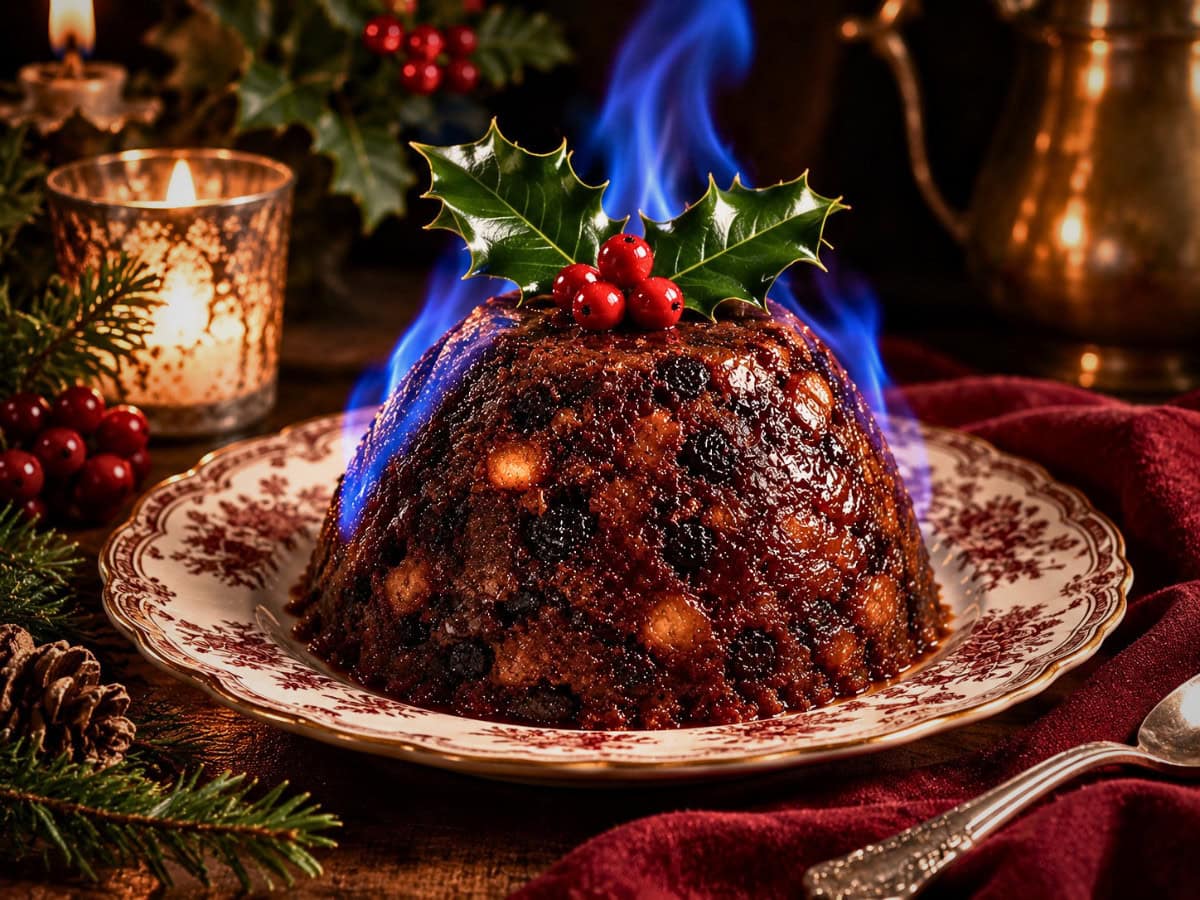
For generations, this rich, fruit-filled pudding has been a familiar part of British Christmas celebrations. Traditionally brought to the table with a sprig of holly and flaming brandy, its flickering blue flames create a dramatic spectacle at Christmas dinner.
Yet the pudding we know today has a rather unexpected past. Its story begins in medieval England, when cooks combined meat, dried fruit and expensive spices to create dishes far removed from our modern Christmas dessert.
Over the centuries, plum pudding became entangled in England’s religious upheavals, acquired a curious royal legend and found a special place in Victorian Christmas celebrations. It even became a symbol of the British Empire under King George V.
But how did a medieval dish become one of Britain’s most enduring Christmas traditions? And what happened to those mysterious plums?
To discover the answer, we must travel back through centuries of British food history, royal traditions and Christmas celebrations.
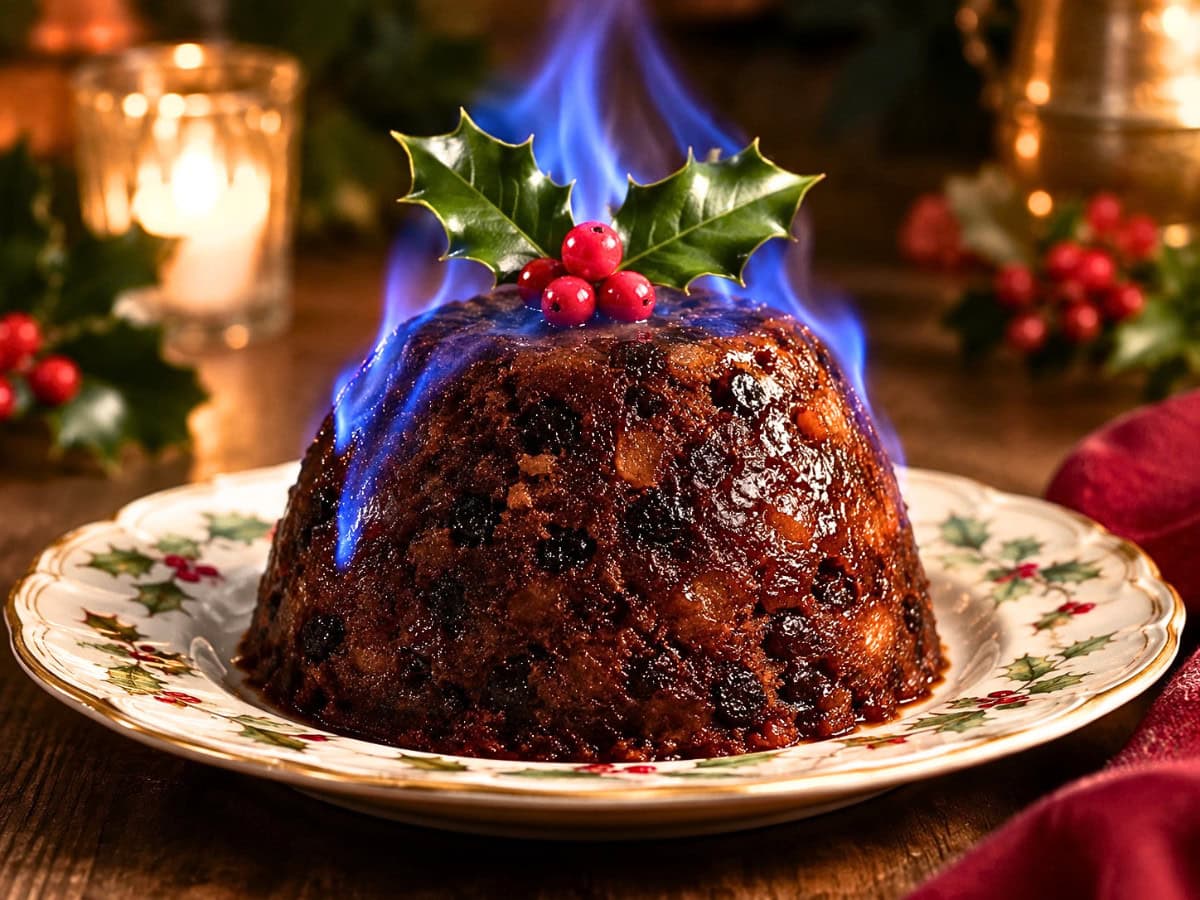
Why Is Christmas Pudding Called Plum Pudding When There Are No Plums?
The answer lies in the changing meaning of the word plum.
In medieval England, the word did not always refer to the fresh, juicy fruit we know today. It could also describe dried fruits, particularly raisins and currants, which were widely used in traditional cooking.
This explains why old recipes for plum pudding contain generous quantities of dried fruit but no fresh plums.
In fact, the name survived long after the ingredients and methods of preparation had changed.
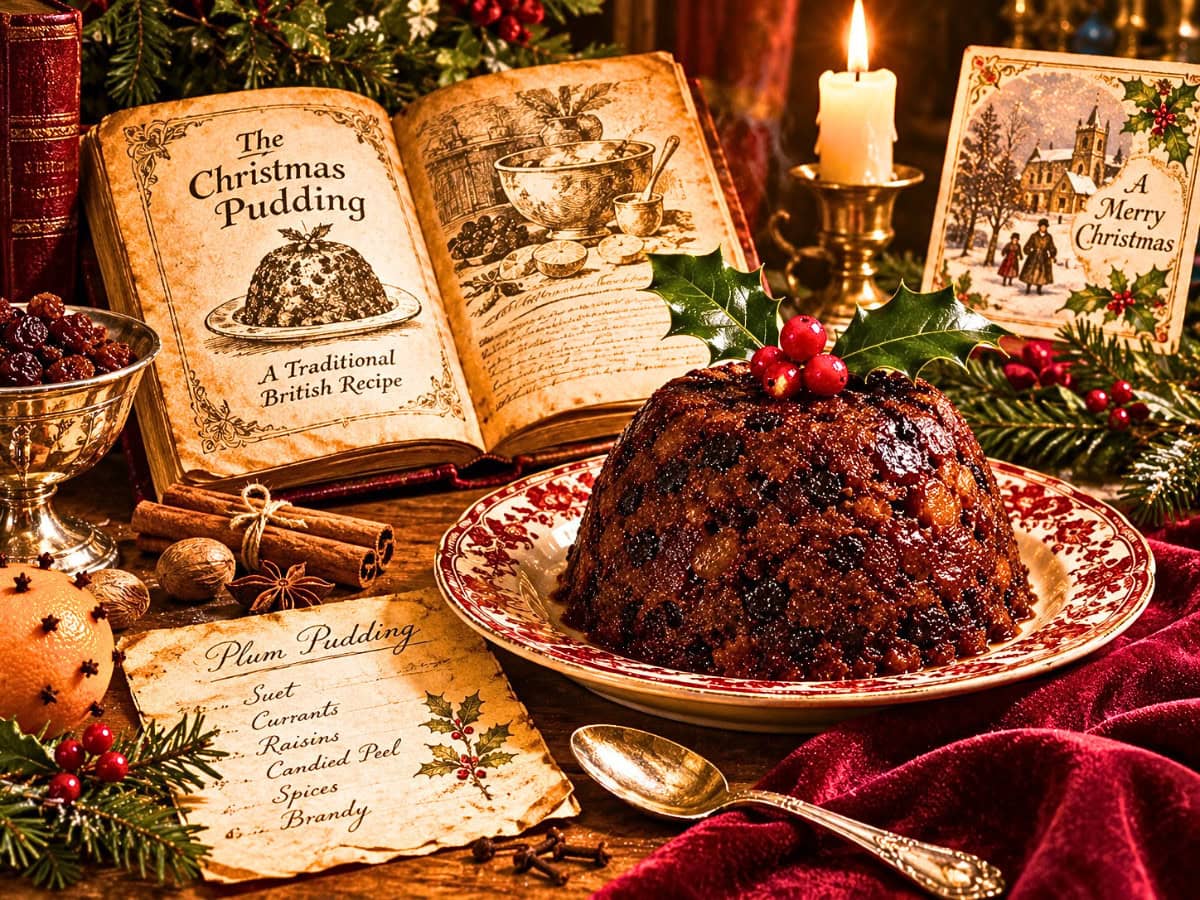
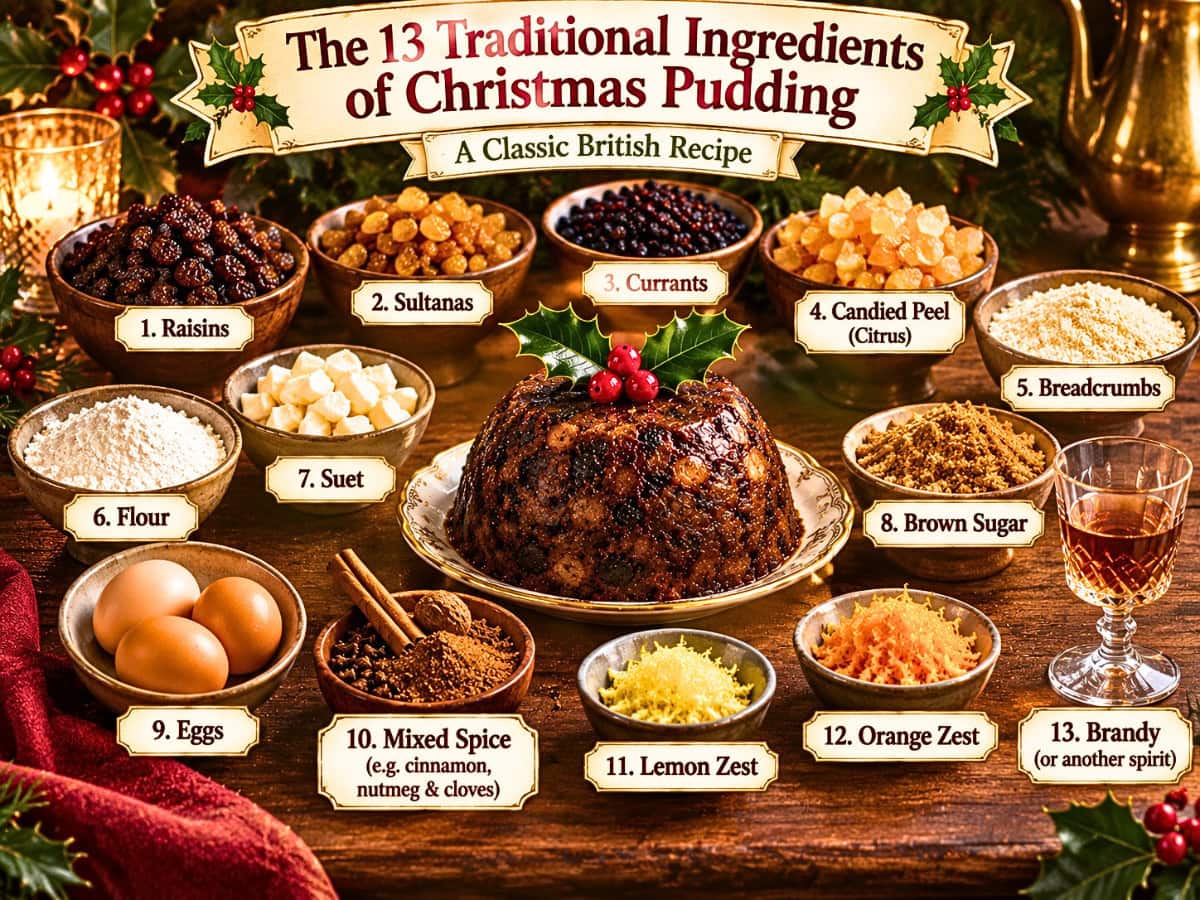
By the 18th century, plum puddings were commonly made with raisins, currants, suet, flour, eggs and sugar. Some recipes also included spices and brandy, creating the rich flavours we associate with Christmas pudding today.
Yet plum pudding was not originally a Christmas dessert. People enjoyed variations of the dish at other celebrations and throughout the year.
The name Christmas pudding became increasingly familiar during the Victorian period, when the rich fruit pudding secured its place at the festive table.
One particularly revealing example appears in Mrs Beeton’s Book of Household Management (1861). Her recipe for an Unrivalled Plum-Pudding includes raisins, currants, sultanas, candied peel and brandy, but not a single fresh plum.
So, the mystery of the missing plums is really a story about how the English language has changed. The old name remained, even as the pudding evolved into the Christmas favourite we recognise today.
And to understand how that transformation began, we must return to the kitchens of medieval England.

The Medieval Origins of Christmas Pudding: When Pudding Contained Meat
Long before Christmas pudding became a sweet festive dessert, its ancestors were hearty dishes made with meat, dried fruit and spices.
In medieval England, combining sweet and savoury ingredients was common, particularly in wealthy households. Cooks used raisins, figs, wine and expensive imported spices to create rich dishes that were quite different from the food we enjoy today.
One fascinating example comes from the royal kitchens of King Richard II (1377–1399).
The Forme of Cury, a collection of recipes compiled by his cooks around 1390, includes a dish called Fygey. It combined figs, raisins, ground almonds, wine, honey and ginger, which were cooked together to create a thick, fruit-rich preparation.
Although Fygey contained no meat, it reveals the medieval taste for the dried fruit and spices that would later become essential to Christmas pudding.
Another important ancestor was plum pottage, a thick broth made with dried fruit, spices and sometimes meat or meat stock. Unlike today’s Christmas pudding, it was generally served at the beginning of a meal rather than as a dessert.
Over the following centuries, these preparations gradually changed. Meat became less prominent, while dried fruit, spices and suet remained important ingredients.
The introduction of the pudding cloth in the early 17th century also helped transform the dish. Instead of serving a loose mixture from a pot, cooks could boil a firmer pudding wrapped in cloth.
By the late 17th century, plum pudding was beginning to resemble the dish that would eventually become a British Christmas favourite.
Yet its journey to the festive table was not entirely straightforward. England’s religious upheavals would soon bring traditional Christmas celebrations into question.
Did Oliver Cromwell Ban Christmas Pudding and Mince Pies?
Imagine celebrating Christmas in England during the 1640s, when even a traditional festive feast could attract unwanted attention.
During the English Civil War, Puritan reformers opposed traditional Christmas festivities, regarding them as excessive and lacking biblical authority. In June 1647, Parliament passed an ordinance abolishing the observance of Christmas, Easter and Whitsun as religious festivals and holidays.
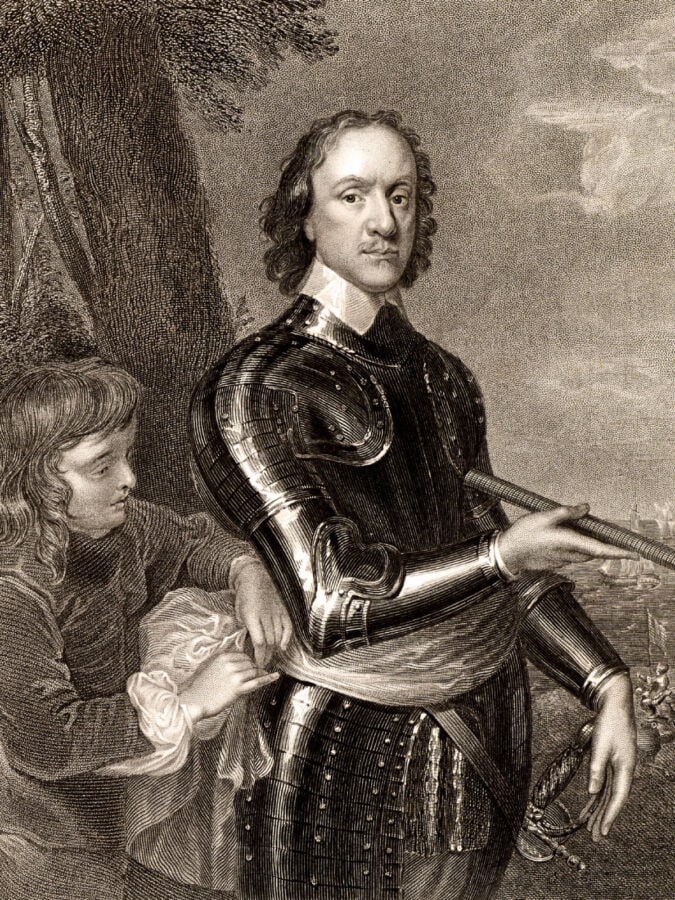
Oliver Cromwell is often blamed for banning Christmas pudding and mince pies. Yet he did not introduce the 1647 ban, which Parliament passed six years before he became Lord Protector in 1653. Neither Christmas pudding nor mince pies were specifically prohibited by law.
There was, however, an unusual exception. In 1644, Christmas Day fell on a Wednesday designated for fasting. Eating festive foods, including mince pies, would therefore have broken the fasting rules.
Despite the restrictions, many people continued celebrating Christmas, sometimes in defiance of Parliament.
Traditional festivities returned openly following the Restoration of Charles II in 1660.
The story of mince pies has its own surprising twists, including their original meat-filled recipes. Discover more in our companion article, Why Did Christmas Mince Pies Once Contain Meat?
George I and the Pudding King: A Royal Christmas Legend
Could a king have helped turn plum pudding into one of Britain’s favourite Christmas traditions?
According to a popular story, King George I requested plum pudding for his first Christmas dinner as Britain’s new monarch in 1714. He supposedly enjoyed the rich, fruit-filled dessert so much that he earned the nickname Pudding King.
George I had arrived from Hanover, in present-day Germany, after succeeding Queen Anne in August 1714. He spoke little English and was still becoming familiar with his new kingdom.
The story suggests that his enthusiasm for plum pudding helped establish it as a royal Christmas tradition.
But did it really happen?
Despite its popularity, historians have found no contemporary evidence that George I requested plum pudding for Christmas dinner or acquired the nickname during his lifetime. Even the Royal Family’s official history describes the story as an unproven legend.
What we do know is that plum pudding was already a familiar British dish.
In 1723, John Nott, cook to the Duke of Bolton, published a plum pudding recipe in The Cooks and Confectioners Dictionary. His ingredients included suet, raisins, flour, sugar and eggs. The mixture was tied in a cloth and boiled for several hours.
It was remarkably similar to the traditional boiled puddings that would become Christmas favourites.
Whether George I ever enjoyed his legendary Christmas pudding remains uncertain. Nevertheless, the story has secured a lasting place in British festive folklore.
It would be during Queen Victoria’s reign that plum pudding became firmly established as one of the most recognisable traditions of Christmas dinner.
Queen Victoria and the Christmas Pudding We Know Today
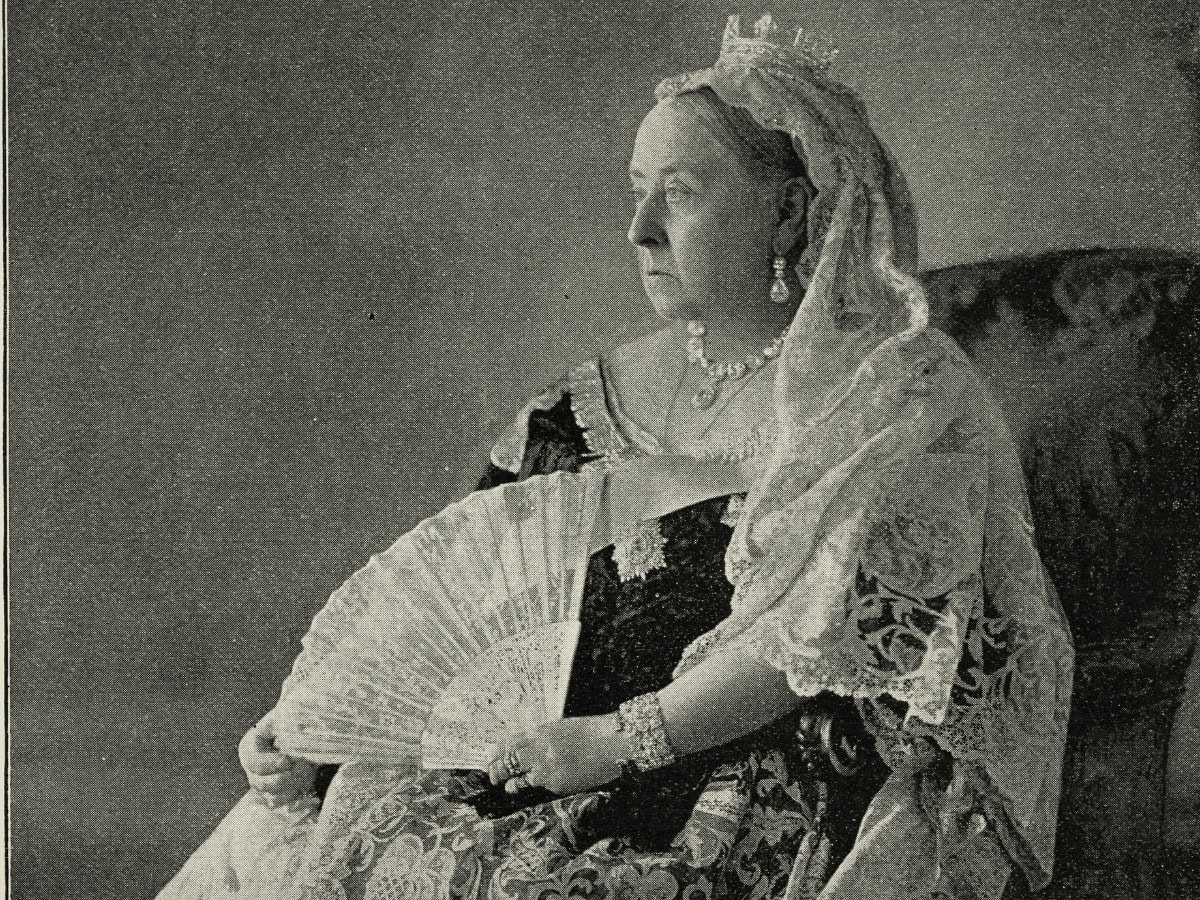
By the 19th century, plum pudding was already a familiar British dish. However, it was during Queen Victoria’s reign (1837–1901) that it became firmly established as a Christmas favourite.
Queen Victoria and Prince Albert embraced Christmas as a time for family gatherings, gifts and festive meals. Their celebrations helped popularise traditions that remain familiar in British homes today.
On Christmas Day in 1843, Victoria recorded a feast of turkey, beef, plum pudding and mince pies in her journal. It was, as she described it, a “regular Christmas dinner”.
That same year, Charles Dickens published A Christmas Carol, giving Christmas pudding one of its most memorable appearances in English literature.
Mrs Cratchit proudly brings her pudding to the family table, describing it as a “speckled cannon-ball”, crowned with holly and blazing with brandy.
For the Cratchit family, the pudding represents more than a festive dessert. Despite their modest circumstances, it becomes a moment of pride, celebration and family togetherness.
Why Do We Set Christmas Pudding on Fire?
The tradition of setting Christmas pudding alight was already familiar in Victorian England.
In her Book of Household Management (1861), Mrs Beeton instructed cooks to decorate their Christmas pudding with holly, pour brandy around it and ignite the spirit before serving.
The resulting blue flames created a dramatic spectacle as the pudding arrived at the table.
Some later interpretations associate the flames with the light of Christ and the holly with his crown of thorns. However, there is no firm historical evidence that these religious meanings explain the custom’s origins.
By the later Victorian period, Christmas pudding had become a familiar festive centrepiece, enjoyed in households across Britain.
And for many families, the tradition began several weeks before Christmas Day, with the stirring of the pudding mixture on a Sunday with a rather curious name.
Stir-up Sunday: Why Do We Stir Christmas Pudding?
For many British families, the tradition of making Christmas pudding begins several weeks before Christmas Day, on a Sunday with a rather curious name: Stir-up Sunday.
Traditionally observed on the last Sunday before Advent, it became an occasion for families to gather in the kitchen and prepare their Christmas puddings.
But did you know that Stir-up Sunday originally had nothing to do with cooking?
Its name comes from a prayer in the Book of Common Prayer, first published in 1549. The prayer for the Sunday before Advent begins, “Stir up, we beseech thee, O Lord”, a phrase that eventually inspired a rather fitting Christmas cooking tradition.
By the Victorian period, families had begun associating the day with preparing their Christmas puddings. Each person took a turn stirring the rich mixture, often making a secret wish for the coming year.
Tradition held that the pudding should be stirred from east to west, recalling the journey of the Three Wise Men to Bethlehem.
Some families also followed the custom of using thirteen ingredients, symbolising Christ and his twelve apostles.
And then there was the lucky sixpence.
A silver sixpence was traditionally hidden inside Christmas pudding as a symbol of good luck. Whoever discovered the coin in their Christmas Day serving was believed to enjoy wealth and good fortune in the coming year.
Preparing the pudding weeks in advance also served a practical purpose. It allowed the dried fruit, spices and alcohol to develop their rich flavours before Christmas.
Today, Stir-up Sunday remains a reminder that some of Britain’s most cherished Christmas traditions begin long before the festive meal itself.

George V’s Empire Christmas Pudding: A Royal Recipe with a Political Message
Could a Christmas pudding tell the story of an entire empire?
In 1927, King George V and Queen Mary gave their approval for a rather unusual Christmas pudding recipe. Their chef, André Cédard, supplied the recipe to the Empire Marketing Board, a government organisation established to encourage trade within the British Empire.
The pudding contained seventeen ingredients sourced from different parts of the Empire. There were currants and sultanas from Australia, raisins from South Africa, apples from Canada and beef suet from New Zealand.
Even the spices told a story. Cinnamon came from Ceylon (now Sri Lanka), cloves from Zanzibar and rum from Jamaica. British breadcrumbs, flour and beer helped complete the mixture.
The idea was simple: encourage British households to buy products from across the Empire, using Christmas pudding as a symbol of imperial unity.
But there was a political message behind the festive recipe. The campaign celebrated imperial trade while overlooking the unequal relationships between Britain and its colonies.
The Empire Marketing Board promoted the pudding through newspapers, recipes and colourful illustrations. One surviving artwork, Making the Empire Christmas Pudding, shows ingredients arriving from across the world.
More than two centuries after George I supposedly earned the nickname Pudding King, another King George had lent his name to a Christmas pudding.
This time, however, the royal connection was no legend. The recipe survives, offering a fascinating glimpse into how even a familiar Christmas dessert could reflect the politics of its time.
Festive Curiosities and Facts About Christmas Pudding Traditions
What is a traditional British Christmas pudding?
A traditional British Christmas pudding is a rich, steamed or boiled dessert made with dried fruit, suet, breadcrumbs, sugar, eggs and spices. Often prepared weeks before Christmas, it is traditionally served on Christmas Day with brandy butter, custard or cream.
What are the 13 ingredients in Christmas pudding?
Traditionally, Christmas pudding is sometimes said to contain thirteen ingredients, representing Jesus Christ and his twelve apostles. Recipes vary, but typical ingredients include raisins, currants, sultanas, suet, flour, breadcrumbs, sugar, eggs, mixed spice, cinnamon, candied peel, apples and brandy. The number thirteen is a symbolic tradition rather than a fixed historical recipe.
Why is Christmas pudding called plum pudding?
Christmas pudding was historically called plum pudding because the word plum could refer to dried fruits, particularly raisins. Although modern Christmas puddings do not usually contain fresh plums, the old name survived as the recipe evolved.
What is the difference between Christmas pudding and plum pudding?
Today, Christmas pudding and plum pudding generally refer to the same traditional British dessert. Historically, however, plum pudding was not exclusively associated with Christmas. It became especially popular as a Christmas dish during the Victorian period.
How long before Christmas should you make Christmas pudding?
Traditionally, families prepare Christmas pudding on Stir-up Sunday, the last Sunday before Advent. This usually falls about five weeks before Christmas. Making the pudding in advance allows its rich fruit and spice flavours to mature, although the ideal preparation time depends on the recipe.
What is the American equivalent of British Christmas pudding?
In the United States, the closest traditional term is plum pudding, although Christmas pudding is also understood. American fruitcake shares some ingredients, but it is baked rather than traditionally steamed or boiled, making it a different dessert.
Why Is It Called Plum Duff?
Plum duff is another traditional British name for a boiled pudding containing dried fruit. The word duff comes from a regional variation of dough and became particularly associated with puddings boiled in cloth, especially among sailors. Plum duff was often a simpler, more substantial pudding than the rich Christmas pudding served at festive tables.
From Plum Pudding to Christmas Tradition: A Taste of British History
From medieval kitchens to royal Christmas tables, Christmas pudding has travelled a remarkable journey through British history.
What began as a mixture of meat, dried fruit and spices gradually became the rich, sweet pudding we recognise today. Along the way, it survived religious upheavals, acquired royal legends and became a cherished part of Victorian Christmas celebrations.
And what about those missing plums? The answer lies not in a forgotten ingredient, but in the changing meaning of a word. The name plum pudding has endured, even as the recipe has evolved.
Today, whether you stir the mixture on Stir-up Sunday, follow a treasured family recipe or gather around the table to watch the blue flames dance, you are continuing a tradition shaped by centuries of British life.
Perhaps that is what makes Christmas pudding so special. It is more than a festive dessert. It is a little piece of Britain’s past, served at the Christmas table.
Uncover More of Our Stories Behind Christmas: Food, Folklore & Traditions
Behind every Christmas tradition lies a story shaped by centuries of history, folklore and changing customs. From festive foods and forgotten rituals to royal celebrations and cherished British traditions, discover the fascinating stories behind the Christmas we know and love today. Explore more of our Christmas heritage articles below.
Continue Your Culinary Journey
The fascinating history of Christmas pudding reminds us that even our most cherished festive traditions have surprising stories to tell. From medieval kitchens and royal Christmas tables to the curious customs surrounding plum pudding, each chapter reveals how food, history and heritage have shaped the celebrations we know today.
It is this connection between food, history and heritage that we celebrate in our Heritage on a Plate collection.
If you enjoy discovering the forgotten stories behind traditional British dishes, festive foods and customs passed down through generations, there are many more delicious discoveries waiting for you at Timeless Travel Steps.
Please take a moment…
Before you go, I’m excited to share some news—Timeless Travel Steps was awarded Best Slow Travel & Heritage Travel Blog 2026! Please take a moment to read our story and discover the passion behind our journeys.
For more travel insights and tips, consider following Georgina from Timeless Travel Steps on BlueSky, Instagram, Facebook and Pinterest. Don’t miss out on her latest adventures and expert advice. Subscribe to stay updated and join a community of fellow travel enthusiasts eager to explore the world.
References and Further Reading
The following historical sources, original recipes and academic studies informed this article on Christmas pudding history and British Christmas traditions.


