
Alfred the Great: From Fugitive King to the Making of England
In the winter of 878, Alfred the Great was a king in hiding.
Viking forces had swept into Wessex in a surprise attack, seizing the royal stronghold at Chippenham and forcing Alfred to flee. Northumbria and East Anglia had already fallen to Viking armies, while Mercia had been overwhelmed and divided. Now Wessex itself was in grave danger.
Alfred retreated with a small band of followers into the marshlands of Somerset.
From his refuge at Athelney, surrounded by wetlands and difficult terrain, the future of his kingdom was far from secure. The man we remember as King Alfred the Great had not yet won the victory that would define his reign. For a time, he was a fugitive king fighting for survival.
Yet Alfred’s story did not end in those marshes.
Within months, he emerged from Athelney, gathered an army and confronted the Viking leader Guthrum at the Battle of Edington. His victory in 878 became a turning point. But it was what Alfred did afterwards that makes his story so remarkable.
He strengthened Wessex and transformed its defences. He encouraged learning, supported scholarship and promoted important works in written English. He also drew together laws for his kingdom.
But Alfred did not create England, nor was he its first king.
That belongs to a longer story, continued by his children and, ultimately, his grandson Æthelstan.
So how did a king driven into the Somerset marshes become one of the most celebrated rulers in English history?
This is the story of Alfred the Great — warrior, scholar and survivor — and how one of the most remarkable Anglo-Saxon kings helped lay the foundations for the making of England after nearly losing everything.
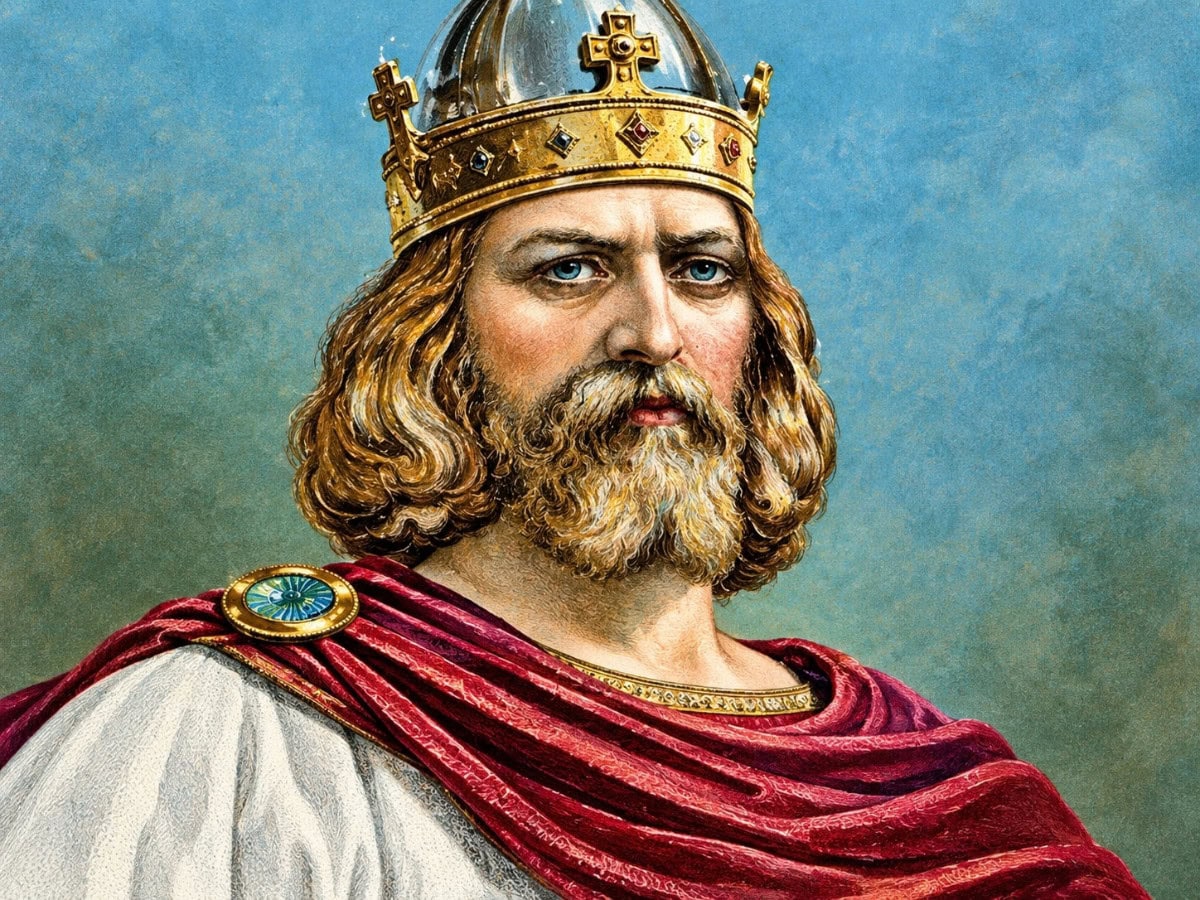
Alfred the Great Timeline — His Life at a Glance
- AD 849 — Alfred is born at Wantage in Wessex, the youngest son of King Æthelwulf.
- 853 — The young Alfred travels to Rome and is received by Pope Leo IV.
- 855–856 — Alfred travels to Rome again, this time as part of his father’s journey to the Continent.
- 868 — Alfred marries Ealhswith.
- 870–871 — Viking armies invade Wessex. Alfred fights alongside his brother, King Æthelred.
- January 871 — Alfred fights at the Battle of Ashdown, an important West Saxon victory.
- 871 — Æthelred dies and Alfred becomes King of Wessex.
- January 878 — Guthrum launches a surprise attack on Chippenham. Alfred retreats into the Somerset marshes.
- Spring 878 — Alfred establishes his stronghold at Athelney and rebuilds his resistance.
- May 878 — Alfred defeats Guthrum at the Battle of Edington.
- 878 — Guthrum is baptised at Aller, with Alfred acting as his sponsor.
- 886 — Alfred takes control of London. His authority among the English beyond Wessex grows.
- 890s — Alfred’s defensive, educational and legal reforms continue as Wessex faces renewed Viking attacks.
- 26 October 899 — Alfred dies. His son Edward the Elder succeeds him.
- AD 927 — Alfred’s grandson Æthelstan takes York and is generally regarded as the first King of England.
Who Was Alfred the Great?
Alfred the Great was King of Wessex from 871 until his death in 899. Born at Wantage in 849, he was the youngest son of King Æthelwulf of Wessex and grew up at a time when Viking attacks were becoming an increasingly serious threat to the Anglo-Saxon kingdoms.
Few would have expected the young Alfred to become king. He had older brothers ahead of him, and three of them — Æthelbald, Æthelberht and Æthelred — ruled Wessex before the crown eventually passed to Alfred.
His reign would become one of the most remarkable of the Anglo-Saxon period.
Alfred is best remembered for his struggle against Viking armies and his victory over Guthrum at the Battle of Edington in 878. Yet his achievements reached far beyond the battlefield. He strengthened the defences of Wessex, developed a network of fortified settlements known as burhs and promoted a revival of learning. He also supported the translation of important works into Old English and brought together a new collection of laws.
These achievements help explain why Alfred became the only English king routinely remembered as “the Great.”
But there is an important distinction.
Alfred was not the first King of England, and he never ruled a united English kingdom. That would come later, through the generations that followed him.
To understand Alfred’s place in the making of England, we first need to meet the younger prince for whom becoming king was once far from certain.

Alfred Before He Was Great — The Making of a Young Prince
The Youngest Son Who Was Never Expected to Be King
Born into the royal house of Wessex, Alfred was the youngest of King Æthelwulf’s sons and grew up with little expectation that the crown would one day be his. His childhood also unfolded against an increasingly unsettled background, as Viking raids on the Anglo-Saxon kingdoms gradually developed into a far greater threat.
Yet Alfred’s early years were not shaped by warfare alone.
When he was around four years old, Alfred was sent to Rome, where Pope Leo IV received him. A couple of years later, he returned to Rome, this time accompanying his father on a longer journey.
For a young Anglo-Saxon prince, Rome must have been far removed from the world he knew in Wessex. We cannot know what Alfred remembered of those early journeys, but his connection with the Church and Christian learning would later become an important part of his kingship.
Alfred’s Childhood and a Love of Learning
One of the most charming stories about Alfred’s childhood comes from Asser, the Welsh scholar who later joined his court and wrote a biography of the king.
Asser tells us that Alfred’s mother once showed her sons a beautifully decorated book of English poetry. She promised the book to whichever of them could learn its contents first.
Alfred wanted it.
According to the story, he found someone to read the poems aloud to him, learnt them and returned to recite them to his mother. The book was his.
It is a lovely glimpse of the boy behind the later king, although it should be read with some caution. Asser was writing about Alfred during Alfred’s own lifetime and presented him as an unusually eager seeker of wisdom.
Yet the story feels particularly fitting because learning genuinely became one of the defining concerns of Alfred’s reign.
Alfred’s passion for learning would become important later in his life. For now, a more immediate threat was gathering across Anglo-Saxon England.
Viking armies were no longer simply arriving to raid and leave.
They were coming to conquer.
And eventually, they came for Wessex.

Alfred the Warrior — When the Vikings Came for Wessex
By the time Alfred reached adulthood, that threat had become far more dangerous.
In 865, the force remembered in the Anglo-Saxon Chronicle as the Great Heathen Army arrived in East Anglia. Within a few years, the political landscape of Anglo-Saxon England had been transformed. Northumbria and East Anglia were conquered, while Mercia was placed under increasing pressure.
Then, in 870, the Viking army turned towards Wessex.
Alfred was not yet king. His elder brother Æthelred ruled Wessex, and Alfred fought alongside him as the brothers faced a relentless succession of battles.
One of those encounters would bring the young prince to prominence.
Alfred and the Battle of Ashdown
In January 871, the West Saxons confronted a Viking army at the Battle of Ashdown, traditionally associated with the Berkshire Downs.
Our most colourful account comes from Asser, Alfred’s contemporary biographer.
According to Asser, the West Saxon army divided into two forces. But as battle approached, King Æthelred remained at prayer and would not leave until Mass was finished. Alfred faced a difficult choice: wait for his brother or begin the attack without him.
He chose to fight.
Alfred led his men against the Viking position in a fierce uphill assault. The West Saxons eventually broke their enemy’s lines and won the battle.
It is a wonderfully dramatic episode, but Asser was writing about the king he served. His portrayal of Alfred as the decisive young warrior should therefore be read with some caution.
What we do know is that Ashdown was an important West Saxon victory.
It was not, however, the end of the Viking threat.
Further battles followed and Wessex suffered more defeats. Alfred was learning something he would have reason to remember: winning one battle did not mean winning the war.
A Crown Alfred Had Never Expected
Then Alfred’s life changed again.
Æthelred died in 871, leaving the kingdom still under enormous pressure. Alfred, the youngest son who had once stood behind several brothers in the royal succession, became King of Wessex.
He was only in his early twenties.
There was little opportunity for celebration. Alfred inherited a kingdom at war and suffered further military setbacks soon after becoming king. Peace was eventually made with the Vikings, giving Wessex some respite.
But the danger had not disappeared.
For several years, Alfred managed to preserve his kingdom while Viking armies continued to reshape the lands around it. Then a new confrontation with the Viking leader Guthrum brought the struggle back to Wessex.
And in the winter of 878, Alfred discovered just how quickly a king could lose almost everything.

Alfred the Great and the Vikings — The Struggle for Wessex
Becoming king did not suddenly turn the war in Alfred’s favour.
The early years of his reign were marked by an uneasy mixture of conflict, negotiation and temporary peace. Viking armies continued to move across Anglo-Saxon England, while Alfred’s immediate priority was keeping Wessex intact.
For a time, the pressure eased. But elsewhere the political landscape continued to change.
In 874, the Vikings drove King Burgred of Mercia from his kingdom and installed Ceolwulf in his place. Wessex was increasingly important as the major independent Anglo-Saxon power still capable of resisting Viking expansion.
Alfred had survived the first years of his reign.
He had not removed the danger.
Guthrum and the Renewed Viking Threat
Among the Viking leaders who now emerged was Guthrum, a man whose name would become closely entwined with Alfred’s story.
Alfred and Guthrum were not strangers when the crisis of 878 arrived. Their forces had already confronted one another, and agreements intended to secure peace had proved fragile.
In 876, Guthrum’s army occupied Wareham in Dorset. A negotiated settlement followed, but the Vikings broke away and moved to Exeter. The following year, after further pressure and negotiations, Guthrum’s forces withdrew from Wessex.
It might have appeared that Alfred had gained some breathing space.
He had not.
In the middle of winter, when campaigning was less expected, Guthrum made a sudden move. In early January 878, his forces attacked Chippenham in Wiltshire, where Alfred had been staying over Christmas.
The attack was devastatingly effective.
Guthrum seized Chippenham and used it as a base from which to dominate much of Wessex. Some of Alfred’s people submitted. Others fled. The king himself escaped with only a small group of followers.
The youngest son who had unexpectedly inherited the crown was now in danger of losing his kingdom.
878 — The Year Alfred Nearly Lost Everything
For Alfred, the beginning of 878 marked the lowest point of his reign.
The kingdoms around Wessex had already been conquered, divided or brought under Viking influence. Now Guthrum controlled Chippenham, and Alfred could no longer operate openly from one of his own royal centres.
He withdrew westwards into Somerset.
Alfred the Fugitive
Later generations would surround this period with legend, but the historical reality is dramatic enough.
Alfred escaped with his royal bodyguard, a small number of followers and the support of Æthelnoth, ealdorman of Somerset. From there, resistance continued on a much smaller scale.
This was what makes the description fugitive king so important to Alfred’s story.
He had not surrendered his kingship, nor simply disappeared into hiding. He had been driven from his royal centre by an enemy occupying part of his kingdom and was forced to continue the struggle from refuge.
The man later remembered as Alfred the Great was, for a time, a king without the security normally expected of kingship.
His refuge lay among the marshes of Somerset.
The Isle of Athelney — Alfred in the Marshes
In the ninth century, Athelney was effectively an island surrounded by wetlands and marshes. Difficult to approach and easy to defend, it offered Alfred and his remaining supporters a natural refuge.
Here he established a fortified base.
The landscape is important to the story. Alfred was not commanding his kingdom from the comfort of a distant palace. His power had contracted to a small stronghold amid the Somerset marshes, while Guthrum’s forces controlled Chippenham.
Yet Athelney became more than a hiding place.
From this base, Alfred continued resisting the Vikings and began rebuilding his support. Men still loyal to him remained in Somerset, Wiltshire and Hampshire. As spring approached, the possibility of a larger counterattack began to emerge.
This is perhaps the most compelling moment in Alfred’s story.
Not because we know what he thought or feared — we do not — but because we know what he did next.
The king who had been driven into the marshes prepared to come out of them.
Before he does, however, there is one small story we cannot ignore.
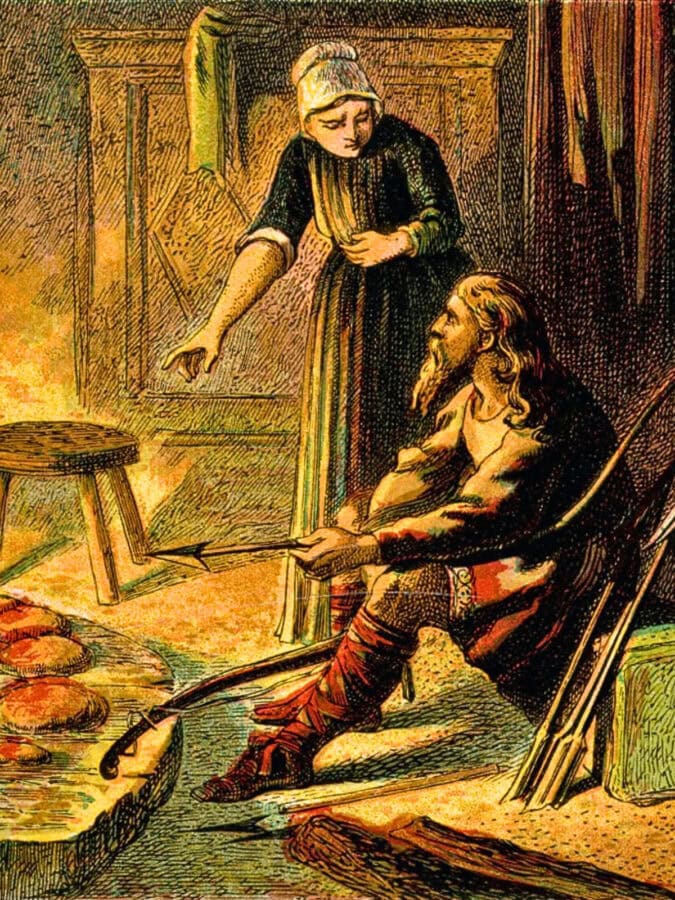
It involves an ordinary cottage, a distracted king — and some famously burnt cakes.

Did Alfred the Great Really Burn the Cakes?
Of all the stories told about Alfred the Great, few have survived as stubbornly as the tale of the burnt cakes.
While hiding from the Vikings in the Somerset marshes, Alfred supposedly took shelter in the home of an ordinary woman. Unaware of the importance of her guest, she asked him to watch some cakes cooking by the fire.
Alfred agreed.
But distracted by his troubles, he neglected them. The cakes burned, and the woman returned to find her food ruined. She promptly scolded the king.
It is a wonderfully human story.
It is also almost certainly a legend.
The episode does not appear in Asser’s ninth-century account of Alfred’s life, written during the king’s lifetime. The earliest surviving version appeared much later, in a medieval Latin life of St Neot, and the story developed further over subsequent centuries.
So, did Alfred the Great really burn the cakes?
We cannot prove that he did. There is no contemporary evidence for the incident, and historians generally treat it as part of the legend that grew around Alfred after his death.
Yet its survival tells us something interesting about the way Alfred has been remembered.
Here was a king temporarily stripped of the usual trappings of kingship. Instead of commanding an army, the Alfred of legend sits beside an ordinary hearth and fails at an everyday task. He can make mistakes. He can be distracted. He can even be told off.
Behind the charming story, however, was a very real crisis.
Alfred had been driven from Chippenham. Guthrum occupied an important royal centre, and the survival of Wessex remained uncertain.
There may be no evidence for burnt cakes.
But there certainly was a comeback.
From Athelney to Edington — Alfred Fights Back
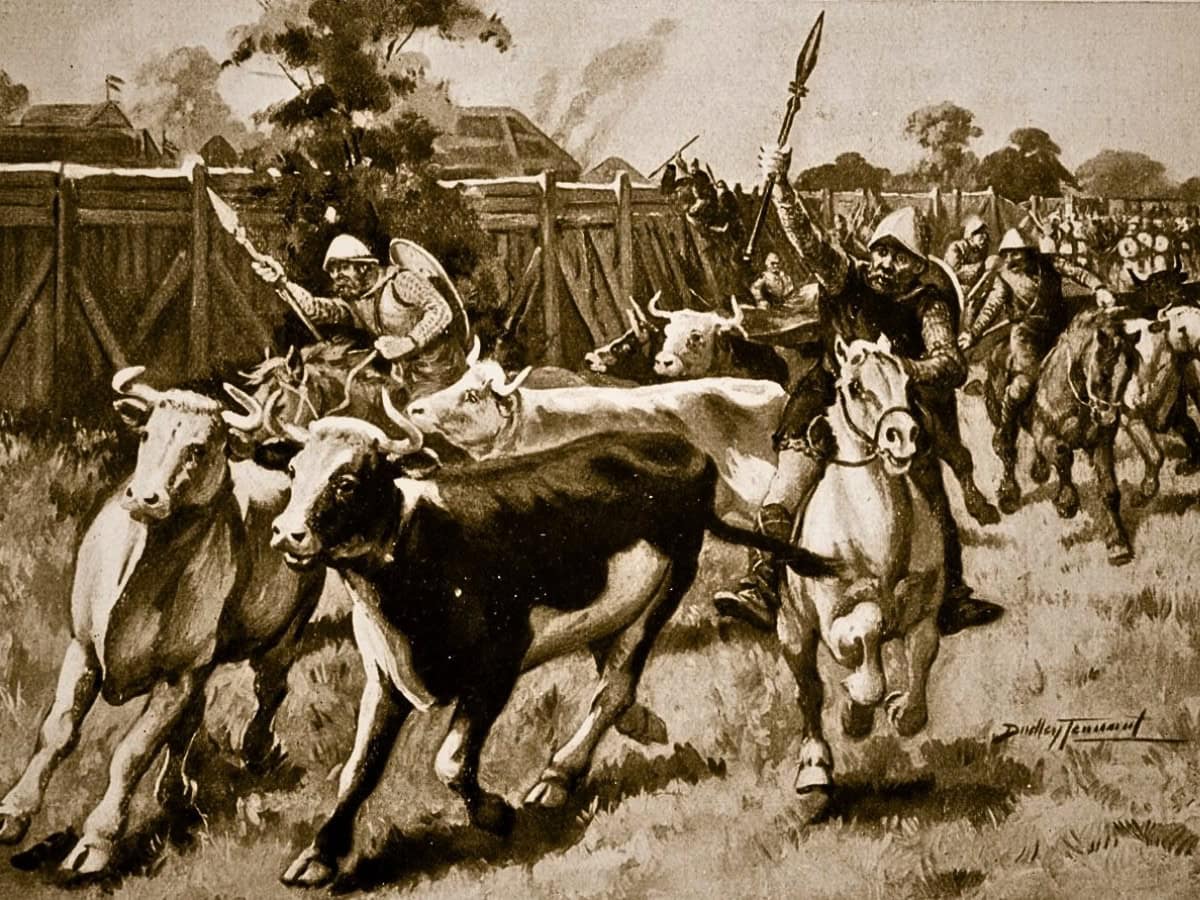
By the spring of AD 878, Alfred was ready to move.
He left Athelney and began gathering the men still loyal to him. According to the Anglo-Saxon Chronicle, forces from Somerset, Wiltshire and part of Hampshire came to meet their king at Egbert’s Stone, east of Selwood.
For a ruler who had been forced into the marshes only months earlier, the gathering marked a remarkable change in fortune.
Alfred had an army again.
And this time, he was taking it to Guthrum.
The Battle of Edington, AD 878
Alfred’s army marched towards the Viking forces and confronted them at the Battle of Edington in May 878.
The surviving accounts tell us frustratingly little about the battle itself. We cannot reconstruct troop movements or tactics with certainty, and even the precise battlefield location remains debated.
What we do know is the result.
Alfred won.
The Viking army retreated to its fortified position, where Alfred pursued and besieged it. After roughly two weeks, hunger forced Guthrum and his men to seek peace.
The consequences were significant.
Wessex had survived one of the greatest crises of Alfred’s reign, and Guthrum agreed to leave the kingdom.
But Alfred’s response to his defeated enemy is an equally important part of what happened next.
Guthrum’s Baptism and the Peace That Followed
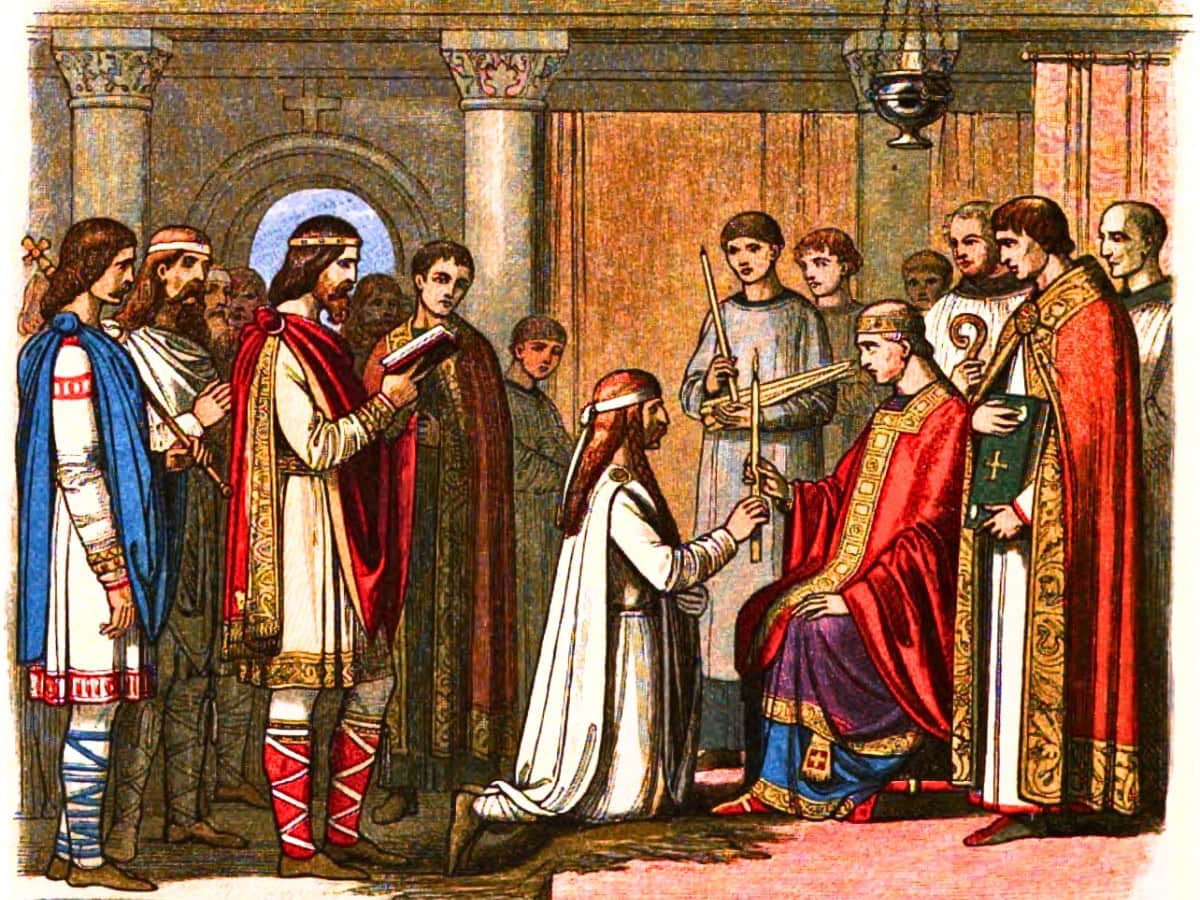
As part of the settlement, Guthrum agreed to accept Christianity.
Several weeks after Edington, he was baptised at Aller in Somerset, with Alfred standing as his sponsor. Guthrum took the Christian name Æthelstan. Further ceremonies and feasting followed at Wedmore.
This was more than a symbolic religious moment. Baptism created a personal bond between the two rulers and helped reinforce the political settlement that followed the fighting.
One distinction is important here.
The agreement reached after Edington is sometimes called the Treaty of Wedmore, but no surviving document with that name exists from 878. A formal written agreement between Alfred and Guthrum survives from a later period and established boundaries and other terms between their territories.
Alfred had not expelled the Vikings from England.
Nor had he conquered all the lands they controlled.
What he had done was ensure that Wessex survived.
And Alfred appears to have understood something important from the crisis of 878: defeating a Viking army once would not be enough.
If Wessex was to survive the next attack, the kingdom itself would have to change.
That meant stronger defences, better organisation and a network of fortified places designed to make another disaster like Chippenham far harder to repeat.
Alfred’s Burhs — Building a Kingdom the Vikings Could Not Easily Destroy
The crisis of AD 878 had exposed a dangerous weakness.
A Viking army had struck quickly, seized Chippenham and forced Alfred into retreat. Victory at Edington saved Wessex, but Alfred could not assume that the Vikings would never return.
They did.
His response was to make his kingdom much harder to attack.
What Were Alfred’s Burhs?
At the heart of Alfred’s defensive system was a network of fortified settlements known as burhs — the origin of the modern word borough.
Some were established at existing towns or former Roman sites. Others occupied strategically important locations. Their purpose was simple: to provide defended places where people could take refuge and from which soldiers could respond to attack.
Places associated with this network included Winchester, Wallingford and Wareham, alongside many other fortified centres across Wessex.
The surviving Burghal Hidage, probably compiled after Alfred’s lifetime but reflecting the defensive system associated with his reign and its continuation, lists more than thirty fortified places and the resources needed to defend them.
This was not simply a collection of walls.
It was an organised system of defence.
Alfred’s New System of Defence
Alfred also reorganised the military resources of Wessex.
The traditional army, or fyrd, could not remain permanently in the field. Men were needed at home to farm and support their communities. According to the Anglo-Saxon Chronicle, Alfred divided his forces so that some men remained on military duty while others stayed at home.
Combined with the burhs, this gave Wessex a more flexible response to Viking attacks.
Fortified centres could hinder an invading army’s movement. Soldiers could be mobilised more effectively, while strategically placed strongholds made it increasingly difficult for Viking forces to move through Wessex without encountering resistance.
The system would prove its value when large Viking armies returned in the 890s.
This time, Alfred was better prepared.
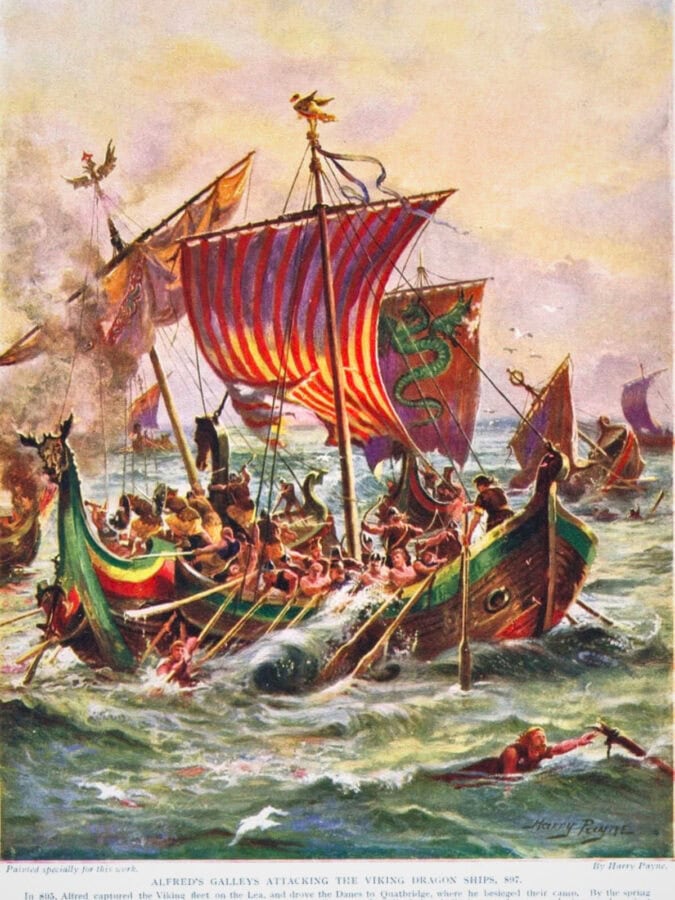
Did Alfred the Great Create the Royal Navy?
Alfred is sometimes described as the founder of the Royal Navy, but that claim needs some qualification.
English rulers had used ships before Alfred, so he did not create naval warfare in England.
What we do know is that Alfred recognised the importance of confronting Viking forces at sea as well as on land. The Anglo-Saxon Chronicle records naval encounters during his reign, and in the 890s Alfred ordered the construction of ships that it describes as larger and differently designed from those used by the Danes and Frisians.
Their success was mixed.
So rather than calling Alfred the founder of the Royal Navy, it is more accurate to see his naval efforts as part of his wider attempt to strengthen the defences of Wessex.
That wider strategy mattered.
Alfred had experienced what happened when an enemy could strike suddenly and penetrate deep into his kingdom. After Edington, he worked to ensure that Wessex would be far more difficult to overwhelm again.
But Alfred was interested in more than the survival of his kingdom.
He also worried about what was happening to its learning.
For the king who had fought to defend Wessex with armies and fortifications, books were about to become another form of defence.
Alfred the Scholar — Why Books Mattered to a Warrior King
Alfred’s achievements were not confined to battlefields and fortifications.
Years of Viking warfare had disrupted monasteries and centres of learning. Alfred believed that knowledge of Latin had declined so severely that too few people could understand important religious and scholarly works.
For a king concerned with rebuilding his kingdom, this mattered.
Alfred wanted learning to become part of Wessex’s recovery.
A King Concerned About the Loss of Learning
One of the clearest glimpses of Alfred’s concerns appears in the preface associated with the Old English translation of Pope Gregory the Great’s Pastoral Care.
Here, Alfred looked back to an earlier England where, in his view, learning had flourished. He contrasted that past with his own time, when knowledge of Latin had declined.
His response was practical.
Alfred gathered scholars around his court, including Asser, a Welsh cleric who later wrote an important account of the king’s life. Other learned men came from Mercia and continental Europe.
Alfred also encouraged education among the young.
According to Asser, the king wanted the sons of free men with sufficient means to learn to read English before moving on to more advanced study in Latin.
For Alfred, restoring learning was not separate from strengthening Wessex.
It was part of rebuilding it.
Bringing Knowledge into English
One of the most important features of Alfred’s educational programme was the use of Old English.
Alfred believed that certain books considered especially valuable should be translated from Latin into a language more people could understand.
Works associated with this programme included Gregory the Great’s Pastoral Care, Boethius’s Consolation of Philosophy, Augustine’s Soliloquies and Orosius’s history of the world. Other translations were produced within the wider intellectual movement surrounding Alfred’s court.
The Anglo-Saxon Chronicle also began to take shape during Alfred’s reign. Its early compilation is closely associated with the intellectual revival of his court, although it is safer to describe Alfred as its likely patron rather than its author.
Together, these efforts helped make written English an important language of learning and historical record.
Did Alfred the Great Translate Books Himself?
This question is more complicated than it first appears.
Tradition has often credited Alfred personally with translating several major works from Latin into Old English. Some texts are explicitly associated with him, particularly the translation of Gregory’s Pastoral Care.
Modern scholars, however, continue to debate how much of the translation work Alfred completed personally and how much was undertaken by scholars working with or for him.
It is therefore safer not to picture Alfred sitting alone translating an entire library.
What matters is the programme he encouraged.
He brought scholars to his court, promoted education and supported the translation of works he considered useful. At a time when his kingdom had spent years fighting for survival, Alfred invested resources in preserving and spreading knowledge.
The young prince once remembered for his fascination with a book of poetry had become a king who placed learning at the heart of his rule.
But books were only one part of Alfred’s vision of kingship.
A stronger kingdom also required laws — and Alfred believed that justice carried responsibilities of its own.
Alfred the Lawmaker — Justice, Kingship and Christian Duty
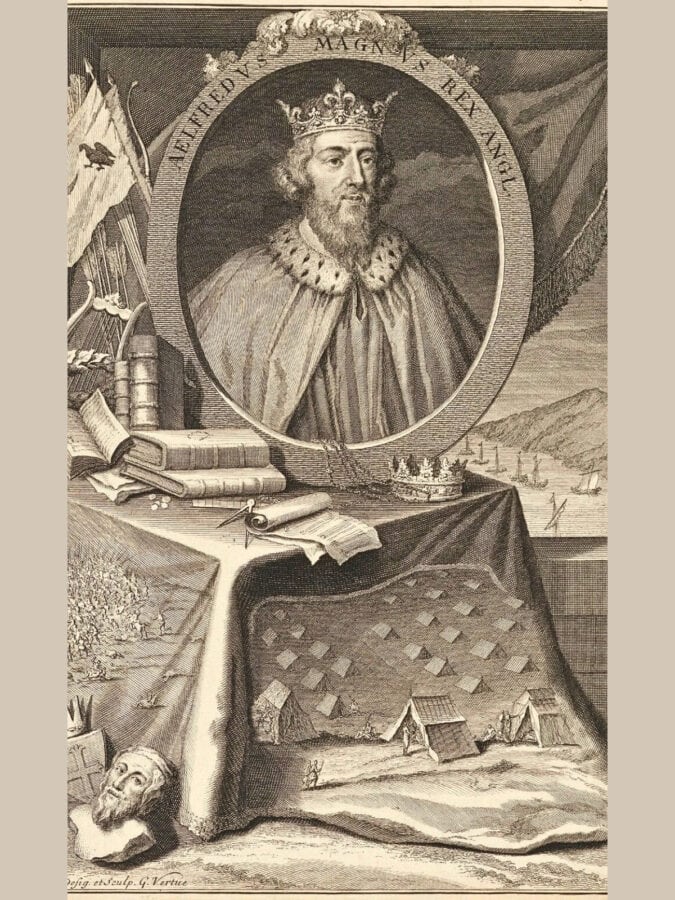
Alfred’s efforts to strengthen Wessex extended to its laws.
Later in his reign, he brought together a substantial collection of legal material often known as Alfred’s law code, or Domboc. But Alfred did not simply sweep away older laws and replace them with his own.
Instead, he deliberately looked backwards.
Alfred’s Law Code
Alfred drew upon the laws of earlier Anglo-Saxon rulers, including King Ine of Wessex, whose seventh-century laws were preserved alongside his own.
His law code also opened with material drawn from the Bible, including the Ten Commandments and other passages from Mosaic law, before connecting these Christian principles with the legal traditions of earlier English kings.
Alfred explained that he had selected laws he considered just, retaining some older rules while rejecting or modifying others.
This tells us something important about the way he approached kingship.
Alfred was not presenting himself as a ruler beginning again from nothing. He placed his own authority within an older tradition of law, Christianity and West Saxon kingship.
The laws themselves dealt with practical matters ranging from violence and theft to property, oaths and disputes.
They also reflected the society that produced them.
Ninth-century Wessex was hierarchical. A person’s status could affect the compensation attached to an offence, and Alfred’s laws should not be confused with modern ideas of equality before the law.
What Alfred Thought a King Should Be
Behind Alfred’s law code was a broader idea of royal responsibility.
A king was expected to defend his people, but defence alone was not enough. He was also responsible for maintaining order and promoting justice within his kingdom.
For Alfred, these responsibilities were closely connected with his Christian faith.
His interest in law therefore fits naturally beside his military and educational reforms. Fortifications protected the kingdom from attack. Learning helped preserve knowledge. Law provided a framework for order within the society Alfred was trying to strengthen.
Taken together, they reveal a king concerned with more than winning battles.
Yet much of what we know about Alfred himself comes through people who admired him — particularly Asser, the scholar who entered his court and wrote about his life.
So what can we actually say about the man behind the later legend?
What Was Alfred the Great Really Like?
More than eleven centuries after his death, separating Alfred the man from Alfred the legend is not always easy.
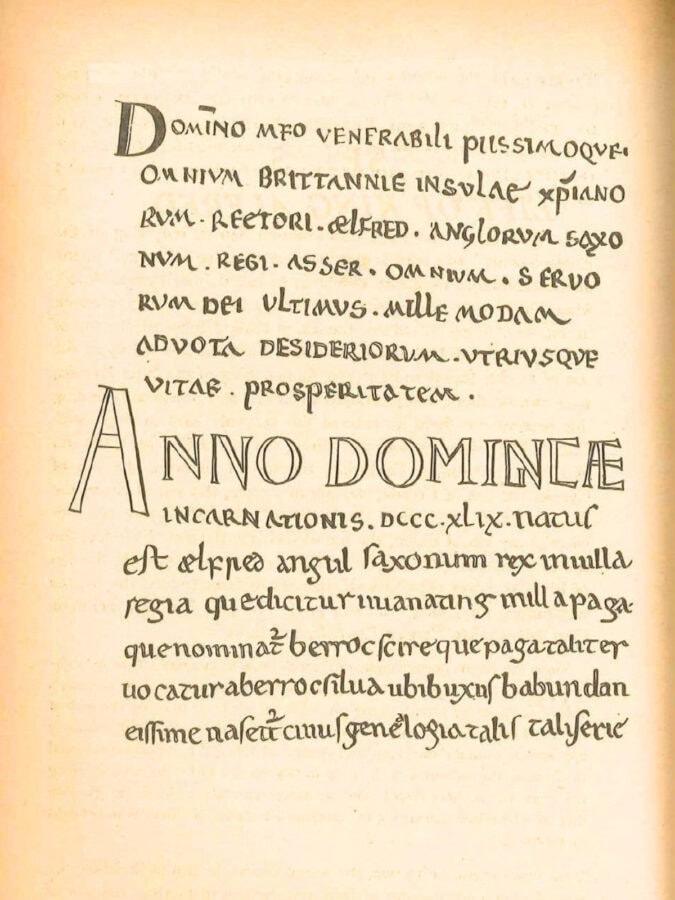
Much of what we know about his personality comes from Asser, the Welsh scholar who joined Alfred’s court and wrote his Life of King Alfred in 893.
Asser knew Alfred personally.
That makes his account extraordinarily valuable. But he was also writing about the king he served, and his admiration for Alfred is clear. His portrait therefore needs to be read alongside other evidence, particularly the Anglo-Saxon Chronicle and writings associated with Alfred’s reign.
Even with those limitations, a distinctive personality begins to emerge.
What Asser Tells Us About Alfred
Asser presents Alfred as intelligent, curious and deeply interested in learning.
He describes a king who enjoyed reading and poetry, valued scholars and wanted to increase his own knowledge. Alfred’s later educational programme supports at least part of this picture.
But Asser also gives us something more personal.
He describes helping Alfred create a small collection of material that particularly interested him. Passages, prayers and other extracts were written together in what is often described as Alfred’s handbook, or enchiridion.
According to Asser, the collection began when Alfred asked him to write down a passage that had caught his attention. More material followed, creating a personal book of texts the king considered worth keeping.
It is a small detail, but an unusually intimate one.
Earlier, Asser had told the story of the young Alfred being captivated by a beautifully decorated book of English poetry. Now we meet the adult king still collecting words and ideas that mattered to him.
There was also a practical side to Alfred’s kingship.
The burhs, military reforms, law code and programme of learning suggest a ruler interested not simply in solving immediate problems, but in creating systems that could strengthen Wessex over time.
Of course, Asser admired the king he served. His portrait of Alfred as a thoughtful and intellectually curious ruler cannot be treated as completely impartial.
Yet Alfred’s own educational programme, the writings associated with his court and his efforts to promote learning give substance to much of Asser’s picture.
His Alfred was not, however, an invulnerable heroic figure.
He was also a man who suffered.
Alfred’s Mysterious Illness
According to Asser, Alfred experienced recurring illness and pain for much of his adult life.
Asser describes an earlier condition that troubled Alfred before his marriage and another severe illness that began around the time of his wedding to Ealhswith in 868. He writes of attacks of pain that returned repeatedly and caused Alfred considerable anxiety.
What illness did Alfred the Great have?
We simply do not know.
Modern suggestions have included conditions such as Crohn’s disease, but diagnosing a ninth-century king from a medieval description is highly uncertain. There is not enough evidence to identify Alfred’s illness reliably.
What we can say is that Asser considered Alfred’s poor health significant enough to make it a recurring part of his biography.
The warrior king who fought Viking armies was, according to someone who knew him, also living with periods of considerable physical suffering.
Faith, Responsibility and the Burden of Kingship
Christian faith ran through almost every aspect of Alfred’s reign.
It influenced his interest in learning, his approach to law and his understanding of kingship. His response to Guthrum after Edington also shows how religion and politics could become closely intertwined.
Alfred seems to have regarded kingship as carrying responsibilities beyond military leadership.
A ruler needed to protect his kingdom, administer justice and encourage learning. The different strands of Alfred’s reign — warrior, lawmaker and scholar — were therefore not as separate as they may appear today.
They formed part of the same approach to rule.
And Alfred’s concerns about the future did not end with his own reign.
His children would eventually carry the West Saxon story far beyond the kingdom he had fought so hard to preserve.
Alfred the Husband and Father
Behind Alfred’s public life as warrior, lawmaker and scholar was a family whose influence would continue long after his death.
In 868, Alfred married Ealhswith, the daughter of Æthelred Mucel, an important Mercian nobleman, and Eadburh, who came from the Mercian royal line.
The marriage strengthened Alfred’s connections with Mercia at a time when relationships between the Anglo-Saxon kingdoms mattered enormously.
Ealhswith and Alfred’s Family
Ealhswith is a quieter presence in the surviving sources than her husband.
She was not formally styled queen. This reflected a West Saxon tradition in which the king’s wife was generally not given the title of queen, rather than suggesting that Ealhswith herself was unimportant.
Alfred and Ealhswith had several children who survived childhood. Among them were Edward the Elder, who succeeded his father as King of Wessex, and Æthelflæd, who became one of the most remarkable women of Anglo-Saxon England.
Æthelflæd married Æthelred, Lord of the Mercians, strengthening the political relationship between Wessex and Mercia. She later ruled Mercia as the Lady of the Mercians and played a major role in campaigns against Viking-held territory.
Their younger daughter Ælfthryth married Baldwin II, Count of Flanders, creating another important dynastic connection. Alfred and Ealhswith also had a daughter, Æthelgifu, who became abbess of Shaftesbury, and a younger son, Æthelweard, whom Asser describes as receiving an education alongside other children at Alfred’s court.
Alfred therefore left more than a political and military legacy.
He left a family capable of carrying it forward.
Edward and Æthelflæd would build upon the system of fortified places and military organisation associated with their father. Together, they pushed West Saxon and Mercian power further into territories controlled by Viking rulers.
That matters because Alfred would not live to see a united Kingdom of England.
The work continued through his children.
And eventually, through his grandson.
Alfred’s Children and the Kingdom They Inherited
Alfred’s children inherited more than a royal name.
They inherited a kingdom their father had fought to preserve, along with the military and political foundations he had spent much of his reign strengthening.
But they did not inherit England.
Despite his importance to its history, Alfred the Great was not the first King of England. He remained King of Wessex, although his authority extended considerably beyond the traditional boundaries of his kingdom during the later years of his reign.
One important moment came in 886, when Alfred took control of London and strengthened its defences.
The Anglo-Saxon Chronicle records that afterwards all the English people who were not under Danish rule submitted to Alfred.
It is a striking statement, although it comes from a West Saxon source associated with Alfred’s reign. It should not be taken to mean that Alfred suddenly became king of a united England.
Instead, it shows how far his position had developed.
The king who had once fought simply to preserve Wessex now held wider authority among English communities beyond his original kingdom.
Yet much of northern and eastern England remained outside his control.
England was not yet united.
Edward and Æthelflæd Continue Their Father’s Story
After Alfred’s death in 899, his son Edward the Elder succeeded him as King of Wessex.
His daughter Æthelflæd had married Æthelred, Lord of the Mercians, and later emerged as a powerful ruler in her own right as Lady of the Mercians.
Brother and sister continued the struggle against Viking-controlled territories.
Æthelflæd strengthened Mercian defences and led campaigns against Viking strongholds. Derby was captured in 917, and Leicester submitted in 918.
She died later that year.
Edward continued extending his authority and eventually brought Mercia more directly under West Saxon control.
Alfred had preserved Wessex.
His children were taking its power further.
Alfred’s Grandson and the Kingdom of England
The next generation carried the story further still.
Edward’s son Æthelstan, Alfred’s grandson, became king in 924.
In AD 927, Æthelstan took control of York, bringing the major territories of the emerging English kingdom under one ruler.
For this reason, Æthelstan is generally regarded as the first King of England.
That distinction is important.
Alfred did not unite England. Nor did he live to see the kingdom his descendants would eventually rule.
What he did was help create the conditions that made it possible.
He preserved Wessex when its survival was uncertain. He strengthened its defences and extended its political influence. His children then carried that work beyond the boundaries Alfred had inherited.
And his grandson took it further still.
The making of England was not the work of one king. It became the work of Alfred’s family across three generations.
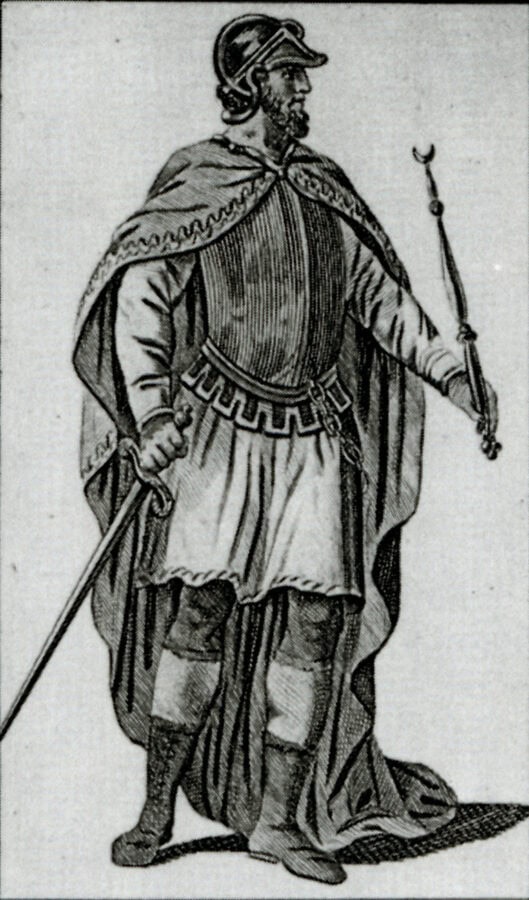
How Did Alfred the Great Die?
Alfred the Great died on 26 October 899, after a reign of almost three decades. He was around 50 years old.
The exact cause of his death is unknown.
Asser tells us that Alfred suffered recurring periods of illness and pain throughout much of his adult life. But there is no reliable evidence that allows us to connect those symptoms directly with his death.
Modern attempts to diagnose Alfred with conditions such as Crohn’s disease remain speculative. More than eleven centuries later, we simply cannot know what illness he had or whether it ultimately caused his death.
What Alfred left behind was far clearer.
Wessex had survived the Viking crisis that once threatened to overwhelm it. Its defences were stronger, its political influence had grown, and Alfred’s son Edward the Elder was positioned to continue the work of the West Saxon dynasty.
Yet Alfred’s own story did not end quite as neatly as his reign.
His body would be moved more than once, monasteries would disappear, and centuries later the location of his remains would become a historical mystery.
Where Is Alfred the Great Buried?
Alfred’s burial story is surprisingly complicated.
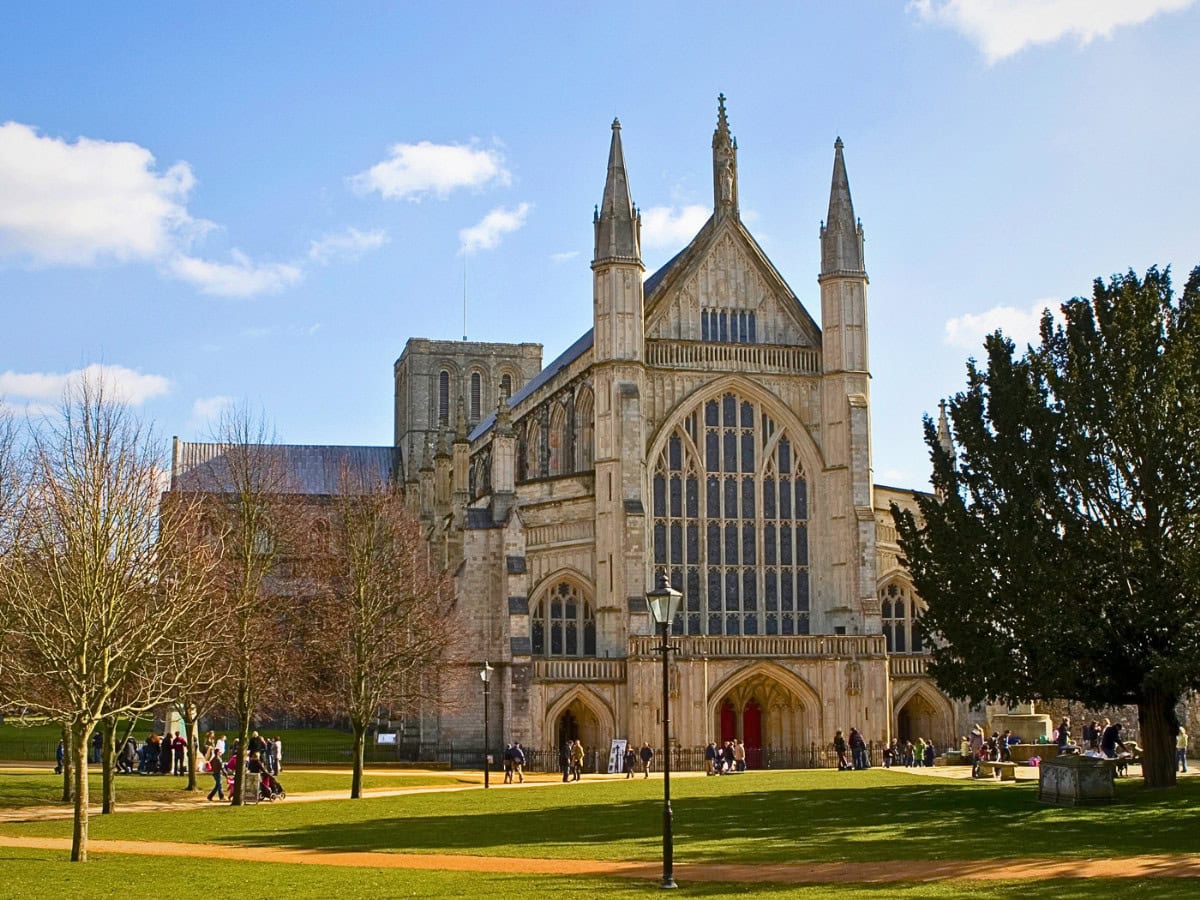
After his death in 899, he was initially buried at the Old Minster in Winchester, the royal and ecclesiastical heart of Wessex.
But this was not to be his permanent resting place.
A few years later, Alfred’s son Edward the Elder completed the New Minster, a royal monastery in Winchester that Alfred had intended to establish. Alfred’s remains were transferred there, alongside those of his wife Ealhswith and, later, Edward himself.
Even then, Alfred’s journey was not over.
In the early twelfth century, the community of the New Minster moved outside Winchester’s city walls to a new monastery at Hyde Abbey. The royal remains were moved with them and reburied there.
For several centuries, Hyde Abbey was Alfred’s resting place.
Then came the Dissolution of the Monasteries.
What Happened to Alfred’s Remains?
Hyde Abbey was dissolved during the reign of Henry VIII, and its buildings were dismantled. The royal burials remained on the site, but their location was gradually forgotten.
The greatest disturbance came in the eighteenth century.
In 1788, a workhouse and prison was built over part of the former abbey. Accounts describe graves being disturbed during construction and bones from stone coffins being scattered.
For centuries, the fate of Alfred’s remains remained uncertain.
Then modern archaeology added an intriguing new chapter.
In 2013, archaeologists from the University of Winchester investigated an unmarked grave at nearby St Bartholomew’s Church. A nineteenth-century account claimed that bones excavated from Hyde Abbey had been reburied there.
The grave contained remains from at least six people.
But radiocarbon dating placed them between approximately AD 1100 and 1500 — far too late to include Alfred, who died in 899.
The investigation did, however, lead archaeologists back to human remains recovered during earlier excavations at Hyde Abbey.
Among them was a fragment of male pelvic bone found near the site of the abbey’s High Altar.
Radiocarbon dating placed the bone between AD 895 and 1017. This made it potentially contemporary with Alfred and members of his family.
Its location made the discovery particularly intriguing.
There was no known Anglo-Saxon cemetery at Hyde Abbey before the royal remains were transferred there. Researchers concluded that the bone could plausibly belong to Alfred, Edward the Elder or Æthelweard, another member of the West Saxon royal family.
Historical evidence places Alfred and Edward the Elder at the High Altar, making them particularly interesting possibilities.
But the bone cannot currently be identified as belonging to either man.
So, where is Alfred the Great buried today?
We know the remarkable journey of his burial — from Winchester’s Old Minster to the New Minster and finally to Hyde Abbey.
But Alfred’s remains have never been securely identified.
Modern archaeology has brought us tantalisingly close. A small fragment of bone recovered from the place where Alfred was once buried may belong to him — or to another member of his family.
For now, the mystery remains.
It is a strangely uncertain ending for one of the best-known kings in English history.
His battles were recorded. His laws survived. His ideas about learning can still be read.
But Alfred himself has been lost.
Why Was Alfred Called “the Great”?
Alfred is the only English king routinely remembered by the title “the Great.”
But he was not known as Alfred the Great throughout his lifetime.
Contemporary sources generally refer to him simply as King Alfred. The reputation that eventually produced the familiar title developed over the centuries after his death.
Importantly, calling Alfred “the Great” was not simply a much later Victorian invention. Medieval writers were already using the description. References to Alfred as the Great can be traced back to at least the thirteenth century, although the title became much more firmly established in later historical writing.
So why did Alfred earn such an unusual distinction?
There was no single achievement behind it.
His victory over Guthrum at Edington in 878 ensured the survival of Wessex at a moment of extraordinary danger. His network of burhs strengthened the kingdom against future Viking attacks. His military reforms improved its ability to respond to invasion.
But Alfred’s reputation was built on more than warfare.
He promoted education and the translation of important works into English. He gathered scholars around his court, encouraged the recording of history and brought together a substantial collection of laws.
Later generations therefore remembered him not simply as a warrior king, but as a defender, lawmaker and patron of learning.
His descendants strengthened that reputation.
The dynasty Alfred left behind eventually extended its authority across the territories that became the Kingdom of England. Looking backwards, later writers could see Alfred as a crucial figure near the beginning of that transformation.
Over time, history and legend became intertwined.
The king who survived the crisis of 878 became the king of the burnt cakes, the defender of England and, eventually, a symbol of ideal kingship.
Some of those later stories exaggerated Alfred’s achievements. He did not create a united Kingdom of England. He did not establish the Royal Navy. And he did not drive every Viking ruler from English territory. The historical Alfred is more interesting than that.
He inherited a kingdom under severe pressure, came close to losing it and then spent much of his reign making it stronger.
Perhaps Alfred’s greatness lies not in the legends that grew around him, but in what he managed to build after almost everything had been taken away.
Alfred the Great — The Man, the Myth and the Memory
The Alfred remembered today is not entirely the Alfred who lived in the ninth century.
Over more than a thousand years, history, storytelling and national memory have added layers to his reputation. The warrior who defeated Guthrum became a heroic defender of his people. The king who promoted learning became an ideal of wise kingship.
And somewhere along the way, Alfred became larger than his own lifetime.
From King Alfred to National Hero
Medieval writers helped preserve Alfred’s reputation, but interest in him grew particularly strongly in later centuries.
By the eighteenth and nineteenth centuries, Alfred was increasingly celebrated as a foundational figure in English history. Writers and artists associated him with ideas of liberty, law, education, naval power and national identity.
Not all these claims withstand modern historical scrutiny.
Alfred did not establish many of the institutions later attributed to him, nor did he single-handedly create England. His reputation was repeatedly reshaped to reflect what later generations wanted an ideal English king to represent.
Even the story of the burnt cakes played its part.
Its enduring popularity transformed a ninth-century ruler into something more approachable: a king who could lose his kingdom, burn someone’s supper and still recover from disaster.
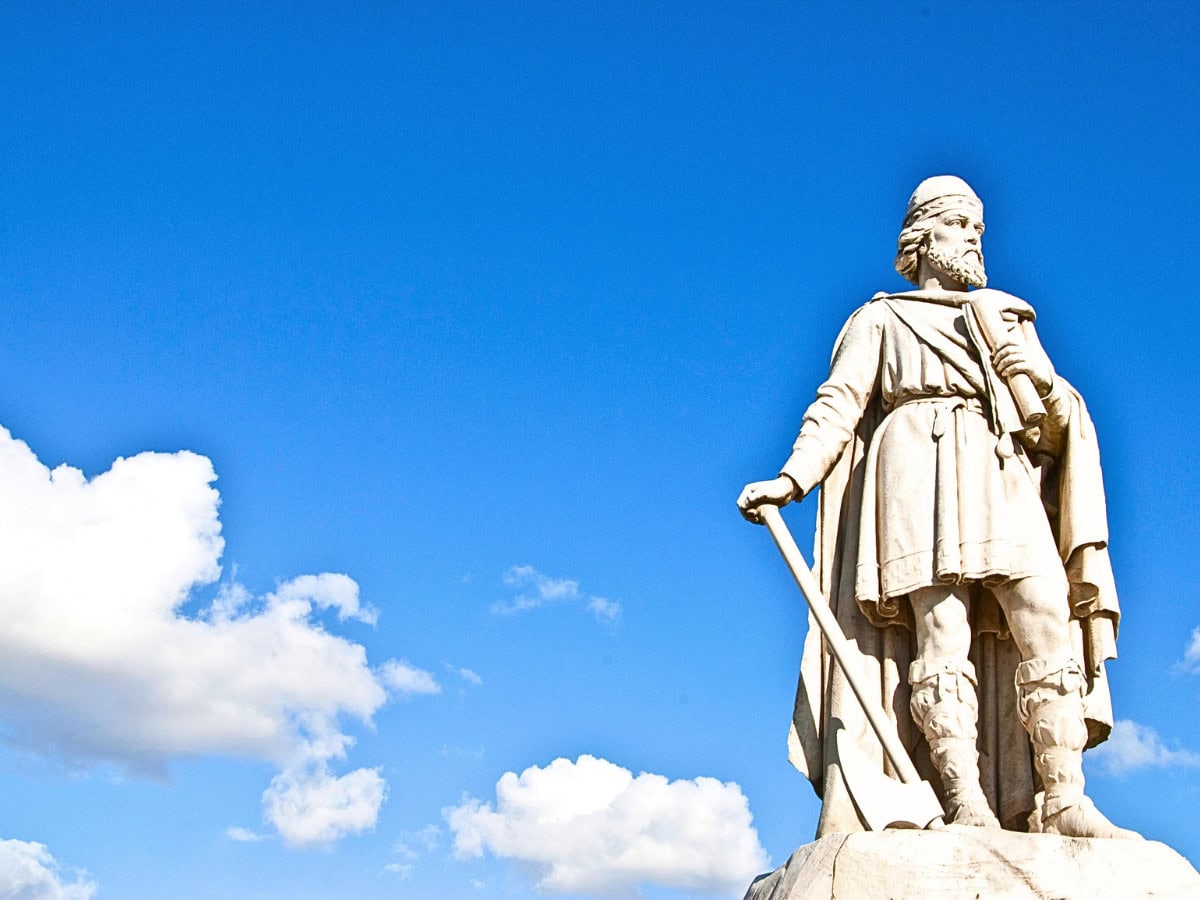
Alfred’s Statue in Winchester
Perhaps one of the most visible expressions of Alfred’s later reputation stands in Winchester, the city most closely associated with his kingship.
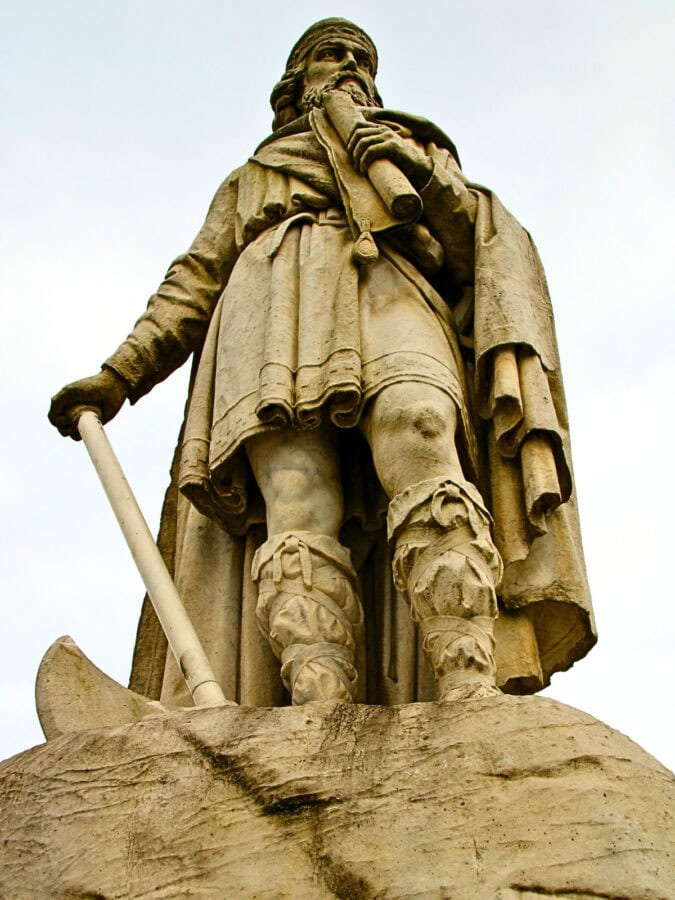
The monumental bronze statue grew out of commemorations in 1899 marking a thousand years since Alfred’s death. Created by sculptor Hamo Thornycroft, it was unveiled in Winchester in 1901 and presents Alfred as an imposing warrior king, sword held high above the city.
The statue tells us as much about the age that created it as it does about Alfred.
By the beginning of the twentieth century, Alfred had become a powerful national symbol — remembered as warrior, lawgiver, scholar and a figure associated with the origins of England.
Today, historians paint a more nuanced picture.
The real Alfred did not need to found England, invent the navy or perform every achievement later credited to him to deserve our attention.
His documented story is remarkable enough.
A king driven into the marshes survived, rebuilt his power and left behind a stronger kingdom.
The legends tell us how later generations wanted to remember him.
The history tells us why they remembered him at all.

Places Where You Can Follow Alfred the Great’s Story Today
Alfred’s world has largely disappeared, but several places still connect today’s landscape with his story.
- Winchester, Hampshire — The heart of Alfred’s Wessex and one of the places most closely associated with his reign. His monumental statue stands near the historic city centre, while nearby Hyde Abbey marks the area of his final known burial place.
- Athelney, Somerset — The Somerset Levels preserve the landscape in which Alfred took refuge during the crisis of AD 878. The site of the former island is associated with the stronghold from which he rebuilt his resistance.
- Edington, Wiltshire — Traditionally associated with Alfred’s decisive victory over Guthrum in 878. The exact location of the battlefield remains uncertain, but the wider landscape retains its connection with the battle.
These places offer something the written sources cannot: a sense of the landscapes in which Alfred’s story unfolded.
Alfred the Great’s Legacy — From Fugitive King to the Making of England
Alfred’s story began here with a king driven into the marshes of Somerset.
His kingdom was in danger. Guthrum had seized Chippenham, and the future of Wessex was uncertain.
Yet Alfred emerged from Athelney and changed the direction of his story.
He did not create England, nor was he its first king. The kingdom that eventually emerged was the work of several generations, including his children and grandson.
But Alfred helped make that future possible.
Perhaps that is his most important legacy.
More than a thousand years later, the legends can sometimes overshadow the man. The burnt cakes, the heroic warrior and the title “the Great” have all become part of the Alfred we remember.
The historical story needs little embellishment.
A king came close to losing his kingdom, fought his way back and left it stronger than he had found it.
His descendants carried that story forward until a kingdom Alfred himself never knew began to emerge.
The making of England was not Alfred’s achievement alone. But the fugitive king who fought his way back in AD 878 helped make what followed possible.
I hope you’ve enjoyed reading my take on Alfred the Great — looking beyond the familiar legends to the man, the king and the remarkable story behind his legacy. Continue the Story of England with me, as we follow what happened next.
Continue the Story of England
If the story of Alfred the Great has drawn you deeper into Anglo-Saxon England, continue through the rulers, kingdoms and conflicts that shaped the country that followed.
Trace the story through the Anglo-Saxon Kings of England, from the kingdoms Alfred knew to the generations that continued his legacy. Follow the Viking struggle and the periods of Danish rule that reshaped England before 1066.
Then continue towards the Norman Conquest and the kings and queens who followed. Or step back and follow the complete Story of England through the rulers, battles and turning points that shaped England across the centuries.
Please take a moment…
Before you go, I’m excited to share some news—Timeless Travel Steps was awarded Best Slow Travel & Heritage Travel Blog 2026! Please take a moment to read our story and discover the passion behind our journeys.
For more travel insights and tips, consider following Georgina from Timeless Travel Steps on BlueSky, Instagram, Facebook and Pinterest. Don’t miss out on her latest adventures and expert advice. Subscribe to stay updated and join a community of fellow travel enthusiasts eager to explore the world.
References and Further Reading
The story of Alfred the Great survives through contemporary chronicles, later medieval accounts and modern historical and archaeological research. The following sources are particularly useful for exploring his life and reign further.


